
Mimoschinia
Mimoschinia
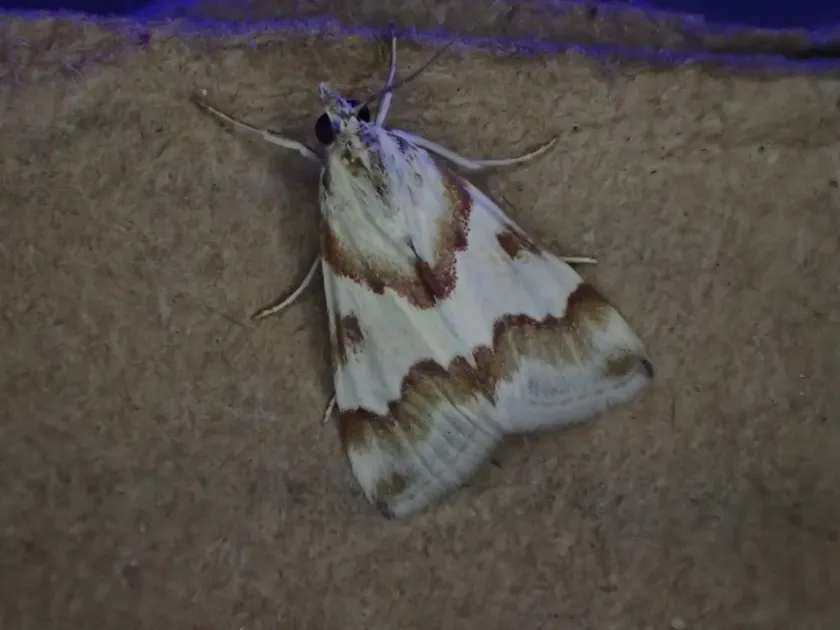
Description
How to identify
Mimoschinia belongs to the order Lepidoptera and the family Crambidae (grass moths). It is a nocturnal moth species that maintains a cryptic lifestyle.
The appearance of the adult moth is characterized by a specific wing pattern that aids in camouflage against the surface of host plants during the day.
The larvae (caterpillars) of Mimoschinia undergo several developmental stages, during which their size and coloration intensity change significantly.
Recognizing the pest at early stages is difficult due to its tendency to mine or roll the leaves of the host plant.
Identification of adults is possible during nighttime using light traps, which allow for the assessment of population density in a specific area.
What it damages
The main crops susceptible to attacks by this pest are members of the Fabaceae family, including forage grasses and certain vegetable crops.
Damage is manifested by the destruction of plant vegetative mass, which leads to a decrease in their photosynthetic activity.
The greatest economic damage is caused by the insect during active crop growth periods, when the loss of leaf surface is critical for harvest formation.
Severe infestation can lead to partial defoliation of plants, reducing the quality of hay or the marketability of vegetable produce.
Furthermore, the pest can indirectly contribute to the development of secondary fungal infections in damaged tissue sites.
When it appears
The life cycle of Mimoschinia is closely related to the regional climatic conditions, with the pest usually showing maximum activity during the warm season.
Adult emergence occurs in the spring, following soil warming and the beginning of the growth phase of primary host plants.
Throughout the season, the insect can produce several generations if weather conditions favor larval reproduction and development.
Pupation often occurs within the soil layer or inside plant debris, providing the pupa with protection against adverse environmental factors.
At the end of the season, the pest enters diapause, overwintering in the pupal or larval stage depending on the species and local conditions.
Signs of infestation
The first sign of crop infestation is the appearance of characteristic "windows" or small holes in the leaf blades of the plants.
Often, leaf rolling into tubes or webbing is observed, within which early-stage caterpillars hide.
The presence of insect frass (excrement) on the leaf surface serves as a clear signal of an active insect population.
When inspecting crops, patches of wilting or yellowing foliage become visible, indicating local damage to stems or leaf stalks.
- Leaf blade damage.
- Presence of silken webs or nests.
- Frass traces on the plants.
- Deformation of shoot tips.
Control measures
The primary protection strategy involves timely monitoring of pest population levels using pheromone traps and regular visual inspections.
Agrotechnical methods, such as crop rotation and deep autumn plowing, help destroy pupal overwintering sites.
The biological control method includes the use of entomophages, which naturally limit the multiplication of these moths in the fields.
Chemical control is applied during periods of mass larval emergence using modern insecticides with systemic or contact action.
When selecting preparations, it is essential to strictly adhere to waiting periods and recommended dosages to minimize negative impacts on beneficial fauna.
Taxonomy
- Latin name
- Mimoschinia
- Order
- Lepidoptera (butterflies)
- Family
- Pyralidae
- EPPO code
- MIMOSP
Discussion
No discussions yet — be the first.