
Melitara nephelepasa
Melitara nephelepasa
Description
How to identify
Melitara nephelepasa is a species of moth belonging to the family Pyralidae, commonly known as a destructive cactus moth. The adult is a small, nocturnal moth with wingspans ranging from 30 to 40 mm.
Adults feature mottled grey and brown patterns, which provide exceptional camouflage against the dry, arid textures of their host plants, the Opuntia cacti.
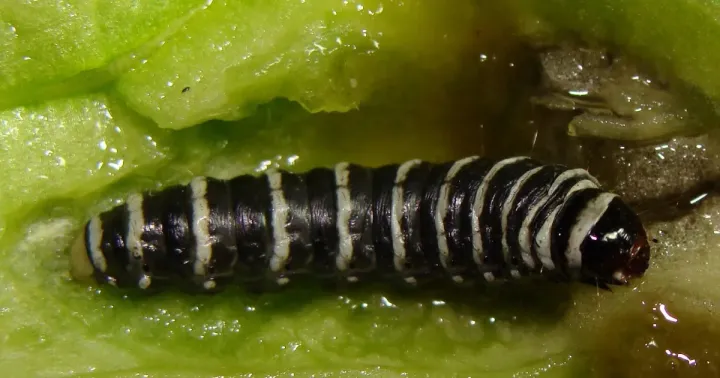
The larval stage is the primary concern for agriculturalists. These caterpillars possess cylindrical bodies with distinctive cross-bands and vary in color from pale white to bluish-green.
Equipped with a sturdy head capsule and biting mouthparts, the larvae are specifically adapted to burrow into the tough, succulent tissues of cacti.
Pupation occurs within self-spun, durable cocoons hidden deep inside the tunnels excavated by the larvae, protecting the insect from environmental fluctuations.
What it damages
The host range is centered on the genus Opuntia. The larvae act as internal feeders, excavating large tunnels through the cactus pads and stems.
By consuming the internal parenchyma, the caterpillars disrupt the plant's structural integrity and its ability to transport nutrients and water, eventually leading to collapse.
Injured tissues frequently become susceptible to secondary infections, such as fungi and bacteria, which cause rapid decay of the cactus segments.
Massive infestations can result in the complete destruction of cactus plantations, causing significant economic losses in regions where these plants are farmed for food or fiber.
Both young shoots and mature woody parts are targeted by the larvae, resulting in severe debilitation of the entire cactus colony.
When it appears
The life cycle of Melitara nephelepasa is closely linked to the cactus growing season. Peak activity of larvae usually coincides with periods of rapid plant growth.
Overwintering typically occurs in the larval stage, housed within cocoons inside the host tissue, which provides a thermal buffer during colder months.
Adult moths emerge in late spring or early summer. Females lay clusters of eggs, often arranged in chains on the surface of the cactus pads or the spines.
Depending on the climatic zone, the insect may complete one or more generations per year, with activity peaking during warm, humid months.
High temperatures generally accelerate larval development, leading to shorter intervals between generations and higher potential for plant damage.
Signs of infestation
Visible entry holes in the cactus epidermis are the most reliable indicators of an infestation, often accompanied by fresh frass (excrement) ejected from the tunnels.
Plants often exhibit patches of yellowing or necrotic tissue. As the internal structure is hollowed out, the pads may become soft and collapse under their own weight.
Accumulated frass, appearing as gritty dark deposits near the base of the plant or in the crotches of the cactus pads, is a clear sign of larval activity.
Hollow-sounding or spongy tissue upon physical inspection is a definitive sign of interior damage caused by the larvae.
- Small entry holes in the epidermis.
- Dark frass deposits on the plant surface.
- Deformation and drooping of segments.
- Unpleasant smell indicating internal rot.
Control measures
Mechanical control is highly effective for small infestations, involving the pruning and disposal of infested pads to prevent the lifecycle from continuing.
Biological control using Bacillus thuringiensis sprays can be highly effective, as the bacteria target the larvae upon ingestion during their feeding process.
Systemic insecticides may be used as a preventative measure, but application timing is critical—they must be used before the larvae bore deep into the plant tissues.
Routine monitoring using pheromone traps is recommended to track adult moth population levels and determine the optimal window for targeted interventions.
Good plantation management, including the removal of dead or rotting material, helps reduce the nesting grounds for this pest and limits population buildup.
Taxonomy
- Latin name
- Melitara nephelepasa
- Order
- Lepidoptera (butterflies)
- Family
- Pyralidae
- EPPO code
- MLTRNE
Discussion
No discussions yet — be the first.