
Cactus moth
Melitara dentata
Description
How to identify
The cactus moth Melitara dentata belongs to the order Lepidoptera and the family Pyralidae. It is a specialized pest known for targeting various species within the Cactaceae family, particularly opuntias.
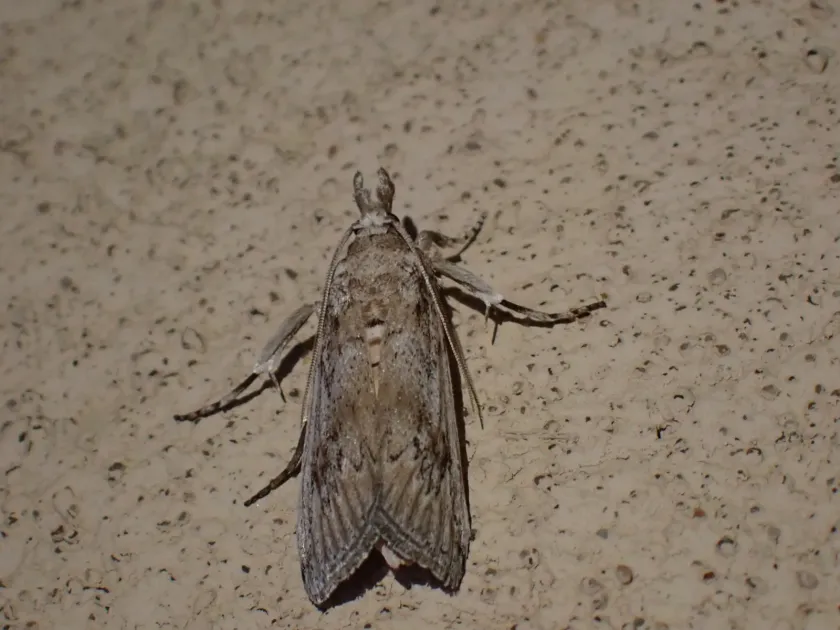
The adult moth has a wingspan of 30–40 mm, with grayish-brown forewings featuring distinct dark, dentate markings. These markings act as camouflage, allowing the moth to remain inconspicuous when resting on cactus pads.
The larvae, or caterpillars, are the primary life stage causing destruction. Initially pale, they transform into a vibrant blue-gray color as they mature, typically growing up to 40 mm in length with visible dark spots.
The life cycle involves multiple larval instars, pupation, and the emergence of adults. Eggs are typically laid in chain-like formations on the spines or epidermis of host plants to facilitate immediate larval access to food.
Pupation occurs in white, silk-like cocoons either inside the mined-out tissues of the cactus or within the top layer of soil, making them difficult to detect during routine plant inspections.
What it damages
Larvae are internal feeders that bore into the fleshy stems of cacti. By tunneling deep into the plant, they consume the internal tissues, effectively hollowing out the segments from the inside.
This damage disrupts the plant's ability to store water and perform vital physiological functions. Furthermore, the tunnels create entry points for secondary bacterial and fungal pathogens, leading to rapid tissue necrosis.
Common signs of infestation include small entry holes on the cactus surface, often surrounded by frass (larval excrement) that looks like fine sawdust or debris.
As the larvae consume the interior, the affected segments may lose their firmness, yellow, and eventually collapse or wither. In severe cases, the entire plant structure is compromised and killed.
The destructive potential of Melitara dentata is significant, as a single colony of larvae can destroy entire pads or even small succulent plants in a matter of weeks during the active season.
Control measures
Regular visual inspections are the most critical control measure. Growers should carefully scan all cactus surfaces for signs of boreholes or unusual soft spots, especially during the peak summer months.
For minor infestations, physical removal of larvae can be attempted by cutting away the damaged portion of the plant. After removal, the cut area should be treated with a fungicide to prevent rot.
Biological control methods, such as utilizing Bacillus thuringiensis, are highly effective against younger larvae. This bacterial agent is safe for the environment and targets the digestive system of the caterpillars.
Systemic insecticides are recommended for severe infestations. Because the larvae live inside the plant, systemic chemicals are absorbed into the cactus tissue, ensuring the larvae ingest the poison while feeding.
Long-term prevention strategies include covering greenhouse vents with fine mesh screens to prevent adult moths from entering and laying eggs. Maintaining healthy plants through proper watering and soil care also improves overall resilience.
Taxonomy
- Latin name
- Melitara dentata
- Order
- Lepidoptera (butterflies)
- Family
- Pyralidae
- EPPO code
- MLTRDE
Discussion
No discussions yet — be the first.