
Cedrela shoot borer
Hypsipyla robusta
Description
How to identify
The Cedrela shoot borer (Hypsipyla robusta) is a moth belonging to the family Pyralidae. The adult moth has a wingspan of approximately 30–40 mm and features greyish-brown forewings with intricate dark markings, which provide excellent camouflage against tree bark.
The larvae progress through several instars, varying in color from yellowish-white to reddish-brown, and are characterized by a prominent dark head capsule. This morphological feature helps distinguish them during early-stage infestation inspections.
Pupation typically occurs inside damaged shoots or within a loose silk cocoon found in plant debris or bark crevices. The pupa is brownish and cylindrical, representing the stage where the insect is most vulnerable to certain biological controls.
Accurate identification is often achieved through pheromone monitoring, which attracts males and signals the start of the breeding season. This data is critical for timing intervention measures in commercial plantations.
Biological development is highly temperature-dependent, and in warm climates, the insect can complete multiple generations in a single year, which significantly increases the risk of rapid pest outbreaks.
What it damages
The pest primarily targets trees in the Meliaceae family, including economically important genera such as Cedrela and Swietenia. It causes severe damage to terminal shoots, flower buds, and developing fruit.
By boring into the shoots, the larvae destroy the apical meristem, leading to stunted vertical growth and excessive branching. This results in poor stem form and a significant reduction in the timber's commercial value.
Young seedlings are particularly susceptible to severe injury, which can often lead to total plant death or complete lack of growth, causing substantial losses in nursery settings and young forestry plantations.
In addition to physical damage, the boreholes created by the larvae serve as entry points for secondary infections by fungi and bacteria. These pathogens accelerate tissue decay and exacerbate the overall decline of the host tree.
In mature stands, the pest damages seeds and fruits, which drastically reduces natural regeneration and seed yield, impacting the long-term sustainability of the affected tree populations.
Signs of infestation
The most evident sign of infestation is the sudden wilting and browning of new shoots. As the larvae consume the internal tissue, the shoot loses its structural integrity and eventually dies.
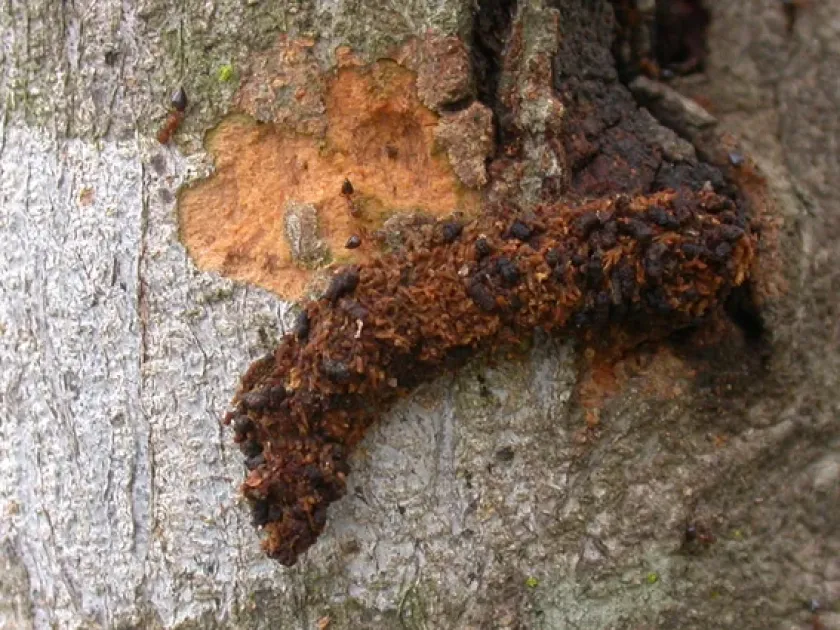
The accumulation of frass (a mixture of larval excrement and wood particles) and resinous exudates at the entrance holes of the tunnels is a clear indicator of active feeding by the larvae.
Damage to fruits or seed pods is marked by exit holes and the presence of fine sawdust or debris on the forest floor or the outer surface of the seeds, indicating that the larva has finished its development.
During the pupal phase, the presence of silken cocoons within the damaged shoots or in leaf litter confirms the completion of a larval stage. These cocoons are often found near the site of previous feeding.
General plant stress, such as yellowing of leaves or premature needle drop, often accompanies severe infestations, reflecting the systemic damage caused by the larvae to the tree's vascular system.
Control measures
Effective management of the Cedrela shoot borer requires an integrated approach that focuses on silvicultural practices, biological controls, and judicious chemical applications.
Sanitation is a cornerstone of management, involving the systematic removal and destruction of infested shoots. Burning or burying these materials prevents the emergence of the next generation of adults.
Biological control using formulations based on Bacillus thuringiensis has proven successful, particularly when applied early in the larval development cycle. This method is environmentally friendly and preserves local biodiversity.
Systemic insecticides are utilized in high-value nurseries or young plantations to protect susceptible tissues from larval boring. Timing these applications is essential to ensure maximum efficacy against the active larvae.
- Monitoring with pheromone-based traps.
- Regular pruning and removal of infested plant parts.
- Conservation and release of native parasitoids.
- Application of Bacillus thuringiensis-based insecticides.
- Selecting tree species or varieties with higher natural resistance.
Taxonomy
- Latin name
- Hypsipyla robusta
- Order
- Lepidoptera (butterflies)
- Family
- Pyralidae
- EPPO code
- HYPYRO
Discussion
No discussions yet — be the first.