
Hypsipyla
Hypsipyla
Description
How to identify
The genus Hypsipyla belongs to the family Pyralidae within the order Lepidoptera. These moths typically have a wingspan of 25–40 mm and display grey-brown coloration, which allows them to blend in perfectly with tree bark during resting periods.
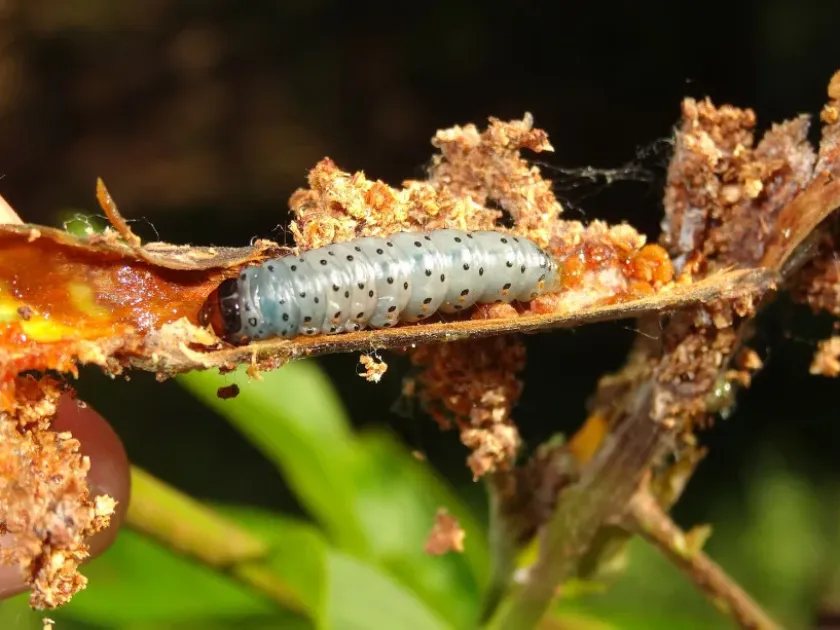
Hypsipyla larvae, commonly known as shoot borers, go through several developmental stages. Their body color often changes from pale to darker or reddish tones as they mature, while their dark-colored head capsules remain a key identifying feature.
The life cycle of this pest is highly dependent on tropical and subtropical environmental conditions. In favorable climates, the generation cycle from egg to adult can be very rapid, leading to overlapping generations and persistent infestation pressure throughout the year.
Females deposit eggs individually or in small clusters on young shoots, buds, or fruits of host plants. Upon hatching, the larvae immediately begin feeding, boring into the inner tissues of the plant to seek protection and nutrients.
Because the larvae live internally, detecting the pest during early stages is challenging. Successful identification relies on regular field scouting, specifically focusing on the health and development of terminal shoots.
What it damages
Hypsipyla causes devastating economic losses in high-value timber species of the Meliaceae family, primarily within the Swietenia (mahogany) and Cedrela (cedar) genera.
The pest attacks young seedlings in nurseries as well as mature trees in forest plantations. Larvae bore into terminal shoots, which effectively destroys the apical meristem and disrupts the vertical growth of the tree.
This damage forces the tree to produce multiple lateral branches, leading to a deformed stem. Such structural damage significantly reduces the timber quality and market value, as straight trunks are required for high-grade wood production.
In addition to shoots, some species of Hypsipyla are known to infest fruits and seeds. This is particularly harmful in seed orchards, as it prevents the production of viable seeds and hampers reforestation efforts.
Severe and repeated infestations can lead to high mortality rates in young plantations, often causing total crop failure and making the cultivation of susceptible timber species unviable without intensive management.
Signs of infestation
The most reliable sign of a Hypsipyla infestation is the presence of larval frass (excrement) mixed with silk webbing on the exterior of the bark or around the base of damaged shoots.
A classic symptom is the sudden wilting, browning, and dying back of the terminal bud or the growing tip of a branch. Internal inspection of these tips usually reveals tunnels carved by the larvae.
Damage to the terminal shoot results in the loss of apical dominance, causing the tree to develop a bushy appearance or multiple stems, which is a major red flag for plantation managers.
When the pest attacks fruits, the presence is indicated by entry holes on the surface, often accompanied by ejected frass and fine silk strands hanging from the entrance site.
Plantation inspections should prioritize identifying color changes in the youngest foliage at the top of the crown, which often precedes the visible wilting of the apical shoot.
Control measures
Effective management of Hypsipyla requires an integrated approach that combines silvicultural practices with biological and chemical control methods.
Intercropping and mixed-species plantations are highly recommended; by planting host trees among other species, the ability of the moth to locate its host is significantly reduced, decreasing the overall infestation level.
Biological control agents, including entomopathogenic fungi, Bacillus thuringiensis, and the release of specific parasitoids, have shown great promise in suppressing larval populations without disrupting the forest ecosystem.
- Regular pruning and destruction of infested shoots to remove larvae before pupation.
- Selection of genetically resistant or tolerant tree varieties for reforestation.
- Monitoring adult flight activity using pheromone traps to time management interventions accurately.
Systemic insecticides may be used in nursery settings to protect young seedlings, but their application should be carefully managed to avoid long-term ecological impacts and the development of pesticide resistance.
Taxonomy
- Latin name
- Hypsipyla
- Order
- Lepidoptera (butterflies)
- Family
- Pyralidae
- EPPO code
- HYPYSP
Discussion
No discussions yet — be the first.