
Hulstia
Hulstia
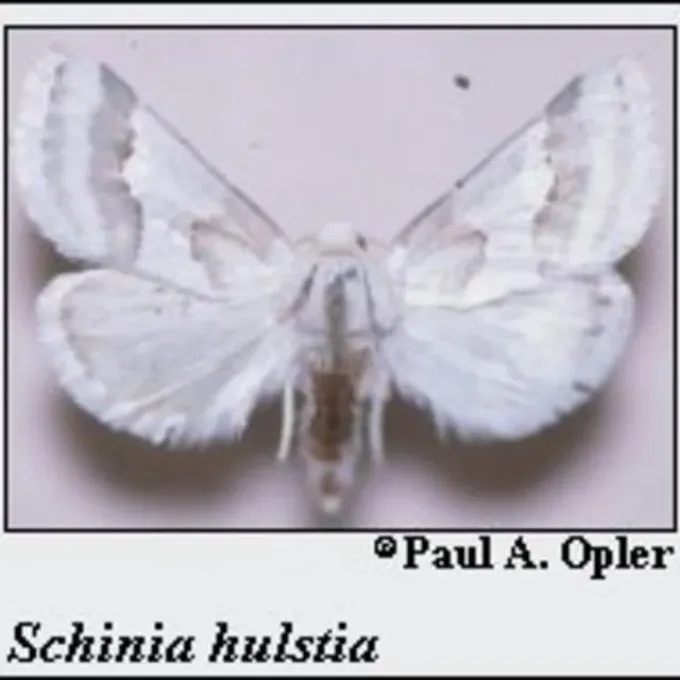
Description
How to identify
Hulstia is a genus of moths belonging to the Pyralidae family. These insects are typically small to medium-sized, with adults exhibiting the characteristic features of the Phycitinae subfamily, including muted grayish or brownish wing patterns that provide excellent camouflage in natural environments.
The larval stage, or caterpillar, is responsible for the damage. These larvae are often segmented, showing varied coloration that matches their host plant, and possess a well-developed chewing apparatus, allowing them to feed efficiently on plant tissues.
The life cycle follows a complete metamorphosis, including egg, larva, pupa, and adult stages. Females lay eggs on or near host plants, ensuring that emerging larvae have immediate access to nutrients, which is crucial for their rapid development.
Pupation typically occurs in sheltered areas, such as silk-lined chambers within damaged plant parts, flowers, or occasionally in the top layer of the soil. This pupal casing serves as a vital protective barrier against environmental stressors and predators.
Accurate species identification of the Hulstia genus can be challenging due to the high morphological similarity between species. Precise classification often requires the examination of genital structures by specialized entomologists.
What it damages
This pest affects a variety of plant species, particularly focusing on crops where they can access protected tissues. They are frequently found in agricultural settings, including greenhouses and open fields, where they can cause significant economic losses.
The larvae primarily target the reproductive organs of plants, including buds, blossoms, and developing fruits. By consuming these parts, they disrupt the plant's ability to reproduce and yield fruit, causing direct damage to the harvest potential.
In addition to direct feeding, the larvae can compromise the structural integrity of stems and shoots. This weakens the plant, making it prone to bending or breakage, and often stops the healthy growth of the vegetative parts.
Wounds caused by larval feeding serve as primary entry points for secondary infections, such as pathogenic bacteria and fungi. These infections often result in rot, further exacerbating the damage beyond what the insects cause directly.
The impact is cumulative; as the infestation grows, the cumulative loss of photosynthetic area and reproductive capability significantly reduces the vigor and overall health of the entire crop population.
Signs of infestation
A classic sign of a Hulstia infestation is the presence of silken webbing covering buds, flowers, or leaf clusters. The larvae use these threads to construct protective shelters while they feed, which are easily visible upon close inspection.
Small, granular dark deposits—the frass of the larvae—are usually found near the webbing and feeding sites. The presence of this excrement is a strong indicator of active larval feeding and should prompt immediate scouting.
Visual symptoms on the plant include withered, discolored, or prematurely dropping buds. This "blight-like" appearance is often a result of the larvae hollowing out the interior tissues, which cuts off the plant's nutrient supply.
As the infestation progresses, stunted growth or deformities in the stems become apparent. This is particularly problematic in ornamental plants where the physical appearance is as important as the health of the plant.
Regular monitoring often reveals the larvae themselves, especially if foliage is carefully parted to check the inner parts of the plant where they seek protection from direct sunlight and natural predators.
Control measures
Integrated pest management starts with rigorous sanitation practices. Removing and destroying infested plant material at the end of the season is essential to eliminate overwintering pupae and break the pest's reproductive cycle.
Biological control agents, such as formulations of Bacillus thuringiensis, provide a selective and effective way to manage younger larval stages without harming beneficial insects or the surrounding environment.
Monitoring using pheromone traps is a highly effective strategy for detecting the arrival of adult moths. This data allows for precisely timed intervention, ensuring that insecticides are applied only when they will have the maximum impact.
Chemical control should be employed only when monitoring thresholds are exceeded. It is crucial to rotate insecticide modes of action to prevent the development of resistant populations of the moth.
- Implement regular crop scouting to catch infestations early.
- Keep fields free of weeds that may host the pest during off-seasons.
- Use cultural practices like crop rotation to discourage long-term colonization of the pest.
Taxonomy
- Latin name
- Hulstia
- Order
- Lepidoptera (butterflies)
- Family
- Pyralidae
- EPPO code
- HULSSP
Discussion
No discussions yet — be the first.