
Sunflower moth
Homoeosoma
Description
How to identify
The sunflower moth (Homoeosoma nebulella) is a significant lepidopteran pest belonging to the Pyralidae family, known for causing extensive damage to sunflower crops globally.
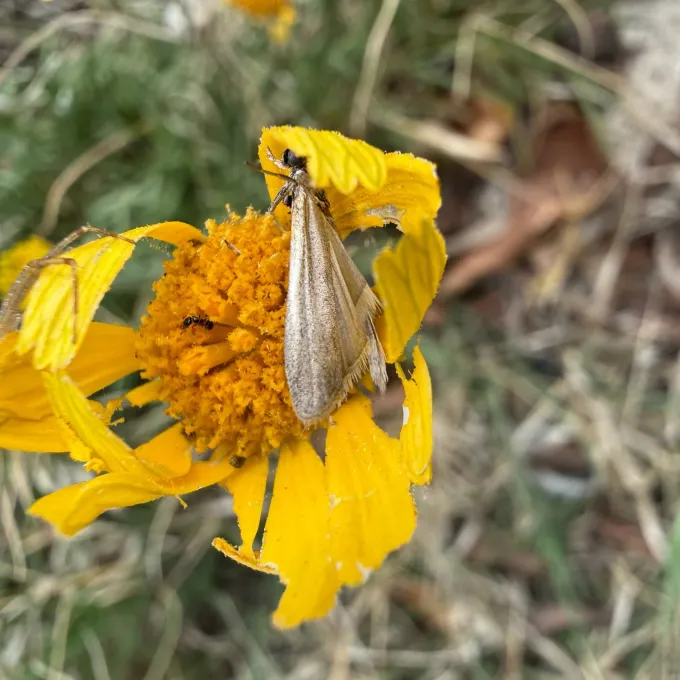
The adult moth is small, with a wingspan of approximately 25 mm. The forewings are brownish-grey with distinct dark spots, while the hindwings are pale and semi-transparent, aiding in camouflage.
The larvae, or caterpillars, reach a length of 20 mm. They exhibit a range of colors from pale yellow to brown, consistently marked by five dark longitudinal stripes running along their bodies.
The pupal stage occurs within a silken cocoon constructed by the mature larva. This cocoon is typically hidden in the upper layer of the soil or protected within the infested flower head.
This species is highly prolific, and its lifecycle is closely synchronized with the flowering phenology of the sunflower, ensuring optimal food resources for the developing larvae.
What it damages
Larvae primarily consume the pollen and florets during early development, but as they grow, they move deeper into the sunflower head to feed on the maturing seeds.
Feeding damage results in tunnels through the seeds and the flower receptacle, which weakens the plant and leaves it vulnerable to secondary infections by various pathogens and fungi.
The presence of larvae is often accompanied by silk webbing and frass (insect excrement), which makes the sunflower heads look decayed and significantly reduces the crop quality.
Alternative hosts include wild species from the Asteraceae family, such as thistles and knapweeds, which serve as essential breeding grounds for the moth populations between crop seasons.
Severe infestations can lead to yield losses exceeding 50%, with a direct impact on seed weight, oil content, and the overall commercial value of the harvested sunflower crop.
When it appears
Adult moths are nocturnal and typically emerge during the sunflower blooming period. They feed on nectar and begin mating and oviposition shortly after emergence.
Depending on the climatic zone, the sunflower moth can complete one or multiple generations annually. Warm and dry conditions significantly accelerate the development of the larvae.
Females lay eggs directly on the open florets. The incubation period for eggs ranges from 5 to 10 days, depending on environmental temperature and humidity levels.
Larval development takes about 3 to 4 weeks. Once fully grown, the larvae drop to the soil to pupate or remain in plant debris to overwinter, surviving until the next season.
Predicting the infestation peak is crucial, as the most significant damage occurs when the sunflower head is in the early stages of seed set and development.
Signs of infestation
A primary indicator of infestation is the appearance of silk webbing on the face of the sunflower head, which captures frass and creates a cluttered, contaminated appearance.
Visible holes on the back of the sunflower head are evidence of larval entry or exit, which are often entry points for secondary moisture and rot-causing fungal organisms.
Internal examination of the flower head reveals partially or completely consumed seeds, with the contents often replaced by larvae, webbing, and dark-colored insect waste.
In the evening, adult moths can be seen hovering near the sunflower heads. Disturbing the plants during the day often causes them to fly, indicating a high local population density.
Premature wilting or localized necrosis of the flower head during the filling stage is a warning sign that significant larval activity is occurring within the receptacle.
Control measures
The use of resistant sunflower hybrids is the most effective preventative measure. Hybrids with a thick hull layer containing tannins and phytomelanin are resistant to larval penetration.
Cultural practices, such as deep autumn plowing, effectively destroy overwintering pupae in the soil, significantly reducing the moth population for the following planting season.
Crop rotation and strict weed management, specifically the elimination of wild Asteraceae host plants, are essential components of an effective integrated pest management strategy.
Chemical control involving insecticides is applied when moth activity exceeds established economic thresholds, typically coinciding with the initial flowering phase of the crop.
Biological control methods, such as the release of Trichogramma wasps, serve as an environmentally friendly alternative to reduce egg survival rates without disrupting beneficial insect populations.
Taxonomy
- Latin name
- Homoeosoma
- Order
- Lepidoptera (butterflies)
- Family
- Pyralidae
- EPPO code
- HMOESP
Discussion
No discussions yet — be the first.