
Greater wax moth
Galleria mellonella
Description
How to identify
The greater wax moth, scientifically known as Galleria mellonella, belongs to the Pyralidae family and is a significant pest in apiculture.
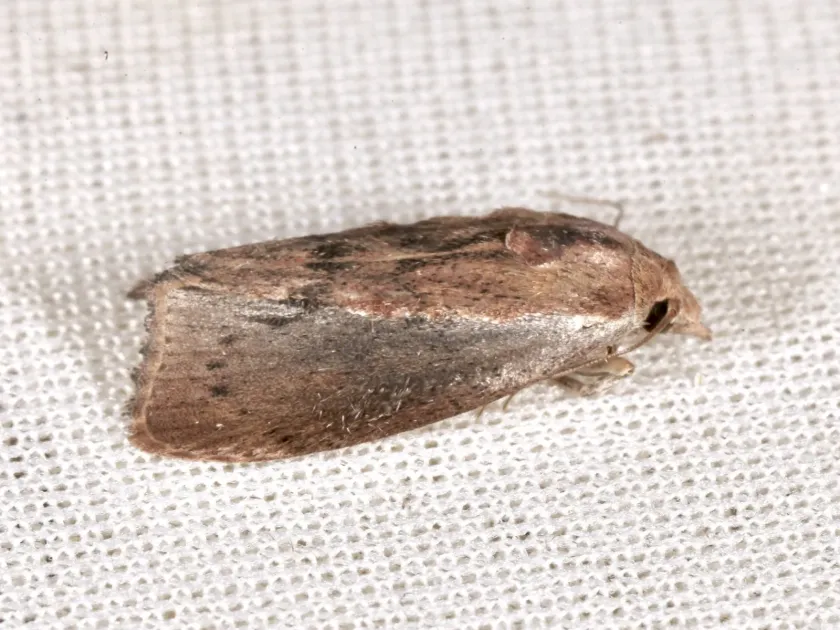
Adult moths are nocturnal, with females typically being larger, reaching up to 18 mm in length with a wingspan of approximately 35 mm.
The coloration of the moths is mottled brown or grey, providing camouflage against the wooden surfaces of bee hives and storage facilities.
The life cycle consists of four stages: egg, larva, pupa, and adult, with the larval stage being the primary cause of economic damage to beekeepers.
Once emerged, adult moths seek out bee colonies to lay eggs in small cracks, crevices, or directly within the honeycomb structures.
What it damages
The larvae of the greater wax moth are notorious for feeding on beeswax, which constitutes the main structural material of beehive frames.
Beyond wax, they consume bee bread (pollen), honey, and debris left by developing bee broods, which they find while tunneling through the combs.
Their movement creates silken galleries covered in webbing, which destroys the structural integrity of the honeycomb and makes it unusable for bees.
Weakened or diseased bee colonies are highly vulnerable, as they lack the manpower to defend their hive space against the advancing larvae.
In severe infestations, the pest can reduce entire honeycombs to a mass of web-covered debris, causing substantial financial loss to the apiary.
When it appears
The activity of the greater wax moth is highly dependent on ambient temperature, with optimal conditions occurring between 25 and 30 degrees Celsius.
The flight of adult moths usually begins in late spring and continues throughout the summer months when environmental conditions are most favorable.
The number of generations produced per year varies by climate; in warm regions or heated storage rooms, reproduction can occur year-round.
Larvae and pupae serve as the overwintering stages, surviving in the cracks of beehives or in storage facilities containing old honeycomb.
The development speed is heavily influenced by the availability of food sources, leading to rapid population explosions during peak summer periods.
Signs of infestation
The presence of fine, silken webbing stretched across the cells of the honeycomb is a primary indicator of larval infestation.
Debris on the hive floor, often referred to as frass, resembles coarse flour or wax dust and is a direct result of larval digestion.
Tunnels visible within the midrib of the honeycomb frames indicate where the larvae have been feeding and moving through the wax foundation.
A foul, musky odor coming from the hive or stored equipment is frequently associated with advanced stages of wax moth infestation.
In infested frames, one might observe the larvae themselves, which vary in size depending on the stage of their development.
Control measures
Maintaining strong, healthy, and populous bee colonies is the most effective natural defense against the greater wax moth.
Regular sanitation of the apiary, including the removal of old, dark combs and accumulated wax debris, is critical to limiting breeding sites.
Stored honeycombs should be kept in well-ventilated, dry, and cool areas, or protected within sealed containers to prevent adult moths from entering.
Biological control agents, such as specific bacterial strains like Bacillus thuringiensis, provide a safe way to manage populations.
- Perform routine inspections of hive interiors and frames.
- Utilize cold storage (freezing) to kill all life stages of the moth.
- Ensure proper hive maintenance to prevent structural gaps.
Taxonomy
- Latin name
- Galleria mellonella
- Order
- Lepidoptera (butterflies)
- Family
- Pyralidae
- EPPO code
- GALLME
Discussion
No discussions yet — be the first.