
American plum borer
Euzophera semifuneralis
Description
How to identify
The American plum borer (Euzophera semifuneralis) is a moth species belonging to the Pyralidae family, known for its destructive impact on various fruit-bearing trees.
The adult moth is relatively small, with a wingspan ranging from 20 to 25 mm. The forewings display a mottled greyish-brown pattern with dark cross-bands.
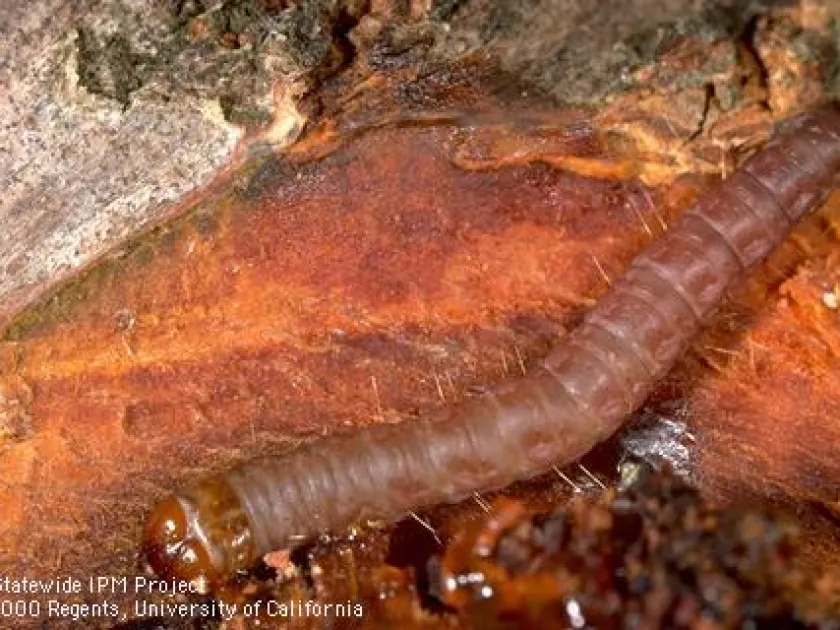
Larvae, which are the main life stage responsible for damage, are creamy-white or pinkish with a distinct brown head and sparse hair on the body.
These larvae pupate within small, silken cocoons spun inside the galleries they create under the bark of the host tree.
This species typically completes two generations per year in temperate climates, which allows for rapid multiplication and high infestation levels in orchards.
What it damages
This pest primarily attacks stone fruits like plums, peaches, cherries, and apricots, as well as apple and pear trees when they are stressed or wounded.
Larvae bore directly into the cambium layer under the bark, excavating winding galleries that severely disrupt the flow of water and nutrients.
Infested trees often exhibit canopy thinning, reduced fruit yield, and, in severe cases, the death of individual scaffold branches or the entire tree.
Gummosis, the discharge of sticky amber sap, is a common reaction of stone fruit trees to the larval feeding activity under their bark.
Young trees are at high risk, as larvae can quickly girdle the trunk, effectively cutting off the tree's supply line and leading to rapid tree death.
When it appears
Adult moths of the first generation emerge in the spring, coinciding with the blossoming period of stone fruit trees.
A second generation of moths is typically active during mid-summer, seeking out wounds, cracks, and grafting sites to deposit their eggs.
Larvae of the second generation feed throughout the late summer and early autumn before preparing for their winter diapause.
The insects overwinter as mature larvae inside their galleries beneath the bark, waiting for the spring temperatures to begin pupation.
Regular monitoring of adult moth activity using pheromone traps is essential from late spring through late summer to time control measures correctly.
Signs of infestation
One of the most reliable indicators of an infestation is the presence of frass (larval waste) mixed with sap on the exterior of the bark.
Clusters of sticky, hardened sap (gummosis) on the trunk and primary branches are strong visual evidence of larval feeding activity beneath the surface.
Bark that looks loose, cracked, or is sloughing off prematurely often hides active larval galleries or recent exit holes.
Sudden wilting or chlorosis of specific limbs during the growing season is a classic sign that the conductive tissue has been compromised by borer activity.
- Excessive sap flow (gummosis) on the trunk.
- Brownish frass visible at bark cracks.
- Dying branches despite adequate irrigation.
- Loose or peeling patches of bark.
Control measures
Sanitation is a primary defense: prune and destroy infested branches or trees to reduce the population of overwintering larvae in the orchard.
Avoid mechanical injuries to the trunks caused by mowing equipment or heavy machinery, as fresh wounds act as attractants for egg-laying females.
Painting tree trunks with diluted white latex paint or lime wash helps prevent the moths from laying eggs on the bark surface.
Application of recommended systemic insecticides during peak moth emergence and egg-hatching times can effectively protect the trees.
Maintaining optimal tree health through proper fertilization and irrigation makes trees more resilient and less susceptible to the American plum borer.
Taxonomy
- Latin name
- Euzophera semifuneralis
- Order
- Lepidoptera (butterflies)
- Family
- Pyralidae
- EPPO code
- EUZOSE
Discussion
No discussions yet — be the first.