
Liriodendron borer
Euzophera ostricolorella
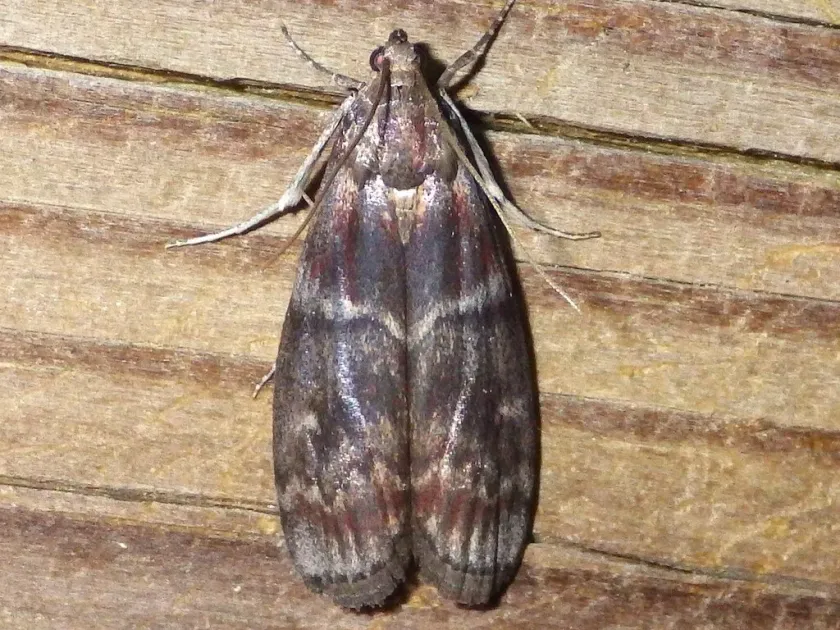
Description
How to identify
The Liriodendron borer, scientifically identified as Euzophera ostricolorella, is a moth species belonging to the Pyralidae family. It is specifically known for its tendency to infest the bark of tulip trees.
The adult moth is characterized by its nocturnal behavior and cryptic coloration, which provides excellent camouflage against the bark of the host tree. The life cycle consists of complete metamorphosis.
The larvae are the primary damaging stage. They spend most of their existence beneath the bark, feeding on the inner tissues of the host. This behavior makes them notoriously difficult to detect until significant damage has occurred.
Understanding the specific biological requirements of Euzophera ostricolorella is essential for arborists and landscape managers to differentiate it from other common trunk borers.
Each generation requires a specific set of environmental conditions, which typically dictates when the adults emerge to lay eggs on the bark of susceptible trees.
What it damages
The pest primarily targets the tulip tree (Liriodendron tulipifera). Larvae tunnel into the phloem and cambium layers, directly disrupting the tree's vascular system.
By damaging the cambium, the larvae interfere with the flow of nutrients and water. This often leads to a decline in tree vigor, branch dieback, and in severe cases, the death of the entire specimen.
The feeding tunnels create structural instability in the lower parts of the trunk. This provides an entry point for secondary pathogens, such as fungi, which can further decay the tree's wood.
Trees that are already under stress, such as those in urban settings with compacted soil or drought conditions, are significantly more susceptible to successful colonization by the larvae.
Because the damage is cumulative, even a minor infestation can become a major health problem if left unmonitored over several years.
Signs of infestation
The most reliable indicator of an active infestation is the presence of frass (larval waste) at the base of the trunk. It often appears as piles of granular, sawdust-like material.
Bark abnormalities are another key sign. One may notice localized cracking, bulging, or sunken areas on the lower trunk where the larvae have been feeding beneath the surface.
Reduced canopy density and yellowing leaves are common symptoms of systemic distress caused by the interruption of the tree's vascular function due to the borer's activity.
In some cases, the tree may exhibit sap flow or bleeding from wounds created by the borer, which serves as a visible warning sign of an active infestation site.
Upon closer inspection of the infested bark, one can observe clear entry holes and galleries filled with dark, granular frass, confirming the presence of the moth larvae.
Control measures
Integrated Pest Management (IPM) is the best approach for controlling Euzophera ostricolorella. Regular inspection of the trunk base is the first step in early detection.
Systemic insecticides applied as trunk injections or soil drenches are generally the most effective way to reach the larvae hidden beneath the thick bark of mature tulip trees.
Ensuring the tree is well-hydrated and appropriately fertilized reduces the chances of severe damage, as healthy trees can sometimes compartmentalize minor borer injuries better than stressed ones.
In cases where infestations are limited, mechanical removal of infested bark sections and subsequent treatment with protective agents can prevent secondary infections.
- Regular monitoring of the trunk base.
- Targeted application of systemic insecticides.
- Proper irrigation to maintain tree vigor.
- Sanitation by removing severely infested bark.
Taxonomy
- Latin name
- Euzophera ostricolorella
- Order
- Lepidoptera (butterflies)
- Family
- Pyralidae
- EPPO code
- EUZOOT
Discussion
No discussions yet — be the first.