
Batang fireworm
Euzophera batangensis
Description
How to identify
The Batang fireworm (Euzophera batangensis) is a moth species belonging to the Pyralidae family. These insects are classified as significant pests in various orchard systems, impacting the structural integrity of fruit-bearing trees.
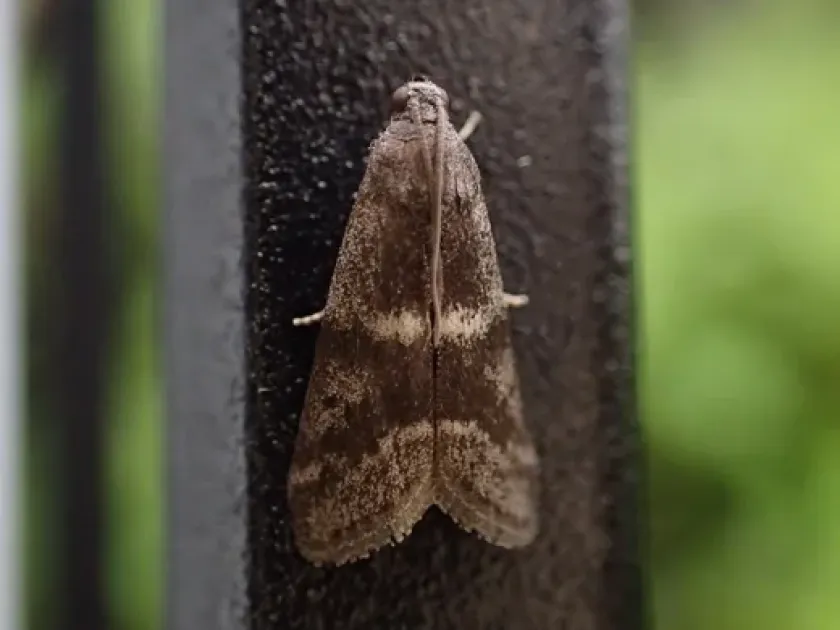
Adult moths typically exhibit a wingspan of 20–25 mm. Their forewings are marked with brownish-gray patterns that provide excellent camouflage against the bark of host trees. Their hindwings are generally lighter and fringed with fine hairs.
The larval stage consists of several instars, with caterpillars transitioning from pale yellow to a brownish-pink hue as they mature. A distinguishing feature is their dark, heavily sclerotized head capsule, which allows them to bore into woody substrates.
The life cycle involves complete metamorphosis: egg, larva, pupa, and adult. Overwintering occurs primarily as larvae in silk-lined cocoons, hidden within deep bark crevices or in the soil near the base of the tree trunk.
Adults are nocturnal and are highly active during warm, humid nights. Females typically deposit eggs on the bark surface, specifically near wounds, cracks, or pruning sites, ensuring that the emerging larvae can quickly access the cambium layer.
What it damages
This pest primarily affects stone and pome fruit trees, with a high preference for species within the Prunus and Pyrus genera. The larvae are the primary damaging agents, feeding internally on the phloem and cambium tissues.
As larvae bore tunnels under the bark, they disrupt the vascular system of the tree, specifically the flow of sap. This interference leads to significant physiological stress, weakening the overall health of the tree and reducing its annual yield.
The mechanical damage inflicted by the larvae creates ideal entry points for secondary pathogens. Infections such as bacterial canker, various fungal rots, and wood-decaying organisms often colonize the damaged tissues, compounding the damage.
Severe infestations can lead to the death of young nursery stock or the systemic decline of mature orchard trees. Visible stunted growth and lack of vigor are common indicators that a tree has been colonized for several seasons.
In addition to cultivated orchards, the pest can thrive on wild relatives of fruit trees, which act as reservoirs and contribute to the constant pressure on agricultural land throughout the growing season.
Signs of infestation
The most reliable field sign of an infestation is the presence of frass — a mixture of larval excrement and bark debris — pushed out of the entry holes. These piles of debris are often found in bark cracks or pruning scars.
Gummosis, or the excessive oozing of sap from the trunk, is a common defensive response by fruit trees. The presence of hardened resin or gum deposits on the bark surface is a strong indicator of larval activity underneath.
In advanced cases, patches of bark may become loose, dry, or cracked. Peeling back such bark layers reveals the intricate, winding galleries created by the caterpillars as they fed on the underlying wood.
During the growing season, affected trees often exhibit premature leaf yellowing and a noticeable reduction in new shoot length, reflecting the impaired transport of water and nutrients to the canopy.
Winter inspections are crucial for identifying the pest. By checking the bark crevices and the trunk base, growers can locate overwintering cocoons and estimate the potential population density for the following spring.
Control measures
Effective management of Euzophera batangensis requires a multi-faceted approach, emphasizing prevention and early intervention to keep populations below the economic injury level.
- Regular removal of dead or loose bark to eliminate larval wintering sites.
- Application of whitewash or trunk protectants to deter female moths from oviposition.
- Pruning and destroying heavily infested branches to reduce local population reservoirs.
- Deploying pheromone-baited traps to monitor moth flight and time chemical applications accurately.
- Targeted insecticide treatments applied during the peak of larval emergence before they bore into the wood.
Cultural practices that maintain tree vigor are essential. Well-nourished and adequately irrigated trees are generally more resilient and can better compartmentalize wounds or damage caused by the fireworm.
Biological control efforts, including the encouragement of natural predators and parasitoids, provide a sustainable way to suppress the pest population over the long term, reducing reliance on conventional synthetic pesticides.
Taxonomy
- Latin name
- Euzophera batangensis
- Order
- Lepidoptera (butterflies)
- Family
- Pyralidae
- EPPO code
- EOZOBA
Discussion
No discussions yet — be the first.