
Lima bean pod borer
Etiella grisea
Description
How to identify
The Lima bean pod borer (Etiella grisea) is a lepidopteran pest belonging to the Pyralidae family. The adult moth has a wingspan of approximately 22–30 mm.
The forewings of the moth are greyish-brown with a distinct white stripe along the leading edge, while the hindwings are pale and semi-transparent.
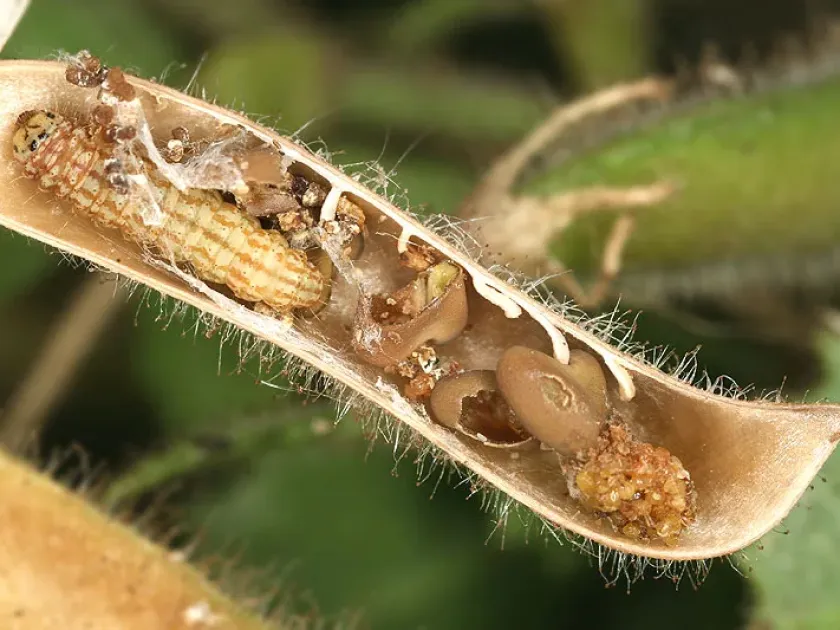
The larvae are typically 15–18 mm long and vary in color from pale green to reddish-brown. They possess a characteristic brown head capsule.
Pupation occurs inside a robust silk cocoon buried in the soil, which provides protection against environmental fluctuations and some natural predators.
These moths are primarily nocturnal, making them difficult to spot during daytime field surveys. They typically shelter in dense foliage or crop residues.
What it damages
This pest is a significant threat to various pulse crops, including soybeans, peas, chickpeas, lentils, and kidney beans, affecting both yield and quality.
Larvae bore into developing pods and consume the seeds. This feeding behavior causes severe physical damage, often destroying the entire content of the pod.
By damaging the integrity of the pod walls, the larvae facilitate the entry of pathogens and fungi, which can lead to further rot and quality degradation.
Economic losses can be substantial, often ranging from 20% to 40% of the total harvest depending on the intensity of the infestation during the pod-filling stage.
Furthermore, damaged seeds exhibit reduced germination rates, making the harvest unsuitable for use as seed stock for the following planting season.
When it appears
The adult moth emergence usually begins in late spring or early summer, coinciding with the flowering phase of major legume crops.
Depending on regional climatic conditions, the pest can complete two to three generations per year, ensuring continuous pressure throughout the growing season.
The second generation is generally the most destructive, as it targets the pods during the crucial seed-filling phase, maximizing the impact on final yields.
The insect overwinters as a pupa within the soil profile. Rising temperatures in spring trigger the emergence of the first generation of adults.
Peak activity occurs during warm, calm evenings, which are ideal for mating and egg-laying on the surfaces of pods and floral structures.
Signs of infestation
Detection starts with identifying adult moths near the crop canopy. Eggs are typically laid on the sepals or the surface of young, developing pods.
The most recognizable sign is the presence of small entry holes on the surface of the pods, often surrounded by larval frass and webbing.
Inside the pods, damaged seeds will show clear signs of consumption, ranging from deep gouges to total destruction of the seed tissue by the larvae.
Plants affected by the pest often show premature chlorosis or drying of specific pods, which stands out against the green background of healthy plants.
Significant infestations often lead to premature pod drop, causing a visible reduction in the density of mature pods per plant across the field.
Control measures
Cultural practices like deep autumn plowing are effective for exposing pupae to harsh winter conditions or predation, reducing the survival rate for the next season.
Implementing crop rotation, ensuring a significant interval between planting host legumes, helps break the lifecycle and reduce local pest pressure.
Selecting early-maturing varieties can help the crop avoid the peak infestation window of the most destructive generations of the pod borer.
Chemical control should be implemented based on scouting data. Insecticide applications are most effective during the egg-laying stage of the moth.
Utilizing pheromone traps for monitoring allows farmers to track population spikes and make informed decisions on the timing of protective insecticide sprays.
Taxonomy
- Latin name
- Etiella grisea
- Order
- Lepidoptera (butterflies)
- Family
- Pyralidae
- EPPO code
- ETIEGR
Discussion
No discussions yet — be the first.