
Mediterranean flour moth
Ephestia
Description
How to identify
The Mediterranean flour moth (Latin: Ephestia kuehniella) is a significant insect pest belonging to the Pyralidae family, commonly found in flour mills and food storage facilities worldwide.
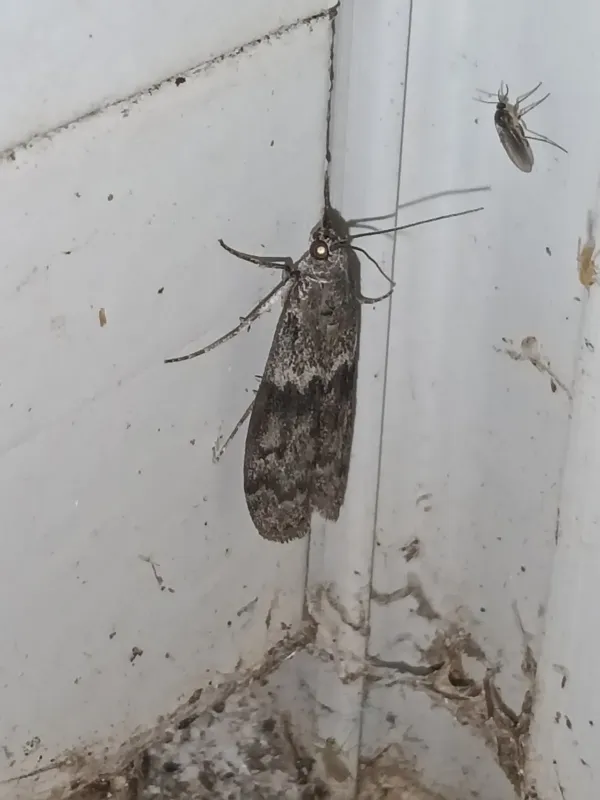
Adult moths have a wingspan of approximately 20 to 25 mm. Their forewings are grey with distinct dark, transverse, zigzag-shaped lines that provide effective camouflage against dusty surfaces.
The larvae, which reach 15–20 mm in length, have a pale white or pinkish body with a dark brown head capsule. Their appearance is relatively consistent, making them easier to identify during regular inspections.
Pupae are about 10 mm long, usually encased in a silken cocoon spun by the mature larva. These cocoons are often hidden in cracks, crevices, or within the machinery of processing plants.
The life cycle is highly temperature-dependent. In heated environments such as flour mills, the pest can continue its development throughout the entire year, leading to overlapping generations.
What it damages
Larvae are the primary cause of damage, as they feed on a wide variety of grain products including flour, cereals, bran, breakfast foods, and even dried fruits and nuts.
A distinctive behavior of these larvae is the production of copious amounts of silk webbing. As they move through the product, they create a dense, webbed mass that ruins the texture and quality of the flour or grain.
This webbing often leads to severe operational issues in industrial facilities, as the material can clog conveyors, sifters, and gravity spouts, forcing unexpected downtime for cleaning and repairs.
Beyond physical consumption, the larvae contaminate stored products with frass (excrement) and shed larval skins, rendering the product unmarketable and failing to meet food safety standards.
In addition to direct loss, the presence of the moth promotes the growth of secondary mold, which further deteriorates the quality of stored ingredients and poses health risks.
Signs of infestation
The most visible sign of infestation is the presence of adult moths flying around or resting on walls near storage areas during dusk or in dim light.
Evidence of larval activity includes the clumping of flour or grain products bound together by thin, sticky silk threads, often forming mats on the surface of the stored material.
Inspections of processing machinery often reveal accumulations of debris and silk webbing in corners, around bearings, and inside elevator legs where the pest prefers to settle.
A musty or rancid odor often develops in heavily infested stocks. This odor is caused by the combined presence of larval waste, silk, and the breakdown of the grain products themselves.
Locating empty pupal cases or discarded larval skins in the crevices of floors, walls, or equipment is a clear indication that a stable population has been established in the facility.
Control measures
Rigorous sanitation remains the first line of defense. This includes regular sweeping and vacuuming of all surfaces to remove dust and spilled product that can support larval growth.
Integrated Pest Management (IPM) practices, including the use of pheromone traps, are highly recommended to monitor adult population levels and determine the appropriate timing for interventions.
Chemical control usually involves fumigation with phosphine-based products. This must be carried out by professionals in sealed environments to ensure the mortality of all life stages.
Maintenance of equipment is crucial; sealing cracks and ensuring that screens on windows and ventilation shafts are intact prevents the migration of moths between different storage areas.
Maintaining cooler storage temperatures and managing humidity levels can significantly reduce the speed of the life cycle and inhibit the overall population growth of the moth.
Taxonomy
- Latin name
- Ephestia
- Order
- Lepidoptera (butterflies)
- Family
- Pyralidae
- EPPO code
- EPHESP
Discussion
No discussions yet — be the first.