
Eldana borer
Eldana
Description
How to identify
The Eldana borer (Eldana saccharina) is a moth belonging to the family Pyralidae. The adult moth has a wing span of 25–35 mm and exhibits a dull, straw-colored to brownish appearance, which provides excellent camouflage against the bark of host plants.
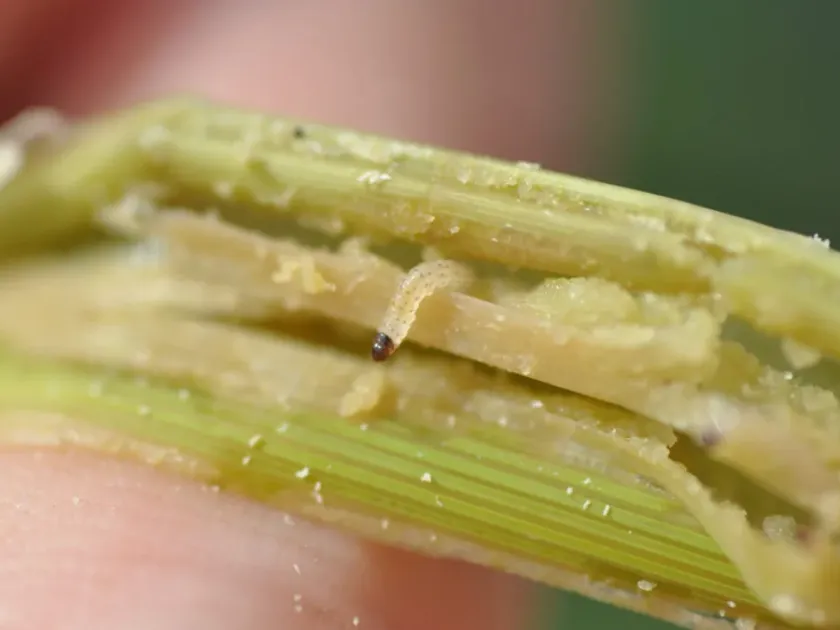
The larval stage is the most destructive part of its life cycle. Larvae are initially pale but darken as they mature, developing a distinct grayish-brown color with characteristic dark spots on the sides of their segments, making them identifiable to trained agronomists.
The life cycle length is heavily influenced by temperature, typically ranging from 40 to 60 days in optimal tropical conditions. This rapid development allows for multiple generations per year, leading to overlapping life stages in a single field.
Females lay eggs in hidden locations, such as leaf sheaths or crevices in the stem. This behavior protects the offspring from environmental stressors and biological predators, making manual scouting for eggs extremely challenging.
Pupation occurs within the plant tissue. Before emerging, the moth prepares a silk-lined exit hole in the stem. Recognizing these exit holes is crucial for determining the timing of population peaks and planning intervention strategies.
What it damages
The primary economic impact is caused by larvae tunneling into the stalks of sugarcane. This feeding behavior destroys the vascular tissue, leading to stunted growth, reduced stalk weight, and a significant decrease in sucrose content.
Beyond sugarcane, the pest affects crops like maize and sorghum. It also utilizes wild grasses as alternative hosts, which allows the insect to maintain high population densities throughout the year, even when primary crops are not available.
Signs of infestation
One of the earliest signs is the "dead heart" symptom, where the central leaf of the plant withers and dies because the larva has severed the growing point. This is a clear indicator that the plant has been colonized by the borer.
External inspection of stems often reveals small holes, which are entrance or exit points for the larvae. These holes provide entryways for secondary infections, including fungal pathogens and bacterial rots, which further degrade the crop.
Internally, the stalk becomes hollowed out as larvae feed on the pith. The presence of coarse, dark frass (larval excrement) within these tunnels is a diagnostic feature of an Eldana infestation, distinguishing it from other borers.
Stalk breakage is a common consequence of heavy infestation. When the structural integrity of the cane is compromised by internal tunneling, the plants become susceptible to wind damage, leading to significant lodging and harvest losses.
Infected fields often show uneven growth and chlorosis. Because the larvae disrupt water and nutrient transport, the affected stalks appear thinner and lighter, resulting in lower industrial yield at the sugar processing plant.
Control measures
Biological control methods are a cornerstone of managing this pest. The use of parasitoid wasps, such as Trichogramma species, has shown success in reducing larval populations by targeting the eggs before they can hatch.
Cultural practices are essential for long-term suppression. Harvesting cane at the appropriate time and avoiding extended ratoon periods helps break the life cycle of the moth, as the pest thrives in older, overgrown fields.
Sanitation is vital: crop residues should be removed or incorporated into the soil immediately after harvest to destroy larvae and pupae remaining in the stubble. This reduces the inoculum for the next planting season.
Planting resistant varieties is the most sustainable solution. Breeding programs focus on structural stalk traits and chemical defenses that make it difficult for the larvae to penetrate or survive within the stem tissue.
- Using pheromone traps for monitoring adult moth flight activity.
- Maintaining field hygiene by clearing weeds that host the pest.
- Applying targeted insecticides only when monitoring indicates threshold levels.
Taxonomy
- Latin name
- Eldana
- Order
- Lepidoptera (butterflies)
- Family
- Pyralidae
- EPPO code
- ELDASP
Discussion
No discussions yet — be the first.