
Carob moth
Ectomyelois
Description
How to identify
The carob moth (Ectomyelois), belonging to the family Pyralidae, is a destructive pest that affects various agricultural commodities. It is known for its ability to thrive in both field and warehouse conditions.
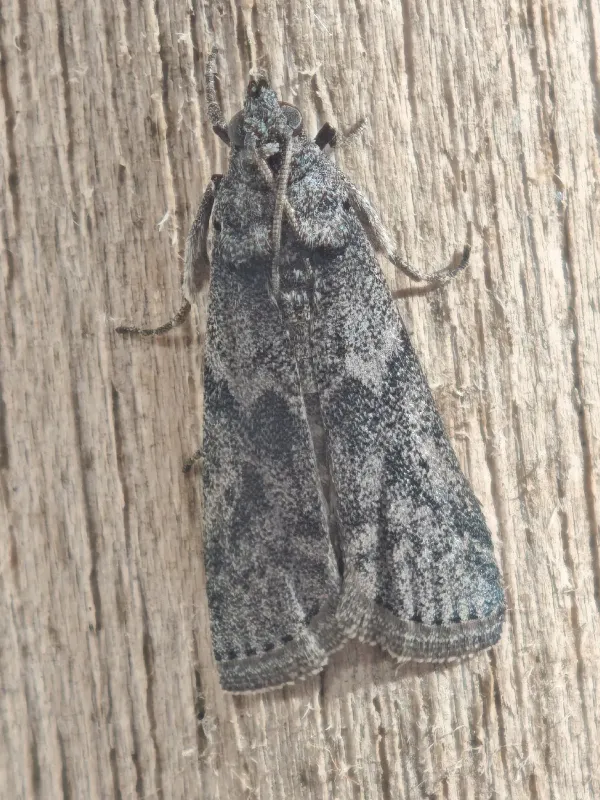
The adult moth has a wingspan of approximately 20–25 mm. The forewings are characterized by a mottled grey-brown appearance with faint dark markings, providing effective camouflage against tree bark.
The larvae progress through several instars. Mature larvae measure up to 20 mm in length and exhibit a color variation from off-white to reddish-pink, depending largely on their host plant.
Pupation occurs within a silken cocoon. These cocoons are typically found inside damaged fruit, under bark, or in other protected crevices within the orchard environment.
With high reproductive potential, this species can rapidly establish large populations. The lifecycle timing is significantly influenced by ambient temperature and the availability of suitable food sources.
What it damages
The carob moth is a polyphagous pest that infests a wide range of crops, including citrus, apples, pomegranates, dates, almonds, and walnuts, causing severe losses to growers.
Larvae are responsible for the damage. They tunnel deep into the fruit or nut, consuming the interior contents and leaving behind tunnels packed with frass and webbing.
Infested fruit often drop prematurely and are rendered unmarketable. The holes created by the larvae provide entry points for secondary pathogens, such as fungi, leading to rot and further quality degradation.
In storage facilities, the moth is highly destructive. It can move easily between adjacent fruits, leading to the rapid spread of infestation throughout the harvested stock.
Economic impact includes direct loss of fruit yield, decreased product quality, increased costs for sorting, and the necessity for rigorous post-harvest disinfection protocols.
When it appears
Adult moths typically emerge in late spring as temperatures rise. Depending on the geographical region, the pest can complete several generations throughout a single growing season.
Egg-laying usually occurs on the fruit surface. Females often target sites near the stem or existing mechanical wounds, which facilitate the entry of larvae into the fruit tissue.
The period of larval feeding peaks during the fruit maturation stage. This is a critical window when the pest is most active and visible signs of damage begin to appear on the crop.
Overwintering occurs primarily in the larval stage. They survive the cold season in diapause within mummified fruit left on trees or within protected crevices in the orchard.
In temperature-controlled storage, the lifecycle can continue throughout the year, as the insects are not limited by seasonal changes in the artificial environment.
Signs of infestation
The primary sign of infestation is the presence of frass (larval excrement) on the fruit surface, held together by silk webbing. This often creates a visible patch near the entry point.
Small holes in the skin of the fruit or nut are telltale indicators of larval entry. These holes are frequently surrounded by dark, discolored tissue resulting from the larvae feeding.
Premature fruit drop or irregular discoloration on the exterior of the fruit can suggest that larval feeding is occurring internally, disrupting the fruit's normal development.
Within storage, webbing between stored products or on packaging materials is a clear indicator of active infestation. Fruits may also feel soft or hollow when inspected.
Confirmation is achieved by opening the suspected fruit or nut to locate the larvae or their cast skins, confirming the presence of the carob moth in the crop.
Control measures
Cultural control is essential. This includes meticulous removal of mummified fruit from trees and the ground, which eliminates the primary breeding and overwintering sites.
Pheromone traps are highly effective for monitoring population densities and can also serve to disrupt the mating process by mass-trapping males in the orchard.
Chemical control involves the application of insecticides targeted at the time of egg hatching to prevent larvae from entering the fruit tissue, where they are protected.
Biological control, including the release of specific parasitoids and the use of bacterial insecticides, offers an environmentally friendly alternative for managing the pest.
In storage, fumigation and maintaining low temperatures are standard practices to arrest larval development and prevent the spread of the pest during the post-harvest phase.
Taxonomy
- Latin name
- Ectomyelois
- Order
- Lepidoptera (butterflies)
- Family
- Pyralidae
- EPPO code
- ECTOSP
Discussion
No discussions yet — be the first.