
Dioryctria merkeli
Dioryctria merkeli
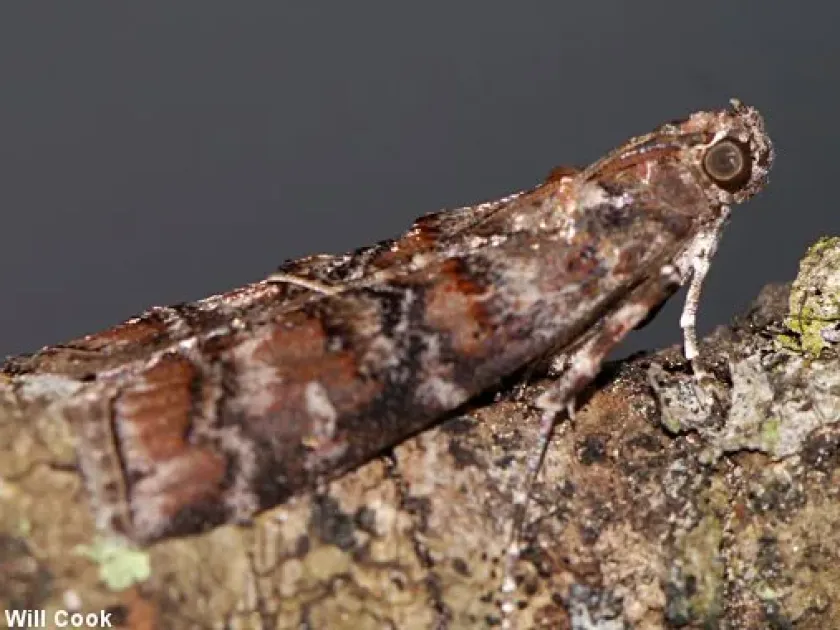
Description
How to identify
Dioryctria merkeli is a moth species belonging to the Pyralidae family, subfamily Phycitinae. It is widely recognized as a serious pest of various coniferous species.
The adult moth features a wingspan of approximately 20–25 mm. The forewings are characterized by grayish-brown patterns with distinct dark transverse lines.
The larvae are typical of the genus, reaching a length of about 20 mm. Their coloration ranges from greyish to reddish-brown, with prominent pinacula on the body.
The pupae are typically found inside the damaged cones, sheltered within silk-lined cocoons where the transformation to adulthood takes place.
Accurate identification usually involves morphological examination of the larvae or rearing them to the adult stage for taxonomic confirmation.
What it damages
The primary damage caused by D. merkeli is focused on the reproductive organs of pines, significantly impacting seed production and forest regeneration.
Larvae bore into young cones, consuming the inner scales and developing seeds, which leads to the premature abortion or necrosis of the cones.
Besides cones, larvae may feed on young shoots, causing mechanical damage that often leads to stunted growth or the terminal bud's death.
Severe infestations can result in the loss of the vast majority of the annual seed crop, posing a major threat to seed orchards and nurseries.
The entry points created by the larvae provide easy access for fungi and other wood-boring insects, further weakening the tree's health.
When it appears
Adult moths are typically active during the summer months, with the peak flight period occurring between June and July in most temperate regions.
Eggs are laid by females on the surface of developing cones or near the base of shoots, ensuring larvae have immediate access to food upon hatching.
The larval stage coincides with the period of rapid cone development, during which they feed voraciously on the nutritious tissues.
Overwintering occurs primarily as early-instar larvae in tough, protective cocoons hidden in bark crevices or pine needle litter.
Environmental factors, such as temperature and humidity, play a crucial role in the timing of emergence and the overall development speed of the population.
Signs of infestation
The presence of D. merkeli is most easily detected by resin exudation (pitch flow) on the surface of attacked cones or terminal shoots.
Frass (larval excrement) mixed with resin often accumulates at the entrance hole, creating a conspicuous dark mound on the exterior of the cone.
Affected cones exhibit abnormal discoloration, turning brown or yellow while still on the branch, and often dropping prematurely from the tree.
Terminal shoots may show signs of wilting or bending, as the internal feeding disrupts the normal vascular flow within the plant tissue.
During a high-density infestation, the canopy may appear sparse, with numerous dead cones and damaged tips visible upon close inspection.
Control measures
Silvicultural practices, such as the removal of heavily infested trees during sanitation thinning, are fundamental in reducing population outbreaks.
Monitoring using synthetic pheromone traps is an effective strategy to determine the timing of the moth's flight and assess the risk level.
Biological control, including the use of Bacillus thuringiensis or promoting local populations of parasitic wasps, can mitigate larval numbers.
Chemical applications are generally restricted to nursery settings and must be timed precisely to target larvae before they bore deep into the cones.
- Regular forest health surveys.
- Manual collection and destruction of infested cones.
- Enhancing habitat for natural predators and parasitoids.
Taxonomy
- Latin name
- Dioryctria merkeli
- Order
- Lepidoptera (butterflies)
- Family
- Pyralidae
- EPPO code
- DIORME
Discussion
No discussions yet — be the first.