
Pine cone moth
Dioryctria disclusa
Description
How to identify
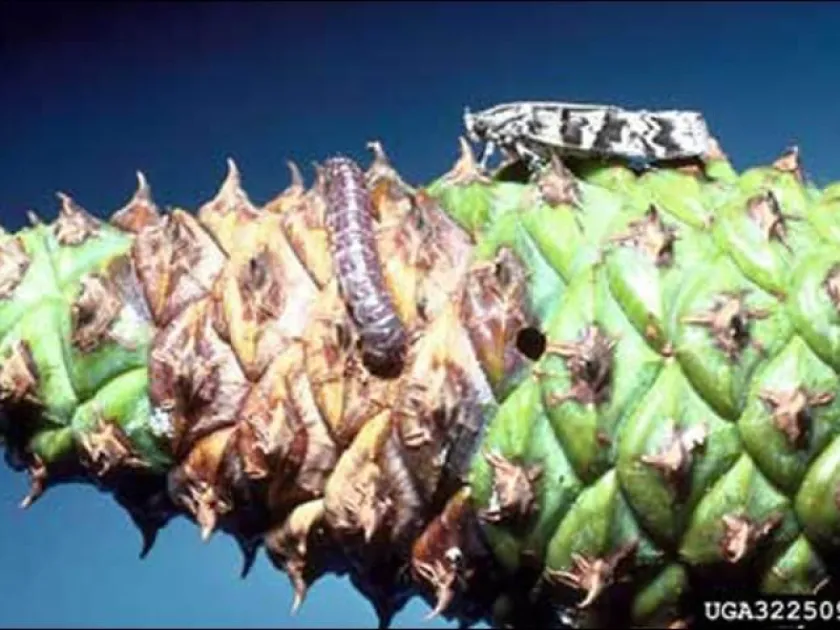
The pine cone moth (Dioryctria disclusa) is a small lepidopteran insect belonging to the Pyralidae family. The adult moth features a wingspan of approximately 20 to 25 mm, with forewings that exhibit a complex camouflage pattern of grey, brown, and dark shades, allowing it to blend seamlessly into the pine bark.
The larvae are typically brownish-red or pale yellow with a distinct dark brown head. These caterpillars are specialized to develop inside the cones of various pine species. Their growth is closely tied to the internal structure of the cone, where they feed throughout their larval stage.
What it damages
This pest specifically targets the developing cones of pine trees. The larvae penetrate the scales and feed on the seeds and the internal tissue of the cone, effectively destroying the reproductive potential of the host tree.
In seed orchards and forest nurseries, the damage is severe as it reduces the yield of viable seeds required for reforestation efforts. Even light infestations can lead to significant economic losses in the forestry sector, making management a priority for silviculturists.
When it appears
Adult moths emerge in early to mid-summer, typically between June and July. During this time, they mate and lay their eggs on the young, developing cones. Once hatched, the larvae immediately bore into the cone.
The larvae remain active inside the cones for the duration of the summer and early autumn. By late autumn, they prepare to overwinter, often pupating within the mined cone or descending into the soil or needle litter beneath the host tree.
Signs of infestation
The most reliable sign of an infestation is the presence of brown, pitchy frass and sawdust extruded from small entry holes on the cone surface. These piles of frass are often mixed with resin, creating a sticky, noticeable accumulation.
Affected cones often stop growing, turn brown prematurely, and become shriveled. They are frequently unable to open naturally to release seeds. Inspecting the ground beneath trees for premature cone drop can also indicate a high level of larval activity in the canopy.
Control measures
Cultural control is the most effective approach for managing this pest. Harvesting and destroying infested cones before the larvae exit can significantly reduce local populations. This practice is essential for maintaining the health of seed orchards.
Where necessary, chemical control using systemic insecticides may be employed in high-value seed production areas. It is crucial to monitor the flight periods of the adults using pheromone traps to time any interventions accurately, ensuring maximum efficacy while minimizing environmental impact.
Taxonomy
- Latin name
- Dioryctria disclusa
- Order
- Lepidoptera (butterflies)
- Family
- Pyralidae
- EPPO code
- DIORDI
Discussion
No discussions yet — be the first.