
Pine coneworm
Dioryctria auranticella
Description
How to identify
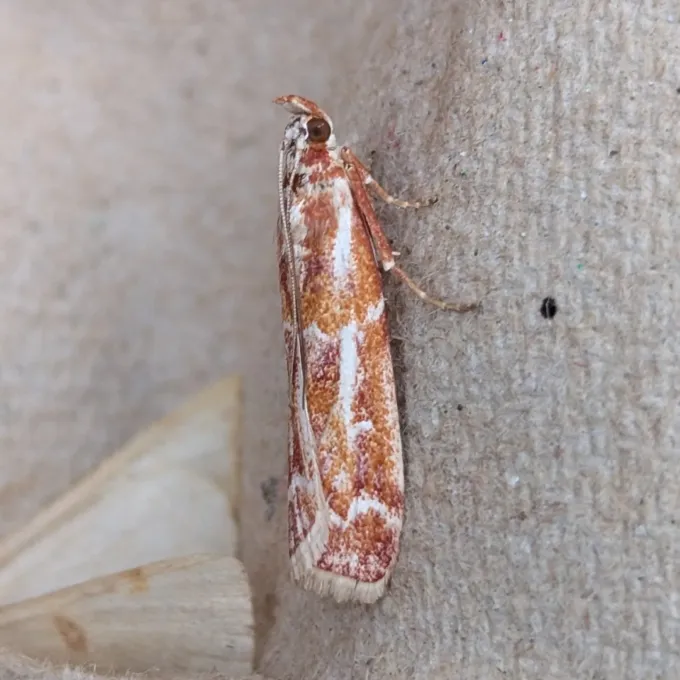
The Pine coneworm (Dioryctria auranticella) is a moth belonging to the family Pyralidae. The adult moth has a wingspan of approximately 25–30 mm, with grayish-brown forewings adorned with distinct zigzag patterns that provide camouflage against pine bark.
The larvae, or caterpillars, reach a length of up to 20 mm. They exhibit a cylindrical body shape, ranging in color from whitish to pinkish-grey, featuring a distinctively hardened dark head capsule and dark plates on the thoracic segments.
The pupal stage occurs within the infested cone or in the ground litter beneath the tree. The larva spins a robust, dense silk cocoon, which serves as a protective barrier against environmental fluctuations and some predatory insects during the overwintering period.
The life cycle of this species is highly synchronized with the growth of pine cones. It typically completes one generation per year, making it a persistent and challenging pest in both commercial plantations and native forest stands.
Understanding the moth's morphological stages is crucial for accurate field identification. Professionals should look for these distinct traits during scouting to distinguish them from other cone-boring insects found in coniferous ecosystems.
What it damages
The primary hosts for Dioryctria auranticella are various pine species, including the Scots pine. The pest is specialized to attack the reproductive organs of the tree, specifically targeting the developing seeds inside the cones.
As the larvae bore into the young cones, they feed on the scales and the central core. This feeding behavior causes the cone to cease growing, often leading to discoloration and premature dropping of the fruit well before maturity.
The economic impact is concentrated on seed production. By destroying the seeds, the Pine coneworm significantly reduces the yield of viable seeds, which is detrimental to reforestation efforts and nursery operations that rely on natural cone harvests.
Furthermore, the damage caused by the larvae creates entry points for secondary pathogens, such as fungi and bacteria. These infections can cause the internal tissues of the cone to rot, rendering even intact cones unusable.
In high-density populations, the infestation rate can be devastating, resulting in the loss of nearly the entire potential seed crop of a stand, which emphasizes the need for rigorous pest management protocols.
When it appears
Adult moths typically emerge in late spring or early summer, coinciding with the period when young cones begin to form and grow on the trees. This is the optimal time for mating and oviposition.
The females lay eggs on or near the developing cones. The subsequent larval hatching happens shortly thereafter, and the larvae quickly burrow into the tissue to begin their feeding cycle, protected from predators and weather.
The larvae remain active within the cones throughout the summer months. This period represents the peak of their destructive activity, as they rapidly gain biomass and consume the essential reproductive tissues of the host plant.
By late summer or early autumn, the mature larvae prepare for hibernation. Depending on the climate and specific developmental cues, they may pupate before winter or overwinter as larvae within their protective cocoons.
For forestry managers, the period from June to August is critical. Monitoring flight patterns and early signs of larval entry is essential for executing control measures before the insects become deeply embedded in the cones.
Signs of infestation
The most reliable sign of a Pine coneworm infestation is the presence of frass (larval excrement and wood particles) on the exterior of the cone. This material is often held together by silk threads near the entrance holes.
Prematurely yellowing or browning cones in the canopy, while neighboring cones remain healthy and green, are strong indicators of larval presence. Such cones are often distorted or underdeveloped compared to normal ones.
- Presence of resin or sap exudation around the larval entry points.
- Early shedding of cones that litter the ground under the trees in mid-summer.
- Intricate tunnel patterns visible when dissecting a damaged cone.
The inner structure of the cone will show irregular holes and a lack of sound seeds. In advanced stages of infestation, the interior may be hollowed out and filled with debris, making the cone lightweight and brittle.
Using pheromone-based traps is a highly effective way to confirm the presence of adult moths in the area. Once the presence is confirmed, ground crews can focus their efforts on targeted inspection of the trees.
Control measures
Chemical control focuses on the application of systemic or contact insecticides during the early larval stage, before the insects tunnel deep into the cones. Proper timing is vital to ensure maximum efficacy of the treatment.
Biological control involves the encouragement of native parasitoids and predators that help regulate the population density of the coneworm. Protecting these natural enemies contributes to a more sustainable forest ecosystem.
Silvicultural practices, such as the removal and disposal of infested cones, are highly recommended for seed orchards. Burning or deep burying of collected debris helps to eliminate overwintering pupae and larvae from the area.
Maintaining a healthy stand through proper thinning and site management increases the trees' vigor, allowing them to better withstand insect pressure and recover from minor losses without needing heavy chemical interventions.
Ongoing monitoring programs, including visual inspections and the use of trap technology, provide essential data for making informed decisions regarding pest management, ensuring the protection of valuable seed resources.
Taxonomy
- Latin name
- Dioryctria auranticella
- Order
- Lepidoptera (butterflies)
- Family
- Pyralidae
- EPPO code
- DIORAU
Discussion
No discussions yet — be the first.