
Spruce cone moth
Dioryctria abietella
Description
How to identify
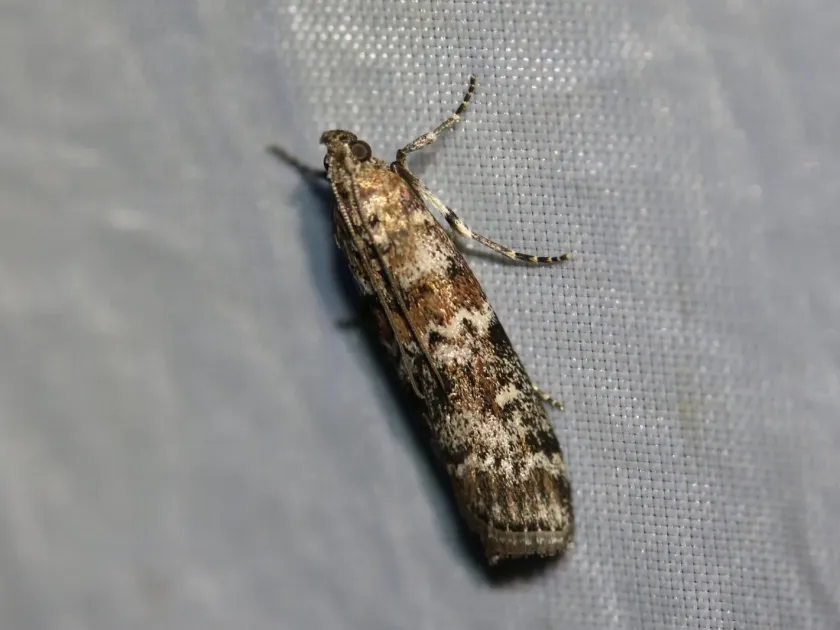
The spruce cone moth (Dioryctria abietella) is a species of moth belonging to the Pyralidae family. The adult moth has a wingspan of approximately 25–30 mm, with greyish-brown forewings adorned with intricate zigzag patterns and darker transverse lines.
The larvae, or caterpillars, reach a length of 20 mm and possess a dull yellowish to reddish-brown body. They are distinguished by their dark-coloured head and distinct thoracic plates, which are visible to the naked eye during inspection.
Typically, this species completes one life cycle per year. Larvae in their final instar spend the winter in silken cocoons located within the forest litter or in the crevices of tree bark, entering a period of diapause until spring.
Adult moths emerge in late spring or early summer, a period that coincides with the growth and maturation of young cones on host trees. The moths are primarily nocturnal, remaining hidden in the dense canopy during the day.
The biological development of this pest is highly dependent on regional climate conditions. In warmer southern climates, the species may occasionally produce a partial second generation if environmental conditions allow.
What it damages
The primary hosts for the spruce cone moth are members of the Pinaceae family, particularly Norway spruce. However, it also poses a significant threat to various species of pine, fir, and larch.
The larvae feed exclusively on the reproductive organs of the trees, specifically targeting the cones. They burrow into the cones, consuming seeds and scales, which destroys the plant's ability to reproduce and causes total seed loss.
In seed orchards and forest nurseries, the damage caused by these moths can be severe. Outbreaks may result in the destruction of up to 90 percent of the annual seed crop, posing a significant challenge to reforestation efforts.
Secondary damage occurs when larvae feed on tender shoots or the cambium layer under the bark of young branches. This can lead to shoot dieback, stunted growth, and structural deformities in the tree crown.
Excessive resin flow, or resinosis, often occurs in areas where the larvae have penetrated the bark or cone tissues. This reaction weakens the tree and attracts secondary pests like bark beetles, increasing overall mortality risk.
Signs of infestation
One of the most noticeable signs of an infestation is the presence of brown frass and excrement pellets on the exterior of the cones, held together by fine silken threads woven by the larvae.
Affected cones often exhibit premature discolouration, turning yellow or brown mid-summer. Unlike healthy cones, these infested ones cease growing and eventually wither away while still attached to the tree.
Internal examination of a damaged cone will reveal extensive tunnels bored throughout the tissue. These tunnels are typically packed with larval waste, making the structure fragile and prone to breaking.
When shoots are targeted, signs include the wilting and curvature of the terminal tips. Small entry holes surrounded by hardened resin droplets are usually visible on the affected branches at the point of infestation.
In autumn, finding numerous prematurely fallen, hollowed-out cones under the tree canopy is a strong indicator of a completed infestation cycle, as the larvae have vacated the cones to pupate.
Control measures
Cultural control measures include the diligent collection and removal of infested cones from the ground during the autumn and winter months. This physically eliminates the hibernating larvae, significantly reducing the population for the following year.
Chemical intervention involves applying systemic insecticides during the peak period of egg-hatching. Careful timing is critical to ensure the chemicals reach the larvae before they burrow too deeply into the cones.
Biological control strategies often employ pheromone traps for monitoring and mating disruption. This method is highly effective in reducing the number of fertile egg-laying females without harming the environment.
Encouraging the presence of natural predators, such as parasitic wasps and predatory beetles, is essential. These beneficial insects play a vital role in regulating moth populations in balanced forest ecosystems.
In silvicultural planning, creating mixed-species plantations rather than monocultures is recommended. Diversity in tree species reduces the risk of massive outbreaks, as it disrupts the availability of hosts required by the moth for development.
Taxonomy
- Latin name
- Dioryctria abietella
- Order
- Lepidoptera (butterflies)
- Family
- Pyralidae
- EPPO code
- DIORAB
Discussion
No discussions yet — be the first.