
Cryptoblabes gnidiella
Cryptoblabes gnidiella
Description
How to identify
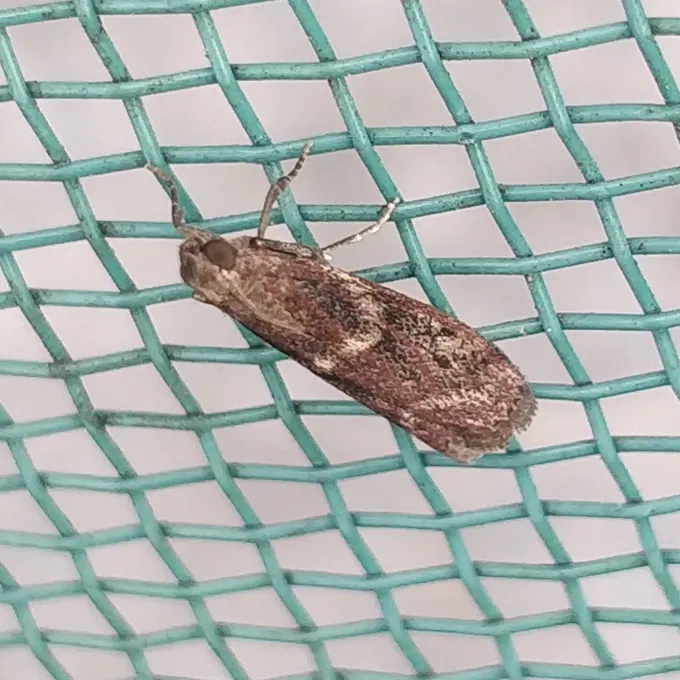
Cryptoblabes gnidiella, commonly known as the honeydew moth, belongs to the family Pyralidae. The adult moth has a wingspan of 14–20 mm, with forewings colored in shades of greyish-brown featuring a distinct pale transverse band.
The eggs are small, oval-shaped, and usually laid singly or in small clusters on the surface of fruit or leaves. Larvae progress through five instars, varying in color from light yellow to a brownish-pink with dark longitudinal stripes.
Pupation occurs within a sturdy silk cocoon constructed by the mature larva. These cocoons are often hidden in fruit crevices, under tree bark, or among debris, remaining there for 10–14 days before adult emergence.
Adults are nocturnal and tend to remain inactive during daylight hours. They are highly responsive to environmental temperatures, with higher humidity levels often favoring their reproductive cycles.
The species overwinters primarily in the pupal stage within protected niches. Emergence of the first generation occurs in early spring, coinciding with the initial growth stages of the host plants.
What it damages
This pest is a highly polyphagous insect, capable of causing significant economic losses across various agricultural crops, with grapevines being a primary target for infestation.
In vineyards, larvae feed on flower clusters and berries. The feeding activity creates entry points for fungal pathogens, significantly increasing the risk of secondary infections like grey mold.
Citrus crops, including oranges, lemons, and pomegranates, are also susceptible. Larvae burrow into the fruit, causing tissue decay and leading to premature fruit drop and reduced market value.
The pest is also known to infest stone fruits and pome fruits during the ripening phase. The hidden nature of their feeding makes them particularly difficult to detect in the early stages.
The versatility of its feeding habits allows the honeydew moth to persist in orchards and vineyards throughout the entire season, moving between available food sources as they become ripe.
Signs of infestation
One of the most obvious signs of infestation is the presence of silk webbing around berries or fruit clusters. Larval frass (excrement) is frequently visible trapped within this webbing.
Damaged berries on grapes may become shriveled or discolored, eventually rotting if left untreated. This damage often ruins the aesthetic quality of the harvest and compromises storage potential.
On citrus fruits, evidence of the pest appears as small entry holes near the stem or through cracks in the skin. Internal tunnels and necrotic tissue indicate the larva's presence within the fruit.
Early-season signs may include leaf rolling or minor damage to foliage. While this is less economically significant, it serves as a warning of an emerging population in the orchard.
Monitoring using pheromone traps is the standard practice for field detection. High trap catches indicate a need for immediate intervention to prevent larval penetration into the fruit.
Control measures
Cultural control methods, such as meticulous orchard sanitation and the removal of mummified fruit, are essential to reduce the overwintering population of the moth.
Proper pruning practices and canopy management are vital. By ensuring adequate light penetration and airflow, farmers can create a less favorable environment for larvae to establish their nests.
Chemical control should be timed based on pheromone trap data to ensure that sprays target neonate larvae before they burrow into the fruit. Using B. thuringiensis-based products can be an effective biological alternative.
The integration of natural predators and parasitoids can help suppress population spikes. Maintaining biodiversity around the crop area supports these beneficial insects in their role as biological agents.
An effective management strategy combines regular field monitoring, strategic timing of applications, and physical removal of infested material to maintain a healthy and profitable harvest.
Taxonomy
- Latin name
- Cryptoblabes gnidiella
- Order
- Lepidoptera (butterflies)
- Family
- Pyralidae
- EPPO code
- CRYBGN
Discussion
No discussions yet — be the first.