
Cryptoblabes aliena
Cryptoblabes aliena
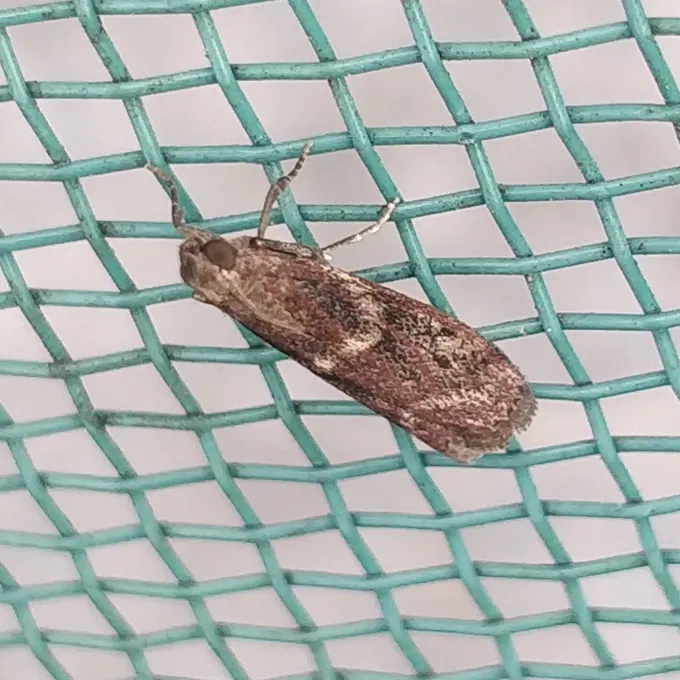
Description
How to identify
Cryptoblabes aliena is a member of the order Lepidoptera and the family Pyralidae. It is a small moth, typically measuring 12 to 15 millimeters in wingspan.
The adult moths exhibit a characteristic coloration of the forewings, ranging from grayish-brown to dark brown, marked with distinct cross-lines and light-colored spots.
Larvae (caterpillars) of this species grow up to 10–12 millimeters in length. They are characterized by a mobile body, generally colored in grayish-green or brownish tones with a dark longitudinal dorsal stripe.
Identifying the pest in the field is challenging due to the cryptic nature of the larvae, which hide within plant tissues or webs, necessitating the use of pheromone traps for monitoring.
The insect undergoes a metamorphosis involving the egg stage, five larval instars, pupation, and the adult moth stage, with development rates heavily dependent on ambient temperature.
What it damages
Cryptoblabes aliena is a polyphagous pest capable of attacking a wide variety of cultivated and wild plant species across several botanical families.
Primary hosts include tropical and subtropical crops such as sorghum, maize, sugarcane, and various fruit-bearing trees like apples, grapes, and citrus species.
In regions where it has been introduced, the pest is noted for feeding on both reproductive and vegetative plant organs, causing significant stress to the host plant.
Economic damage is most severe when larvae feed on flowers and developing fruit, leading to substantial yield losses and degradation of the aesthetic and market quality of the produce.
Larval feeding activity often creates entry points for secondary fungal and bacterial pathogens, leading to accelerated decay of the affected plant tissues.
Signs of infestation
The first indicator of an infestation is the presence of silk webbing that binds together plant parts, such as leaves, flower clusters, or developing fruits.
Detailed examination of inflorescences often reveals larval frass (excrement) accumulated within the loose webbing, which is a hallmark of larval activity.
On fruits, deep entry holes bored by the larvae are commonly observed, frequently accompanied by premature fruit drop or the rotting of the affected area.
At the points where larvae penetrate the tissues of stems or fruits, one may observe epidermal discoloration and sap leakage, signaling tissue damage.
In cases of high infestation density, plants exhibit general vigor decline, characterized by distorted shoot growth and premature wilting of flower stalks.
Control measures
Chemical control strategies involve the use of systemic and contact-stomach insecticides targeting the early larval instars when they are most vulnerable.
Biological control efforts focus on the introduction or conservation of natural enemies, such as braconid parasitoids, which help regulate population levels effectively.
Cultural management is vital: sanitation practices, including the removal and destruction of crop residues where pupae may overwinter, are essential for limiting future generations.
The strategic placement of pheromone traps serves dual purposes: early detection of adult migration and reduction of the male population through mass trapping.
- Implementation of crop rotation and spatial isolation of susceptible plants.
- Application of bio-insecticides based on Bacillus thuringiensis for safer control.
- Monitoring adult population dynamics using light traps in orchards.
- Maintaining optimal irrigation to support plant resilience against pest pressure.
Taxonomy
- Latin name
- Cryptoblabes aliena
- Order
- Lepidoptera (butterflies)
- Family
- Pyralidae
- EPPO code
- CRYBAL
Discussion
No discussions yet — be the first.