
Cryptoblabes adoceta
Cryptoblabes adoceta
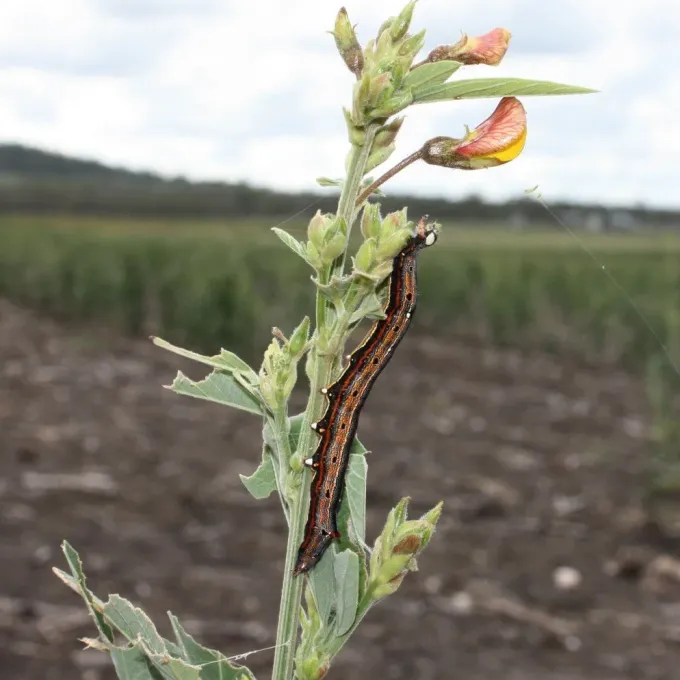
Description
How to identify
Cryptoblabes adoceta is a moth species belonging to the order Lepidoptera and the family Pyralidae. It is a well-known pest that specifically targets the reproductive structures of certain grain crops.
The adult moth is relatively small with cryptic coloration, which helps it blend in with the stems and foliage of the host plants, making it difficult to detect during daylight hours.
The larvae, or caterpillars, undergo several developmental instars. They are typically pale initially and darken as they mature, often showing a reddish-brown hue depending on their diet.
The life cycle is heavily influenced by environmental temperature and moisture. In warmer regions, this pest can complete several generations within a single season, leading to potential outbreaks.
Proper identification usually requires an examination of wing venation or the use of pheromone traps, as the moth shares visual similarities with other related species in the Pyralidae family.
What it damages
The primary hosts for Cryptoblabes adoceta larvae are cereal crops, with sorghum and various millet species being the most vulnerable. The larvae specifically target the panicles and developing seeds.
Larval feeding results in the destruction of the grain endosperm. By hollowing out the seeds, the larvae leave behind empty husks and large amounts of frass, rendering the crop unmarketable.
The feeding activity often creates wounds that act as entry points for various fungal and bacterial pathogens, leading to secondary infections such as head blight or grain rot.
Damage is most severe during the grain-filling stage. If the infestation is high, the overall yield can be significantly reduced, impacting both the quantity and quality of the harvested grain.
Field studies indicate that without proper intervention, localized infestations can lead to significant economic losses, especially in regions with high planting density and favorable conditions for the pest.
Signs of infestation
The most reliable sign of an infestation is the presence of fine silk webbing woven by the larvae around the flower clusters or maturing grains within the panicle.
Evidence of larval activity is often found in the form of accumulated frass (excrement) pellets, which appear as small dark grains stuck within the webbed areas of the plant.
Patches of prematurely discolored or withered spikelets are indicators that larvae are feeding internally within the grain structures or at the base of the panicle.
Upon closer inspection of the panicles, one can find the larvae themselves or the empty, damaged shells of individual seeds that have been hollowed out.
Increased moth activity, often observed during dusk or dawn hours near field borders, suggests that egg-laying is occurring, signaling the need for immediate field assessment.
Control measures
Management of Cryptoblabes adoceta requires an integrated pest management (IPM) strategy that combines monitoring, cultural practices, and chemical or biological control.
Cultural practices include the removal of crop residues and wild host grasses after harvest to minimize the number of overwintering pupae in the environment.
Chemical control should be timed to target neonate larvae before they burrow into the panicles and enclose themselves in protective webbing, as this makes them inaccessible to sprays.
Biological control methods, such as the release of egg parasitoids like Trichogramma species, have shown promise in reducing population pressure in organic or sustainable farming systems.
- Use pheromone traps for early detection and timing of insecticide applications.
- Implement strict crop rotation and weed management programs.
- Apply selective insecticides during the panicle emergence stage.
- Choose sorghum varieties with tighter or more compact panicle structures.
Taxonomy
- Latin name
- Cryptoblabes adoceta
- Order
- Lepidoptera (butterflies)
- Family
- Pyralidae
- EPPO code
- CRYBAD
Discussion
No discussions yet — be the first.