
Honeydew moth
Cryptoblabes
Description
How to identify
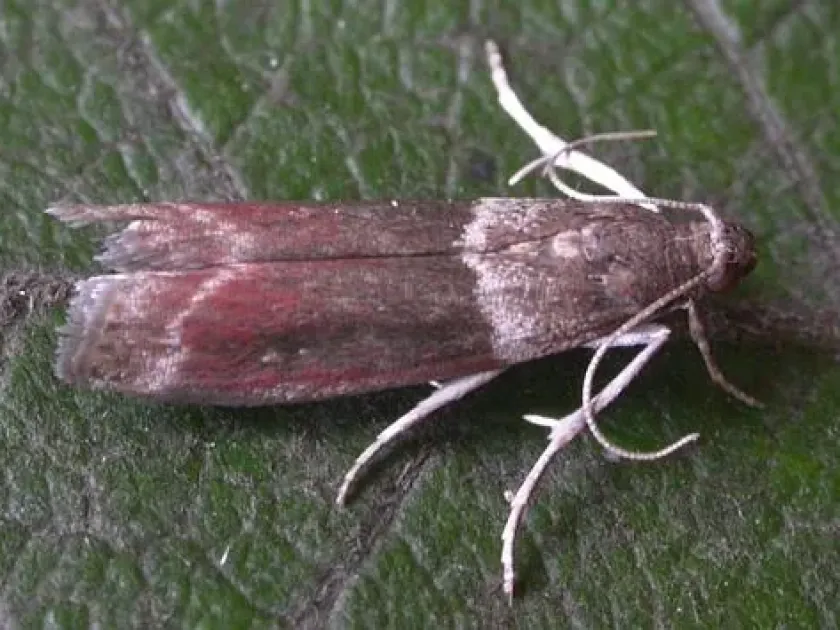
The honeydew moth (Cryptoblabes gnidiella) is a moth of the Pyralidae family, well-known for its role as a significant agricultural pest.
The adult moth is relatively small with a wingspan of 15–20 mm, characterized by greyish-brown forewings with distinct dark patterns and crosslines.
The larvae progress through several developmental stages, eventually reaching up to 12 mm in length with a brownish or greenish color and light stripes.
Eggs are typically laid by females on the surface of fruit, flowers, or leaves of the host plants, either individually or in small clusters.
The pupa stage occurs within a white, dense silk cocoon, usually spun by the mature larva in sheltered areas like fruit cracks or tree crevices.
What it damages
This polyphagous pest is particularly destructive to vineyards, where larvae bore into grapes, causing bunch rot and significant loss of fruit quality.
Beyond grapes, it heavily impacts various fruit-bearing trees including citrus, peaches, apples, and pomegranates by damaging both fruit and foliage.
In greenhouse environments, it can infest a wide range of ornamental and vegetable plants, necessitating strict management strategies to avoid widespread damage.
The larvae feed on the internal tissues of the fruit, creating tunnels that destroy the fruit's structural integrity and aesthetic appeal.
Infested areas are prone to secondary infections, such as grey mold, which can rapidly spread across the entire harvest if not managed properly.
When it appears
The lifecycle of the moth is highly dependent on climate, with the ability to produce multiple generations per year in warm growing regions.
The species usually overwinters as larvae in cocoons or as pupae hidden within plant debris, under bark, or inside dried fruit remnants.
Spring activity begins as temperatures rise, leading to the emergence of adults and the start of the first generation's egg-laying cycle.
The peak population density usually occurs during the warm summer months, coinciding with the maturation of fruit, leading to maximum damage.
As autumn temperatures decrease, the developmental process slows down, and the population transitions into the overwintering phase.
Signs of infestation
Visible frass (excrement) on the surface of fruit or flowers, held together by fine webbing, is a primary indicator of larval activity.
Discoloration, softening, and premature shriveling of grapes in a bunch are strong signs that larvae have bored into the berries or stems.
Spider-like webbing nests covering flower buds or fruit clusters are common places to find feeding larvae upon close inspection.
On citrus or pomegranate fruits, evidence of damage includes irregular tunnels just beneath the skin, often accompanied by sap or gum discharge.
The presence of white, silken cocoons in leaf axils, fruit cracks, or bark fissures confirms the pest's presence in the orchard or vineyard.
Control measures
Cultural control is essential, involving the removal and destruction of crop residues, mummified fruit, and leaf litter where the pest overwinters.
Pruning and sanitizing infested areas significantly reduce the population density, preventing the moth from spreading to healthy clusters or trees.
Monitoring using pheromone traps is highly recommended to detect the arrival of adult moths and to time insecticide or biological applications precisely.
Biological control methods, such as utilizing Bacillus thuringiensis sprays, offer an effective way to target young larvae without harming the ecosystem.
Chemical control should be applied before the larvae penetrate the fruit, while strictly adhering to safety periods and rotating chemical groups to prevent resistance.
Taxonomy
- Latin name
- Cryptoblabes
- Order
- Lepidoptera (butterflies)
- Family
- Pyralidae
- EPPO code
- CRYBSP
Discussion
No discussions yet — be the first.