
Raisin moth
Cadra figulilella
Description
How to identify
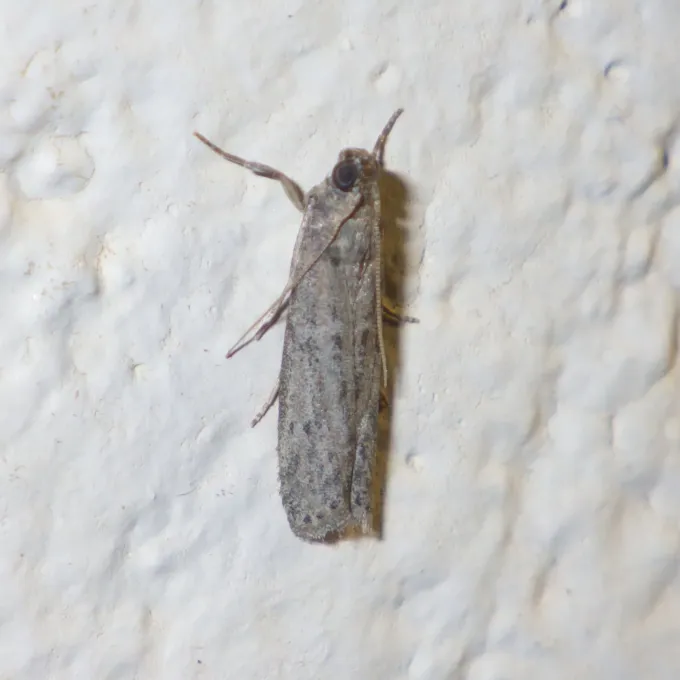
The raisin moth Cadra figulilella is a species of moth belonging to the family Pyralidae. Adult moths typically have a wingspan of 15–20 mm, featuring grayish-brown forewings with distinct darker transverse bands, which serve as excellent camouflage on warehouse surfaces.
Larvae are small caterpillars, growing up to 15 mm in length, characterized by a pale yellowish or pinkish body and a dark head capsule. When ready to pupate, they spin dense silken cocoons within the food substrate or in cracks of storage structures.
The life cycle encompasses four stages: egg, larva, pupa, and adult. Development speed is highly dependent on ambient temperature, allowing the moth to complete several generations per year under warm, indoor conditions.
This species is well-adapted to environments where dried fruits are processed or stored. Its ability to undergo diapause ensures survival during unfavorable periods, making it a persistent threat in food facilities.
High reproductive rates allow local populations to expand rapidly if left unchecked. Females deposit eggs directly on the fruit surface, ensuring that larvae have immediate access to food upon hatching.
What it damages
The larvae primarily feed on ripening grapes in the field, boring into the berries and causing significant rot. This damage often results in premature fruit drop and reduces the overall yield quality before harvest.
In storage facilities, the raisin moth is a notorious pest of dried fruits, including raisins, dates, figs, and apricots. Larvae tunnel through the fruit, webbing them together and contaminating the stock with frass.
Beyond physical consumption, the larvae encourage the growth of secondary pathogens such as molds and fungi. This makes the infested product unsuitable for human consumption and commercial sale.
The pest can also infest other stored products like nuts, cereals, and processed food ingredients. This versatility in diet allows the moth to maintain its population even when primary hosts are temporarily absent.
Economic losses arise not only from the loss of product volume but also from the high costs of disposal, fumigation, and loss of business reputation due to the presence of pests in the supply chain.
Control measures
Sanitation is the cornerstone of effective management. Thorough cleaning of storage areas to remove residual food debris, dust, and spider webs is essential to eliminate breeding sites for the raisin moth.
For large-scale infestations, fumigation using registered products remains a standard intervention. This process must be performed by certified professionals to ensure safety and regulatory compliance within food storage facilities.
Field control involves timely harvesting of fruits to minimize the window of opportunity for moth oviposition. Applying selective insecticides during the peak flight of adults can also help reduce the initial population density entering the storage phase.
Pheromone traps are highly recommended for continuous monitoring. By tracking the number of captured adults, managers can determine the exact timing for control measures, preventing minor infestations from escalating.
- Maintaining low temperatures in storage to inhibit larval metabolism.
- Using hermetically sealed containers for long-term storage of dried fruits.
- Inspecting incoming stock for signs of larval webbing or frass.
- Installing physical barriers like fine-mesh screens on ventilation ports.
Taxonomy
- Latin name
- Cadra figulilella
- Order
- Lepidoptera (butterflies)
- Family
- Pyralidae
- EPPO code
- EPHEFI
Discussion
No discussions yet — be the first.