
Raisin moth
Cadra calidella
Description
How to identify
The raisin moth (Cadra calidella) is a moth of the family Pyralidae, known as a significant pest of stored high-sugar food products.
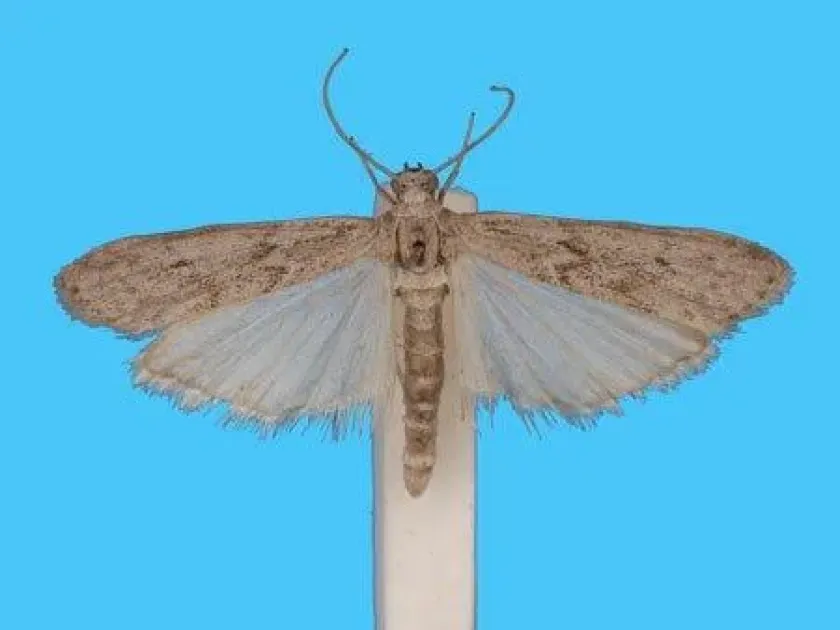
Adult moths have a wingspan of approximately 20–25 mm, with brownish-grey forewings characterized by indistinct darker transverse bands.
The larvae, which are the main cause of damage, are yellowish-white with brown heads and grow to about 18 mm in length.
The lifecycle of the moth is highly temperature-dependent, allowing for continuous generations in heated warehouses where food is available year-round.
Pupation typically occurs within a tough, silk-lined cocoon, often found tucked into the crevices of packaging or storage structures.
What it damages
The species primarily infests dried fruits such as raisins, dates, and figs, as well as nuts like almonds, walnuts, and occasionally stored grains.
Larvae tunnel deep into the fruit, consuming the interior and destroying the structural integrity and nutritional value of the infested product.
As they feed, larvae produce large amounts of webbing, which traps feces and food debris, causing the product to clump together.
This web-clumping effect renders the food products unmarketable and difficult to process for industrial use.
Heavy infestations can lead to substantial financial losses due to the total degradation of the quality of the stored raw materials.
Signs of infestation
The most reliable sign of an infestation is the presence of silk webbing spun by larvae across the surface of the fruit or inside packaging.
Frass (larval excrement) is often found mixed with the food source, appearing as small, dark granules resembling coarse dust.
Infested items will show visible holes where the larvae have entered, often accompanied by a distinct, slightly musty smell from the spoiled material.
Adult moths may be seen flying near storage bins, particularly during dusk or when the lights are dimmed in the warehouse.
Clumping of usually loose products like raisins or dried nuts is a clear indication that larvae have been active within the batch.
Control measures
Sanitation is the primary line of defense; regular cleaning of warehouses removes spilled food that could harbor developing larvae.
Maintaining low storage temperatures (below 10°C) is effective in suppressing the development rate and reducing the viability of the pest.
Pheromone traps are essential for early detection, allowing warehouse managers to monitor moth populations before an infestation gets out of control.
Physical exclusion through airtight storage containers and screens on ventilation points helps prevent adult moths from entering and laying eggs.
In cases of severe infestation, fumigation with authorized insecticides is required to eliminate larvae and pupae within the stocked products.
Taxonomy
- Latin name
- Cadra calidella
- Order
- Lepidoptera (butterflies)
- Family
- Pyralidae
- EPPO code
- EPHECL
Discussion
No discussions yet — be the first.