
Cactus moth
Cactoblastis
Description
How to identify
The cactus moth (Cactoblastis cactorum) is a member of the Pyralidae family. It is a small moth, known globally for its specific relationship with prickly pear cacti.
The adult moth has cryptic greyish-brown coloration, which allows it to blend perfectly into the arid environments where its host plants grow.
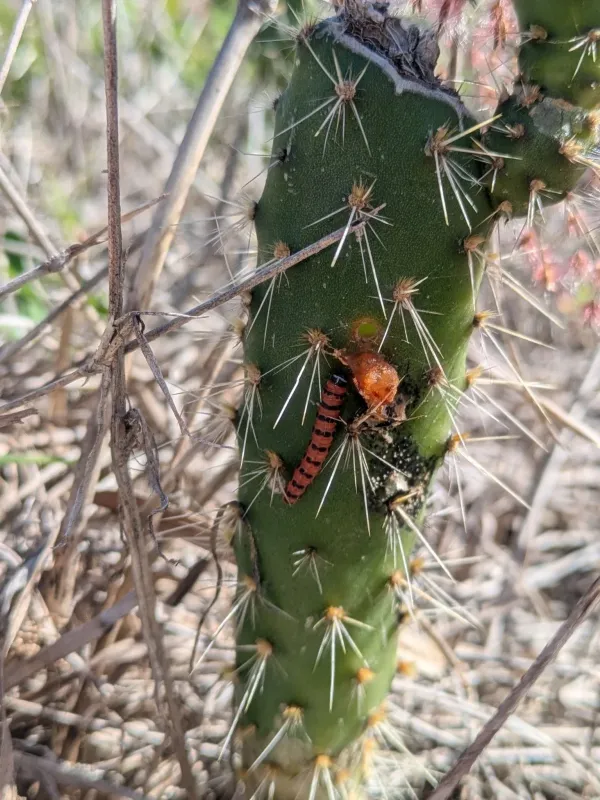
The larvae, or caterpillars, are the most recognizable stage, featuring a vivid orange-red body with distinct rows of black spots throughout their length.
The life cycle involves four stages: egg, larva, pupa, and adult. Eggs are laid in unique, chain-like sticks that mimic the spines of the host cactus.
This species is considered invasive in many regions, having been introduced intentionally for biological control and then spreading unexpectedly to native populations.
What it damages
The primary host plants for this pest are members of the Opuntia genus. Larvae feed exclusively on the succulent internal tissues of these cacti.
As they feed, the caterpillars burrow into the pads, creating extensive tunnels that compromise the structural integrity of the entire plant.
Feeding damage leads to rapid tissue necrosis and frequently invites secondary bacterial and fungal infections, which destroy the plant from the inside out.
A single colony of larvae can consume an entire cactus pad, leading to the collapse and death of the plant within a very short period.
In regions where Opuntia is an agricultural crop, Cactoblastis cactorum is viewed as a major threat to production and economic stability.
Signs of infestation
The first sign of infestation is the presence of egg sticks, which look like small, tan-colored spines deposited on the edges of the cactus segments.
As larvae begin feeding, you may notice small holes in the epidermis of the cactus, accompanied by frass (larval waste) accumulating on the surface or base.
Yellowing, softening of the pads, and eventual tissue rot are typical symptoms of an advanced infestation that requires immediate attention.
Internal tunnels can often be confirmed by gently pressing the pad to feel for hollow or soft sections caused by the feeding larvae.
The discovery of the characteristic orange-and-black caterpillars when opening a decaying pad is the definitive indicator of cactus moth presence.
Control measures
Chemical control focuses on the use of systemic insecticides that can be absorbed by the cactus tissue to effectively target larvae hidden inside the pads.
Mechanical control, such as the systematic removal and immediate destruction (usually by burning) of infested segments, is vital to prevent population growth.
Pheromone traps are highly effective for monitoring adult moth populations and timing the application of control agents during peak flight periods.
Biological control methods often involve the application of Bacillus thuringiensis sprays, which target the caterpillars without impacting beneficial insects.
- Regular field inspections for egg sticks.
- Quarantine of new plant introductions to prevent spread.
- Sanitation protocols to remove infested material immediately.
Taxonomy
- Latin name
- Cactoblastis
- Order
- Lepidoptera (butterflies)
- Family
- Pyralidae
- EPPO code
- CACTSP
Discussion
No discussions yet — be the first.