
Blepharomastix
Blepharomastix
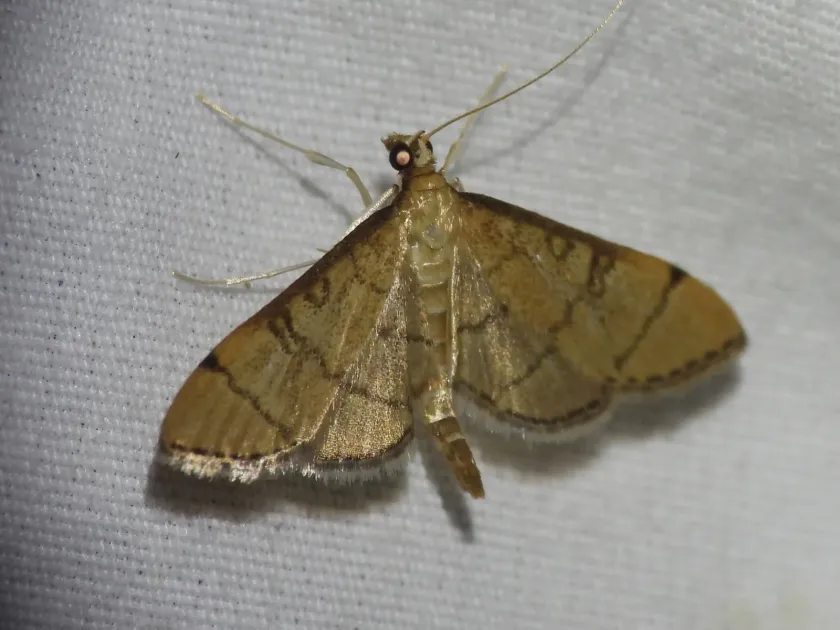
Description
How to identify
Blepharomastix is a genus of moths belonging to the family Crambidae. These insects are recognized as significant pests in various agricultural and horticultural systems.
The adult moths are typically small to medium-sized, characterized by distinct wing patterns that provide camouflage against their host plants.
The larvae, which cause the primary damage, have a segmented body often covered with fine setae, allowing them to cling to leaves efficiently.
Identification often requires careful examination of the wing venation and genitalia, as the genus contains several closely related species.
Females lay eggs in clusters on the undersides of leaves, ensuring that hatching larvae have immediate access to food sources.
What it damages
The primary damage is caused by larvae feeding on the foliage of host plants, which can include a variety of garden vegetables and ornamental species.
Larvae consume the leaf parenchyma, often leaving behind skeletonized leaves where only the primary vascular veins remain intact.
In addition to direct consumption, the larvae often spin silk webs that pull leaf edges together, creating protected shelters for feeding and development.
This feeding behavior reduces the plant's photosynthetic surface area, leading to stunted growth, wilting, and, in severe cases, plant death.
The open wounds created by feeding act as entry points for various secondary infections, including fungal and bacterial pathogens.
When it appears
The activity cycle of Blepharomastix is highly dependent on temperature, with peak activity observed during warm spring and summer months.
In outdoor environments, the life cycle typically completes over several weeks, allowing for multiple generations per growing season in warmer climates.
Greenhouse environments offer ideal conditions for the pest to thrive year-round, leading to overlapping generations and persistent infestation pressure.
Pupation generally occurs in soil debris or protected areas near the base of the plant, where the insect remains dormant during colder months.
The emergence of adults is often synchronized with the flushing of new leaves on host plants, providing optimal conditions for the next generation.
Signs of infestation
The presence of Blepharomastix is often first indicated by the curling or folding of leaves, bound together by fine silk strands.
Small, dark, pellet-like frass (excrement) deposited on the leaves or trapped in silk webbing is a clear sign of active larval feeding.
Noticeable leaf damage, including ragged edges, irregularly shaped holes, or skeletonization, indicates an established infestation.
Plants may show symptoms of general decline, such as yellowing or browning of leaves, particularly in areas where larval feeding is concentrated.
- Rolled or webbed leaves.
- Evidence of skeletonized leaf tissues.
- Accumulation of larval frass near damaged areas.
Control measures
Management of Blepharomastix requires an Integrated Pest Management (IPM) approach to minimize crop losses and chemical impact.
Sanitation is a crucial cultural control method, involving the thorough removal and destruction of crop residues where pupae overwinter.
Biological control agents, such as naturally occurring predators or Bacillus thuringiensis sprays, can effectively manage larval populations.
Chemical intervention should be based on threshold monitoring, utilizing systemic insecticides to target larvae feeding within leaf rolls.
Continuous monitoring and early detection are essential to prevent the pest from reaching population levels that cause significant economic damage.
Taxonomy
- Latin name
- Blepharomastix
- Order
- Lepidoptera (butterflies)
- Family
- Pyralidae
- EPPO code
- BLEMSP
Discussion
No discussions yet — be the first.