
Date moth
Arenipses sabella
Description
How to identify
The Date moth (Arenipses sabella) is a member of the order Lepidoptera and the family Pyralidae. It is a specialized pest specifically adapted to the environment of date palm plantations.
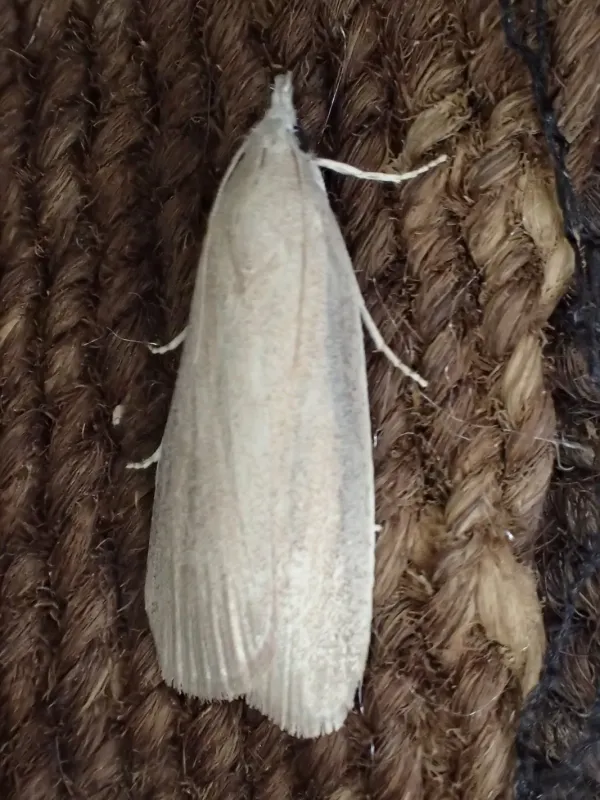
Adult moths have a wingspan reaching 35–40 mm. The forewings are grayish-brown with intricate dark markings, providing excellent camouflage against the rough texture of palm bark.
The larvae progress through several instars, reaching up to 35 mm in length. They typically possess a brownish body with a dark head and a smooth, slightly shiny cuticle surface.
The life cycle of this species is closely synchronized with the phenology of the date palm. Depending on climate, the moth can complete multiple generations within a single season.
Overwintering occurs primarily in the larval stage, protected within dry leaf bases, old fruit stalks, or clusters of infested mummified fruits.
What it damages
The primary host for Arenipses sabella is the date palm (Phoenix dactylifera). Larvae feed on both vegetative growth and reproductive structures, severely impacting yield.
The most significant damage occurs during fruit ripening. Larvae burrow into the fruit, consuming the flesh and leaving behind frass and webbing, which ruins the marketability of the dates.
When fruit is unavailable, larvae feed on young leaves and the central growing point (the apical meristem). This can cause structural deformities and reduce the overall vigor of the palm tree.
Infested clusters often show signs of secondary fungal decay because the internal damage and larval waste create ideal conditions for pathogens to thrive.
In regions such as North Africa and the Middle East, this pest is considered a major economic challenge, causing substantial losses in both quality and quantity of harvested dates.
Signs of infestation
Early detection is possible through observing thick webbing on the flower stalks and developing fruit bunches, which the larvae use for protection while feeding.
Small entry holes on the skin of the date fruit, surrounded by granular waste held together by silk strands, are definitive signs of larval activity.
Premature dropping of immature fruit, combined with shriveling and dark discoloration, often indicates that larvae have already penetrated the fruit interior.
Young fronds may show irregular feeding patterns and edges that have been skeletonized or shredded by the larvae, often accompanied by silk cocoons.
Pheromone traps are highly effective for monitoring adult male flights, providing a reliable early warning system for plantation managers.
Control measures
Sanitation is the cornerstone of Arenipses sabella management. Removing old fruit stalks, dry leaves, and fallen debris eliminates critical overwintering sites.
Biological control using Bacillus thuringiensis (Bt) products is highly effective against young larvae and minimizes impact on the beneficial insects within the palm ecosystem.
Mass trapping using synthetic pheromones can significantly reduce the mating frequency of adults, thereby lowering the overall population density in the grove.
Maintaining strong tree health through proper irrigation and balanced fertilization helps palms withstand minor infestations and recover more rapidly from pest pressure.
- Regular inspection of developing fruit clusters.
- Prompt harvesting to reduce exposure time.
- Judicious use of selective chemical sprays only when monitoring indicates threshold levels.
Taxonomy
- Latin name
- Arenipses sabella
- Order
- Lepidoptera (butterflies)
- Family
- Pyralidae
- EPPO code
- ARENSA
Discussion
No discussions yet — be the first.