
Date palm moth
Arenipses
Description
How to identify
The Date palm moth (Arenipses sabella) is a moth belonging to the family Pyralidae. It is a significant pest primarily affecting date palms (Phoenix dactylifera) in various regions globally.
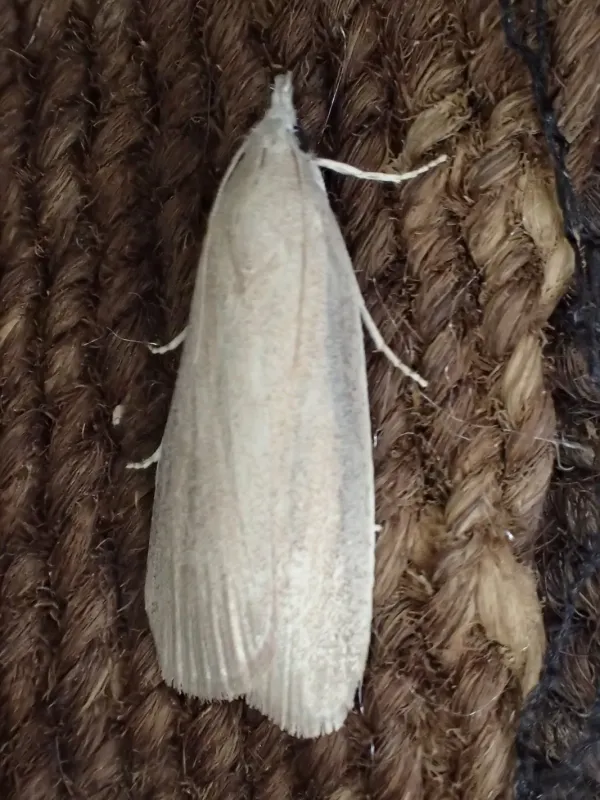
The adult moth has a wingspan of 30 to 40 mm. Its forewings are grayish-brown with subtle dark longitudinal markings, providing excellent camouflage against the bark of palm trunks during the day.
The larvae, or caterpillars, are creamy-white with dark brown heads. They are highly active and grow up to 35–40 mm long, equipped with strong mandibles designed for boring into plant tissues.
The lifecycle consists of several larval instars, a pupal stage in a silken cocoon, and the adult moth phase. In favorable climates, the moth can complete multiple generations annually.
The pupae are often found hidden within the debris of the infested crown or nestled deep between the fiber layers of the trunk, making them difficult to detect during standard inspections.
What it damages
The larvae are specialized to feed on the tender parts of the palm, including the terminal bud (the apical meristem), which is the most critical growth point of the tree.
Feeding on the central crown often leads to the death of the palm if the apical meristem is destroyed. This causes severe losses in both commercial plantations and ornamental landscapes.
The fruit of the date palm is also a major target. Larvae bore into the dates, feeding on the pulp and contaminating the fruit with frass, rendering the crop unmarketable for human consumption.
Secondary damage occurs when the pest-infested areas become points of entry for bacteria and fungi. These pathogens cause rot, which further exacerbates the decline of the host plant.
High levels of infestation weaken the palm, making it susceptible to other environmental stresses and secondary pest attacks, ultimately leading to reduced fruit yields and plant health.
Signs of infestation
The most reliable sign of an infestation is the accumulation of frass, resembling brown sawdust or wood shavings, at the base of leaves and within the leaf axils.
Wilting and yellowing of the newest central fronds indicate that the larvae have reached the growing point. These leaves can often be pulled out easily from the crown.
Infested fruit displays small entry holes, often covered with silk webbing produced by the larvae to protect their feeding tunnels inside the developing date.
An examination of the inflorescences often reveals chewed flowers or fruit stalks tied together with silk, which effectively protects the caterpillars while they consume the plant tissue.
Reduced vigor of the tree and distorted growth of new leaves are clinical symptoms of advanced infestation that typically indicate long-term colonization by the larvae.
Control measures
Integrated Pest Management (IPM) is essential for controlling this moth, starting with routine field monitoring to identify the onset of the moth's seasonal activity.
Sanitation is a primary control method. All damaged or infested bunches and leaves should be surgically removed and destroyed to reduce the local population density of larvae.
Chemical control involves the application of systemic insecticides. Timing is critical; applications should target the early larval stages before they bore deep into the plant tissues.
Pheromone traps are highly recommended for monitoring and mass trapping of male moths. This technique disrupts the mating cycle and provides data on peak activity periods.
Biological control agents, such as egg parasitoids, can be integrated into the management strategy to provide sustainable control and reduce reliance on synthetic pesticides.
Taxonomy
- Latin name
- Arenipses
- Order
- Lepidoptera (butterflies)
- Family
- Pyralidae
- EPPO code
- ARENSP
Discussion
No discussions yet — be the first.