
Apomyelois
Apomyelois
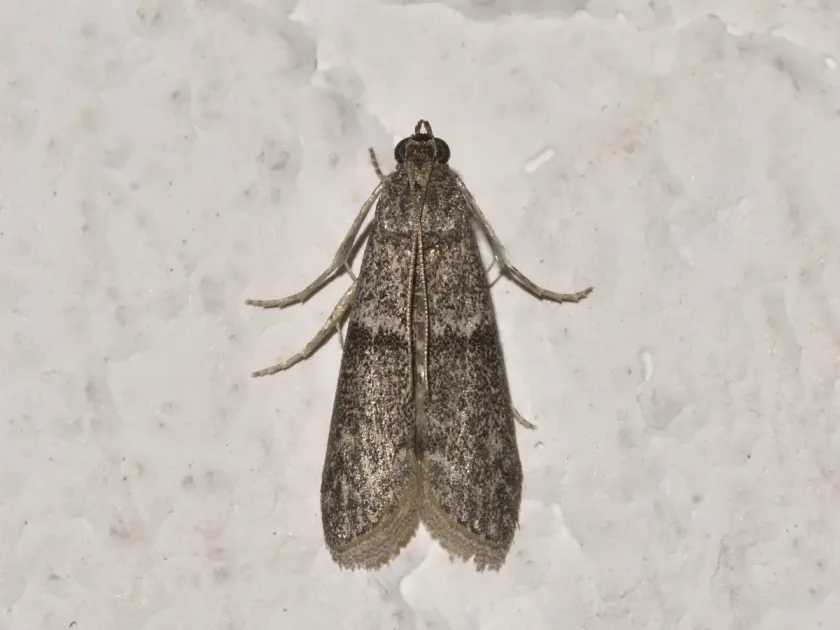
Description
How to identify
Apomyelois ceratoniae, commonly known as the carob moth, belongs to the family Pyralidae. It is a significant agricultural pest that affects various fruit-bearing trees globally.
Adult moths are relatively small, with a wingspan of 20 to 25 millimeters. Their forewings feature a distinctive greyish-brown pattern, which provides excellent camouflage against tree bark.
The larvae progress through several instar stages. Young larvae are usually pale, while mature ones exhibit a pinkish-brown coloration with a darkened head capsule and visible thoracic legs.
The life cycle of this insect is highly adaptable to local climatic conditions. In warmer climates, it can complete multiple generations annually, significantly increasing the population density within a single season.
Overwintering occurs primarily as larvae within infested fruits left in the orchard or in stored products. Pupation typically takes place inside the feeding site, protected by silk cocoons.
What it damages
The carob moth is a polyphagous pest, meaning it attacks a wide range of crops including pomegranate, citrus, figs, dates, almonds, pistachios, and walnuts.
Larvae are responsible for the damage, as they bore into the fruits or nuts to feed on the internal tissues. This feeding behavior destroys the core quality of the product.
Infested fruits often become secondary hosts for fungal infections, leading to rapid rotting. This process renders the crops unsalable and unsuitable for human or animal consumption.
Significant economic losses occur because infested fruits often drop prematurely. The internal damage is frequently hidden, which complicates sorting processes for commercial growers.
The pest is also notorious for causing severe damage in storage facilities. Once inside a warehouse, the larvae continue to feed, potentially destroying large quantities of harvested nuts and dried fruits.
Signs of infestation
The most visible sign of infestation is the presence of frass (larval excrement) appearing as fine powder around the entry holes or near the stem of the fruit.
In the case of nut crops, the presence of webbing within the shell, mixed with larval waste, is a clear indicator of Apomyelois activity.
Premature fruit drop, particularly when fruits appear mostly normal on the outside but show small boreholes, strongly suggests an internal infestation of the larvae.
Mummified fruits remaining on branches from the previous season are primary reservoirs for the pest and should be monitored as potential sources of new infestation.
Discoloration of the fruit skin around the entry point is a common symptom. If this is observed, internal inspection of the fruit will usually reveal the feeding tunnels and the larvae themselves.
Control measures
Sanitation is the cornerstone of Apomyelois management. Removing all mummified fruits from trees and clearing fallen produce from the ground are critical steps to interrupt the life cycle.
Pheromone traps are essential tools for monitoring adult activity. By tracking the population density, growers can time insecticide applications to target the most vulnerable larval stages.
Biological control agents, such as Bacillus thuringiensis (Bt) based formulations, provide an environmentally friendly option for managing larvae before they penetrate the fruit surface.
Chemical control should be applied preventively based on pheromone trap monitoring. Once the larvae have entered the fruit, they are protected from most surface-acting pesticides, making late treatment ineffective.
Proper warehouse management, including sanitation and sealing storage areas, is vital to prevent cross-infestation between different batches of harvested products after they have been moved from the orchard.
Taxonomy
- Latin name
- Apomyelois
- Order
- Lepidoptera (butterflies)
- Family
- Pyralidae
- EPPO code
- APMLSP
Discussion
No discussions yet — be the first.