
Aphomia
Aphomia
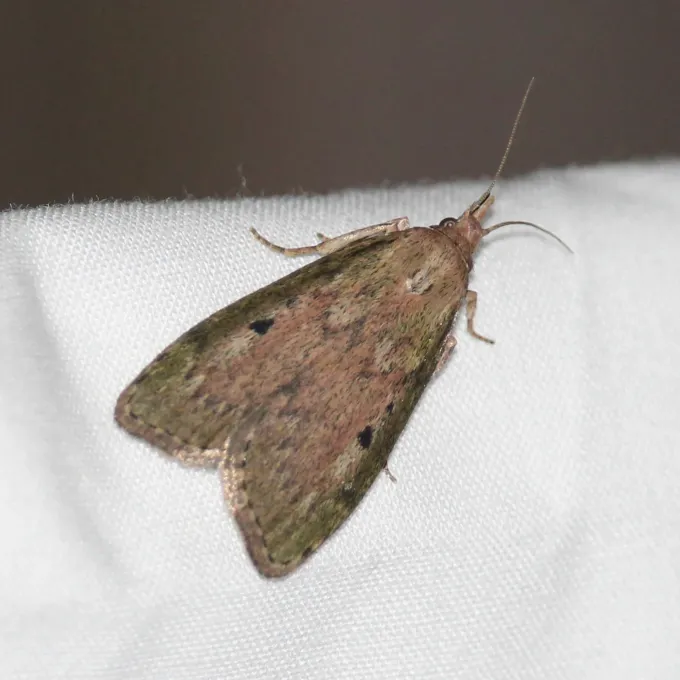
Description
How to identify
Aphomia is a genus of moths belonging to the family Pyralidae, commonly referred to as snout moths, known for causing significant damage to stored goods.
Adult moths have a wingspan ranging from 20 to 35 mm, displaying mottled grey or brown wings that allow them to camouflage well in storage environments.
The larvae are whitish to greyish-yellow caterpillars with a dark head capsule, capable of moving rapidly through food sources.
The lifecycle involves four stages: egg, larva, pupa, and adult, with the larval stage being the most destructive to agricultural commodities.
Pupation occurs within sturdy, silk-lined cocoons, which are frequently constructed within the substrate they feed upon.
What it damages
Aphomia species are primary pests of stored grain, flour, bran, and various dry food products kept in warehouse conditions.
They are known to infest dried fruits, nuts, oilseeds, and specialized stored products like confectionery ingredients.
In apiaries, these moths can become major pests by consuming wax combs, bee larvae cocoons, and pollen stores, often resulting in hive destruction.
The larvae create extensive webbing in the material, which traps feces and debris, rendering the stored products unfit for consumption.
Economic impact includes both direct loss of commodity weight and the devaluation of the product due to severe contamination.
When it appears
These pests are highly adaptable to indoor environments where consistent temperature and humidity levels support year-round breeding.
Optimal conditions for rapid development are temperatures between 20°C and 28°C and moderate to high humidity levels.
The nocturnal behavior of adult moths facilitates their dispersal within storage facilities and maximizes the success of mating.
In unheated environments, larvae may enter a period of reduced activity during winter, but they remain resilient and can resume growth when warmth returns.
The frequency of generations is entirely dependent on the ambient conditions of the storage facility.
Signs of infestation
The most distinctive sign of an infestation is the presence of silk webbing that binds grain or flour particles into dense, matted clumps.
Visible insect frass (small dark granular droppings) within the product is a clear indicator of active feeding by the larvae.
The emergence of adult moths from hidden locations, such as cracks in walls or behind storage equipment, signifies an established population.
A noticeable change in the odor of the stored product, often becoming musty, is common as the moisture content increases due to insect activity.
Empty pupal cases found on walls, floor cracks, or tucked away in packaging indicate that the pest has successfully completed its lifecycle.
Control measures
Effective management requires a combination of strict sanitation, structural maintenance, and monitoring programs.
- Implementing rigorous cleaning schedules to remove spilled grain and debris where larvae hide.
- Using hermetically sealed storage units to physically exclude moths from laying eggs.
- Utilizing pheromone-based monitoring traps to identify the presence of adults early.
- Applying cold storage techniques to lower grain temperatures and inhibit pest development.
- Treating empty warehouses with approved insecticides after thorough cleaning to eliminate residual populations.
Proactive monitoring and maintaining dry, cool storage conditions are the most reliable methods to prevent Aphomia outbreaks.
Taxonomy
- Latin name
- Aphomia
- Order
- Lepidoptera (butterflies)
- Family
- Pyralidae
- EPPO code
- APHMSP
Discussion
No discussions yet — be the first.