
Sand moth
Anerastia lotella
Description
How to identify
The Sand moth (Anerastia lotella) is a lepidopteran insect belonging to the Pyralidae family. This moth is known for its ability to infest various cereal crops, particularly in sandy soil habitats.
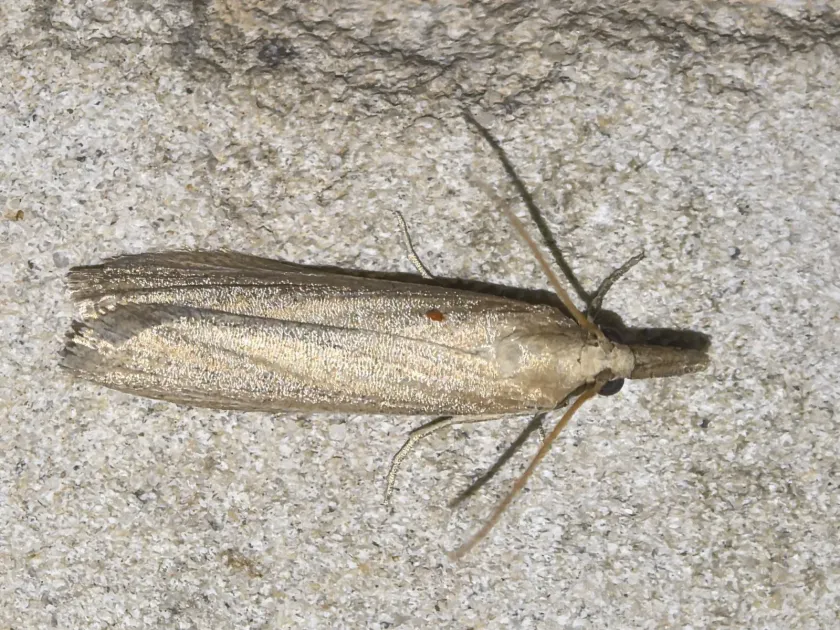
The adult moth has a wingspan of 18–25 mm. Its forewings exhibit a pale yellow to sandy-beige color with longitudinal light veins, providing excellent camouflage against dry grass and soil.
The hindwings are paler, often grayish-white, and are fringed with long hairs, which is a key diagnostic feature used by entomologists to distinguish this species from other related moths.
The body of the moth is slender and equipped with a well-developed proboscis, typical for the Phycitinae subfamily, which allows the adult insect to feed effectively on floral nectar.
The larvae, or caterpillars, are brownish-yellow or grayish with dark longitudinal stripes. They spend most of their time in hidden galleries near the base of host plants, making them difficult to spot.
What it damages
The Sand moth primarily targets cereal crops, including wheat, rye, and various wild grasses, thriving in regions with light, sandy, or loamy soil types.
The primary damage is caused by larvae that bore into the stem base, consuming the soft tissues and disrupting the plant's ability to transport water and nutrients to the upper parts.
This feeding activity leads to stunted growth, yellowing, and eventual wilting of the plants. In cases of severe infestation, the stems may die entirely, resulting in significant yield losses.
Young cereal plants are particularly vulnerable; a single larva can destroy the entire tiller or the young plant, leading to thin and uneven crop stands across the field.
Furthermore, the physical wounds inflicted by the larvae provide entry points for secondary pathogens, such as fungi and bacteria, which can cause stem rot and further weaken the crop.
When it appears
The flight period for adult Sand moths typically occurs during the summer months, usually peaking between late June and August, depending on local temperatures and rainfall.
The development cycle is highly sensitive to environmental conditions, with hot and dry weather favoring faster larval development and population growth in sandy areas.
Female moths lay eggs on or near the soil surface at the base of host plants, ensuring that the newly hatched larvae can immediately begin feeding on the stems.
The larvae overwinter in the soil or within old plant debris, entering a state of diapause to survive the colder months before resuming activity in the spring.
Spring emergence coincides with the active tillering phase of cereal crops, which provides the larvae with the ideal nutritional conditions required for their development and pupation.
Signs of infestation
The first indicator of an infestation is the yellowing or premature wilting of the leaf tips or the entire central shoot of the cereal plant during the day.
Upon closer inspection of the stem base, one can often find entry holes, silken tunnels created by the larvae, and small, dark pellets of excrement around the plant base.
- Patchy thinning of the crop in specific areas.
- Internal stem tunnels visible when splitting the plant longitudinally.
- Dead or bleached stems appearing within a green field of cereal.
Adult moth activity can be monitored in the evenings using light traps, which reveal the presence and abundance of the pest before significant crop damage becomes apparent.
Because the larvae are hidden inside the plant stems, the damage is often cumulative and may go unnoticed until the affected plants exhibit visible signs of collapse.
Control measures
Effective management of the Sand moth relies on integrating cultural practices that disrupt the life cycle of the pest and minimize its preferred breeding habitats.
Deep plowing after harvest is essential; it buries or exposes the larvae and pupae to predators and adverse weather conditions, significantly reducing the survival rate for the next season.
Maintaining weed-free fields and field margins is crucial, as wild cereal grasses often serve as reservoirs for the moth population when commercial crops are not present.
If population thresholds are exceeded, the application of registered insecticides is recommended, particularly during the larval hatching period to prevent initial stem entry.
Crop rotation remains one of the most sustainable control methods, as moving away from susceptible cereal crops prevents the pest population from building up in the soil over time.
Taxonomy
- Latin name
- Anerastia lotella
- Order
- Lepidoptera (butterflies)
- Family
- Pyralidae
- EPPO code
- ANEALO
Discussion
No discussions yet — be the first.