
Grease moth
Aglossa
Description
How to identify
The Grease moth (scientific name Aglossa pinguinalis) is a member of the Pyralidae family and is a significant pest of stored products.
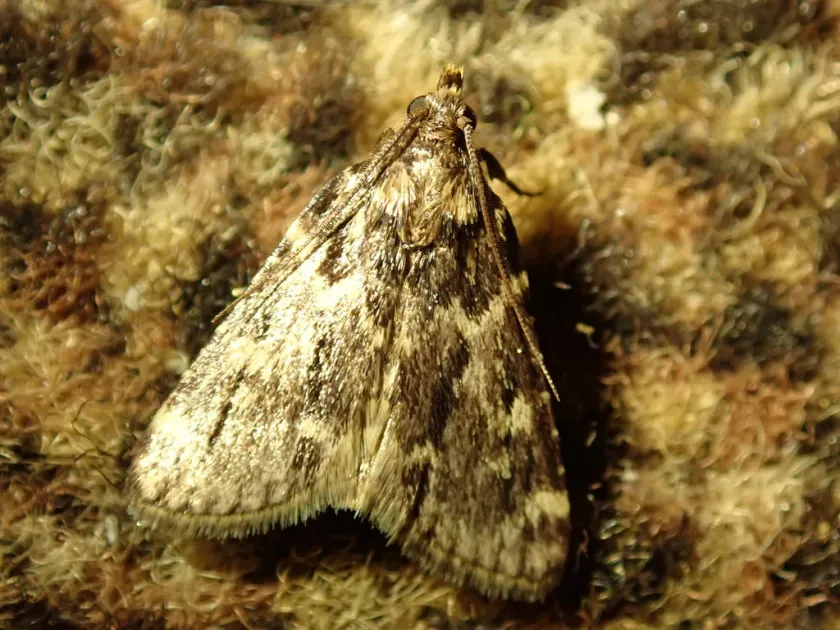
Adult moths have a wingspan of 25–30 mm. Their wings are typically brownish-grey to dark black with distinct, wavy transverse lines.
The larvae, or caterpillars, reach up to 25 mm in length. They have a yellowish-white body, a dark head, and are known for their ability to thrive in damp environments.
Pupation occurs within a tough, silken cocoon constructed by the larva, often incorporating debris from the surrounding food source.
This species is highly adapted to environments where organic matter accumulates in dark, undisturbed, and slightly humid conditions.
What it damages
The Grease moth primarily damages stored grain, flour, oilseed cakes, dried fruits, and various animal feed products kept in warehouses.
Larvae feed on these commodities, causing substantial loss not only through consumption but also by webbing together large masses of grain with silk.
The excrement and webbing contaminate the product, often rendering it unusable for food processing or livestock feeding due to toxicity concerns.
Heavy infestations lead to increased localized humidity within the grain heap, which further accelerates the growth of molds and pathogenic fungi.
Mills, granaries, and storage sheds are the most affected sites, as the moth spreads easily through shipping containers and logistics equipment.
When it appears
The flight period of adult moths typically occurs during the summer months, but they can remain active year-round in heated warehouses.
These insects are nocturnal, spending their days hidden in dark corners, cracks, or deep within stored product piles to avoid detection.
Their developmental speed is highly dependent on temperature and moisture levels; development is fastest in warm and humid conditions.
Overwintering usually occurs at the larval stage, allowing the pest to survive low temperatures in unheated structures until favorable conditions return.
The total life cycle duration varies significantly depending on the availability of high-quality nutrition and environmental temperature stability.
Signs of infestation
The most visible sign of an infestation is the presence of silk webbing that binds grain particles or flour into clumps or mats.
Observation of moths fluttering near artificial lights at dusk is a primary indicator of an existing population within the warehouse.
Upon closer inspection, one may find larval casings, shed skins, and small dark fecal pellets scattered throughout the infested commodity.
A distinct, unpleasant, and musty odor often permeates the air around heavily infested storage areas due to larval metabolism and mold growth.
Checking equipment and storage cracks often reveals dormant larvae or cocoons, which are reliable signs of established long-term presence.
Control measures
Strict sanitation and hygiene programs are essential, including the removal of dust, grain spills, and old residues from all storage areas.
Maintaining low moisture content in grains (below 14%) and effective ventilation are critical deterrents against larval development.
- Fumigation of warehouses using approved chemical agents.
- Deployment of pheromone-based traps to monitor and suppress adult populations.
- Sealing structural gaps and cracks to deny the moths safe overwintering sites.
Infested commodities must be immediately segregated to prevent the spread of the population to healthy stocks and subsequently treated or disposed of.
Regular inspections and temperature monitoring within grain silos can identify "hot spots" early, allowing for timely intervention before large-scale damage occurs.
Taxonomy
- Latin name
- Aglossa
- Order
- Lepidoptera (butterflies)
- Family
- Pyralidae
- EPPO code
- AGLOSP
Discussion
No discussions yet — be the first.