
Tricolored knot-horn
Acrobasis tricolorella
Description
How to identify
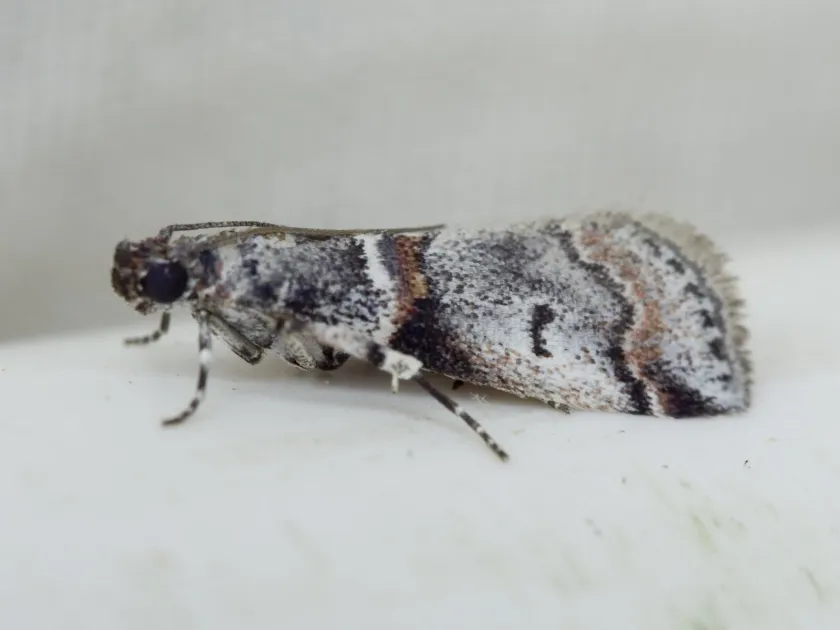
The tricolored knot-horn (Acrobasis tricolorella) is a moth belonging to the family Pyralidae. Its common name refers to the distinctive three-colored pattern found on its forewings, which serves as camouflage against bark.
The larvae are approximately 15 to 18 mm long at maturity and typically possess a brownish-green or greyish body with a dark brown head. Pupation occurs within flimsy silk cocoons hidden in crevices or near the damage sites.
What it damages
This pest primarily infests members of the Rosaceae family, with a strong preference for the genus Prunus, including plums, chokecherries, and occasionally cherries.
Larval feeding is concentrated on the reproductive parts of the host plants. They bore into developing buds and flower clusters, consuming the core tissues and significantly reducing the potential fruit yield.
When it appears
The insect typically overwinters as early-instar larvae protected by silk hibernacula situated in crotches or under bark scales. They emerge in early spring to coincide with host plant bud break.
The lifecycle consists of four developmental stages. After the spring emergence and feeding period, larvae pupate, eventually emerging as adult moths to start the next generation cycle.
Signs of infestation
Visible webbing around the buds and flower clusters is the most characteristic sign of an infestation. Infested buds often fail to open and may appear scorched or shriveled.
Frass (larval excrement) is often clumped together with silk within the damaged buds. Heavy infestations can lead to substantial defoliation of flower buds and premature fruit drop later in the season.
Control measures
Management strategy should focus on early detection and physical removal of infested tissue. Pruning and destroying webbed clusters during dormant winter months is a highly effective cultural control.
- Application of selective insecticides during the bud burst stage.
- Utilization of biological control agents like parasitic wasps.
- Monitoring pest activity with pheromone traps to time chemical interventions.
- Maintaining tree vigor to help the plant withstand minor feeding damage.
Integrating cultural practices with judicious pesticide use ensures the health of the orchard. Always ensure that interventions are timed precisely to the larval emergence period for maximum efficacy.
Taxonomy
- Latin name
- Acrobasis tricolorella
- Order
- Lepidoptera (butterflies)
- Family
- Pyralidae
- EPPO code
- MINESC
Discussion
No discussions yet — be the first.