
Plum moth
Acrobasis stigmella
Description
How to identify
The plum moth (Acrobasis stigmella) belongs to the order Lepidoptera and the family Pyralidae. As a moth, it is primarily nocturnal, making it difficult to detect during the daylight hours when gardeners typically inspect their trees.
The larvae are small, usually greenish-brown with a dark head capsule. Their bodies are sparsely covered with fine hairs, and they reach a length of about 15–20 millimeters. They are well-camouflaged, blending in with twigs and bark.
Pupae are deep brown, protected within silk cocoons. These are often hidden in bark crevices or among folded leaves, where they wait for the next generation to emerge. Identifying these locations is key to manual control.
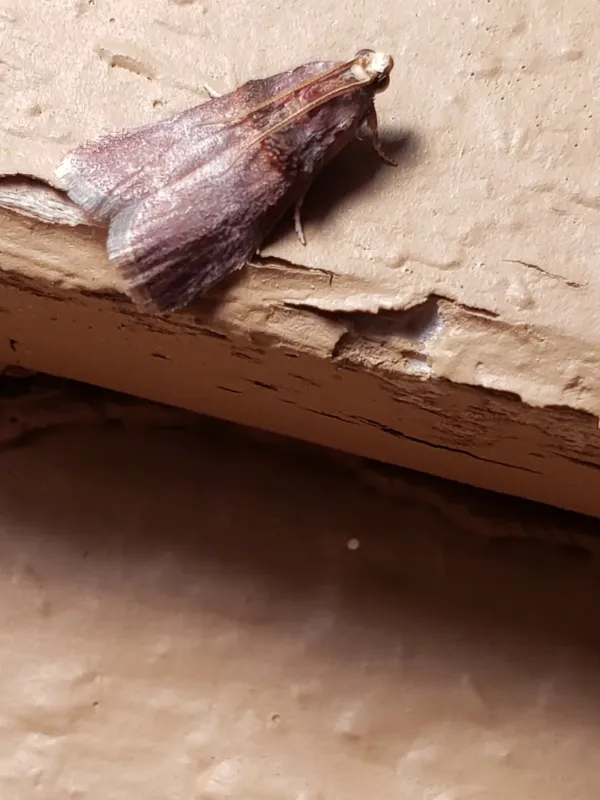
Adult moths have a wingspan of approximately 20–25 millimeters. Their forewings feature complex gray and brown patterns, providing excellent camouflage against the bark of plum or cherry trees where they rest during the day.
The life cycle involves multiple generations per season. Understanding the timing of each generation's peak emergence is essential for effective orchard management and long-term suppression of the pest population.
What it damages
The primary hosts of this moth include stone fruits such as plums, damsons, cherries, and sour cherries. Larvae consume plant tissues, causing significant yield losses and reducing the overall health and vigor of the trees.
Larvae damage buds, young shoots, and developing fruit. By burrowing into the fruit, they hollow out the interior, which causes the fruit to yellow, wither, and drop prematurely, leading to severe crop loss.
During heavy infestations, the plum moth can destroy a significant percentage of the yield. Furthermore, the entry holes made by the larvae provide easy access for pathogens, leading to fungal rot and fruit decay.
Attacks on terminal buds stunt the growth of young shoots, which is particularly detrimental to young orchards. This impacts the tree's architecture and can lead to a long-term reduction in fruit-bearing potential.
Chronic infestation weakens the tree's immune system. This makes the host plant more susceptible to environmental stressors like frost and drought, as well as secondary diseases that target weakened wood.
Signs of infestation
The earliest symptom is the wilting and drying of shoot tips in the spring. Closer inspection reveals silk webbing and frass (larval excrement) where the larvae have been feeding on the new growth.
Holes in young fruit, often accompanied by gumming (the release of sap as a defense mechanism), are clear indicators of larval activity. Damaged fruit often appears misshapen or brown and usually falls before ripening.
During the flowering season, you may notice clusters of blossoms tied together with silk. These are protective nests where larvae congregate while feeding on the delicate floral parts.
- Wilting and necrosis of terminal shoot tips.
- Silk webbing present on blossoms and developing fruit.
- Entry holes in fruit accompanied by sap flow (gumming).
- Premature fruit drop of undersized, damaged produce.
- Accumulation of larval frass on leaves and bark surfaces.
In severe cases, the canopy of the tree looks ragged and stunted. Regular monitoring of the orchard in early summer is the best way to catch an infestation before it leads to significant economic loss.
Control measures
Cultural control involves the pruning and destruction of infested twigs. Promptly removing and destroying fallen fruit is also critical to break the lifecycle and reduce the number of larvae entering the soil.
Tilling the soil around the base of the trees in late autumn can help destroy overwintering pupae hidden in the ground. Clearing away loose bark can also eliminate hiding spots for the pest.
Biological controls are highly recommended, including the use of B. thuringiensis-based products, which target the larvae specifically without harming the beneficial predatory insects or pollinators in the orchard.
Chemical control should be timed to coincide with the emergence of larvae from their eggs. Rotation of chemical classes is necessary to prevent the population from developing resistance to insecticides.
Pheromone traps serve as excellent monitoring tools to determine exactly when the moths are flying. This enables growers to apply treatments only when necessary, maximizing efficiency while reducing chemical usage.
Taxonomy
- Latin name
- Acrobasis stigmella
- Order
- Lepidoptera (butterflies)
- Family
- Pyralidae
- EPPO code
- ACBAST
Discussion
No discussions yet — be the first.