
Sumac pyralid
Acrobasis sodalella
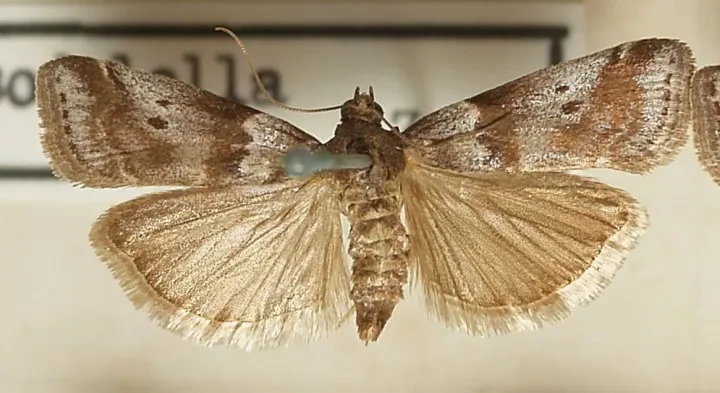
Description
How to identify
The sumac pyralid (Acrobasis sodalella) is a moth species from the Pyralidae family that specifically targets plants of the genus Rhus (sumac).
The adult stage is a small moth, typically showing camouflaging patterns on its wings, which allows it to blend into the bark of its host plant during the daytime.
The larvae, or caterpillars, are the destructive stage of the life cycle, typically exhibiting a brownish or dark appearance that helps them hide within the plant tissues.
Pupation occurs in resilient, silken cocoons spun by the larvae, usually situated in crevices or protected areas of the tree, ensuring survival through dormant periods.
The life cycle is tightly synchronized with the host plant's phenology, making this species a specialized feeder that relies on the seasonal development of the sumac.
What it damages
This pest primarily damages young shoots, developing buds, and inflorescences, leading to stunted growth and reduced aesthetic value of ornamental sumac plantings.
Larvae burrow into the succulent parts of the stems, creating galleries that disrupt water and nutrient transport, which often leads to the death of affected branches.
The destruction of flower buds is a major concern, as it prevents fruit production, which is particularly detrimental in industrial or commercial cultivation settings.
Plants weakened by repeated infestations become highly susceptible to secondary pathogens, including various wood-rotting fungi that thrive on damaged host tissue.
In nursery settings, the loss of the terminal bud due to caterpillar feeding can lead to severe structural deformities in saplings, necessitating corrective pruning.
When it appears
The activity begins in early spring, synchronized with the bud burst of the sumac, when overwintering larvae emerge to feed on the tender, developing tissues.
Adult moths typically appear in late spring or early summer, engaging in mating and egg-laying on the fresh growth to secure the next generation of larvae.
Active larval feeding continues throughout the summer months, with caterpillars growing and expanding their galleries as the host plant develops its foliage.
By autumn, the caterpillars prepare for diapause, seeking sheltered locations on the host plant or within debris near the base to undergo the winter season.
The number of generations per season is heavily influenced by regional climate conditions, though usually, one to two cycles are completed in most temperate zones.
Signs of infestation
A primary indicator of an infestation is the presence of silk webbing mixed with larval frass (droppings) around the feeding sites on young shoots.
Visual symptoms include the wilting and browning of branch tips or inflorescences, which often appear scorched or prematurely dried out.
- Entrance holes in buds or small boreholes on stems.
- Small piles of brown, sawdust-like frass on leaves beneath the damage.
- Dense, greyish cocoons tucked into bark cracks or leaf axils.
Reduced flower development and the appearance of "flagging" (where branch ends die back) are clear signs that the pest is actively feeding within the tissue.
In the evening hours, the presence of adult moths can be verified using light traps, which is a useful monitoring technique for timing management interventions.
Control measures
Sanitation is a critical control method, requiring the prompt removal and destruction (burning or deep burial) of infested branches to eliminate the larval population.
Biological control agents, such as Bacillus thuringiensis (Bt) based sprays, are highly effective against young larvae while preserving beneficial insect populations.
Systemic insecticides may be necessary during severe outbreaks, applied as soon as larval activity is detected to ensure they reach the insects feeding internally.
Promoting a healthy environment for natural predators, including parasitic wasps and predatory beetles, can significantly suppress the sumac pyralid population.
Monitoring for egg-laying and early larval stages allows for targeted management, reducing the need for broad-spectrum chemical sprays in the landscape.
Taxonomy
- Latin name
- Acrobasis sodalella
- Order
- Lepidoptera (butterflies)
- Family
- Pyralidae
- EPPO code
- ACBASO
Discussion
No discussions yet — be the first.