
Leaf crumpler
Acrobasis indigenella
Description
How to identify
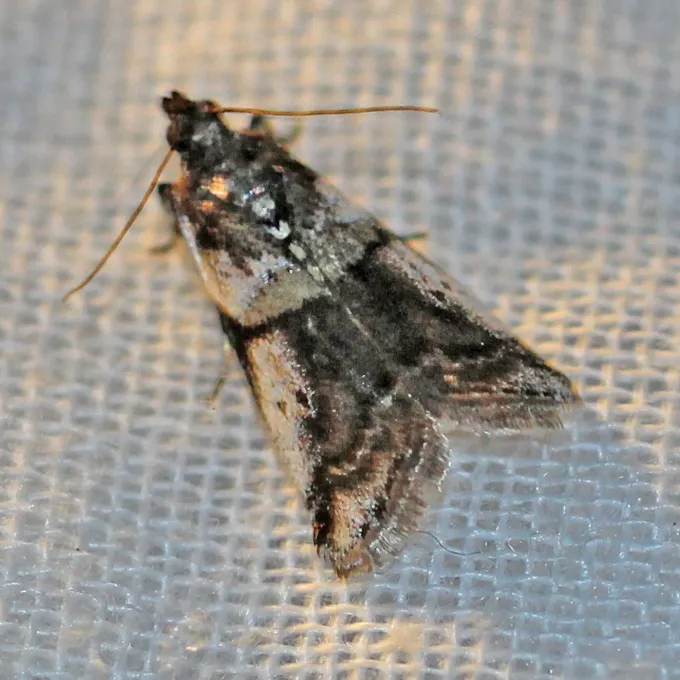
The leaf crumpler (Acrobasis indigenella) is a member of the Pyralidae family. The adult moth has a wingspan of about 15-20 mm, with brownish-grey forewings marked with dark, irregular transverse lines.
The larvae, which cause the primary damage, are reddish-brown to brownish-green with a dark head. They reach approximately 12-15 mm in length and are known for their habit of creating protective cases.
Life cycle dynamics depend heavily on local temperatures. The larvae overwinter in the second instar inside thick, silken tubes or cases secured to twigs, often near buds.
In spring, as the host plant begins its vegetative growth, the larvae emerge from their overwintering cases to begin feeding on developing buds and young leaves.
The larvae are nocturnal feeders, but their presence is easily detected due to the distinct construction of their shelters, which are made of silk, excrement, and dead leaves.
What it damages
The pest primarily affects pome and stone fruit trees, including apples, pears, plums, cherries, and hawthorn, often causing significant stress to young trees in nurseries and orchards.
Larval feeding targets buds initially, often destroying them before they can bloom, which leads to immediate yield loss and reduced tree vitality.
As the season progresses, the caterpillars move to leaves and developing fruits. They skeletonize leaves and create holes in fruits, often webbing them together.
Heavy infestations result in stunted growth and a scorched appearance of the foliage, as the webs trap dying leaf tissues and accumulate frass.
The aesthetic and commercial value of fruit is destroyed because the larvae bore into the flesh, creating deep entry holes and contaminating the produce with debris.
Signs of infestation
The most recognizable sign is the presence of dark, twisted, horn-shaped cases or tubes attached to the twigs, especially in the crotches of branches.
Early spring observations often reveal non-opening, dry buds that have been hollowed out from the inside, often surrounded by small amounts of silk webbing.
Leaves that are webbed together in clusters indicate the feeding activity of the larvae, as they pull leaf blades toward their central case for protection.
Small, irregular holes on the surface of young fruit, accompanied by accumulations of frass held by webbing, are classic indicators of late-stage larval activity.
Sparse canopy development in parts of the tree can often be traced back to the destruction of terminal buds by the larvae early in the season.
Control measures
Sanitation is a cornerstone of management: pruning and destroying infested twigs during the dormant season significantly reduces the overwintering population.
During the growing season, applications of Bacillus thuringiensis or other selective insecticides are effective when timed with the emergence of young larvae.
Monitoring using pheromone traps helps identify the flight periods of adult moths, allowing for precise timing of chemical or biological interventions.
Encouraging natural predators such as lady beetles, lacewings, and parasitic wasps helps maintain larval populations below the economic injury level.
- Hand-picking and burning nests in small-scale orchards.
- Applying dormant oil sprays to smother overwintering larvae.
- Maintaining healthy tree vigor through proper fertilization and irrigation.
Taxonomy
- Latin name
- Acrobasis indigenella
- Order
- Lepidoptera (butterflies)
- Family
- Pyralidae
- EPPO code
- ACBAIN
Discussion
No discussions yet — be the first.