
Lesser wax moth
Achroia grisella
Description
How to identify
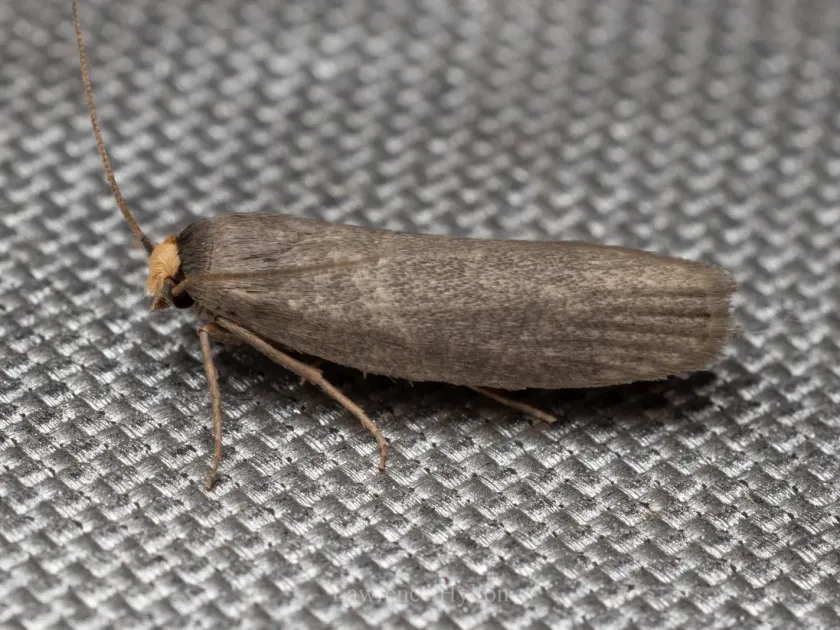
The lesser wax moth (Achroia grisella) is a small moth belonging to the family Pyralidae. Adult moths are easily distinguished by their size, typically having a wingspan of only 15 to 25 mm, and a grayish-yellow coloration.
The male of this species is notably smaller than the female. They are nocturnal and are often found resting on the inner surfaces of beehives or in dark storage areas for beekeeping equipment.
The larvae, or caterpillars, of the lesser wax moth are small, whitish-gray creatures with dark head capsules. They are highly mobile and crawl rapidly through the comb wax to find food and shelter.
The life cycle involves four distinct stages: egg, larva, pupa, and adult. The duration of this cycle is highly dependent on ambient temperatures, with warm conditions allowing for rapid reproduction and multiple generations per year.
These pests survive the winter primarily as larvae or pupae tucked into cracks, crevices, or piles of stored wax debris, ensuring they are ready to emerge and feed as soon as temperatures rise in the spring.
What it damages
The primary damage is caused by the larvae, which feed on beeswax, honey, pollen (bee bread), and remnants of larval skins left behind in the cocoons. They create extensive tunnels throughout the comb structure.
While the greater wax moth is more destructive in terms of volume, the lesser wax moth is often more pervasive in cool or neglected parts of the hive, frequently attacking the outer edges of frames.
As the larvae feed, they spin silken webs that mat the contents of the cells together. This webbing effectively destroys the structure of the comb, making it unusable for both brood rearing and honey storage.
The lesser wax moth is also recognized as a vector for various bee pathogens. Their presence can facilitate the spread of diseases such as foulbrood, significantly increasing the health risks to the colony.
In large-scale storage facilities, an uncontrolled population of these moths can turn perfectly healthy honey supers into a mass of web-covered debris within a single season, leading to significant financial loss.
Signs of infestation
The presence of fine, silk-like webbing throughout the honeycomb is the most telltale sign of a lesser wax moth infestation. This webbing is often observed stretched across the faces of the cells.
A fine, brownish dust or "frass" is typically found at the bottom of the hive or in the corners of storage boxes. This debris consists of the excrement of the larvae and fragments of wax they have destroyed.
When inspecting frames, look for irregular, burrowing tunnels that lead directly into the midrib of the comb. These paths are often hidden beneath the cappings of honey or pollen cells.
Observing small, grayish moths fluttering near the entrance of the hive or sitting on the outer walls during the twilight hours is a strong indicator of a developing infestation inside the nest.
A distinct, musty odor coming from the hive, combined with damaged comb edges that crumble upon touch, confirms that the colony is suffering from significant pest pressure.
Control measures
Maintaining strong, vigorous bee colonies is the most effective biological defense. A healthy colony will naturally patrol its combs and aggressively remove any wax moth larvae discovered during cleaning.
Strict sanitation practices are vital. Beekeepers should regularly cull old, dark brood combs, as these are the most attractive to moths, and ensure that no loose wax or scrap pieces are left exposed.
Biological control using bacteria-based treatments (such as Bacillus thuringiensis) is a safe and highly effective method for protecting stored combs, as it specifically targets the larvae without harming bees.
Mechanical control through freezing is a highly recommended practice. Storing supers at temperatures below -10°C for several days will kill all life stages of the wax moth, including eggs and pupae.
Chemical fumigation, such as using acetic acid or other approved substances, may be employed in sealed storage areas, provided that all safety labels and guidelines are strictly followed to prevent contamination.
Taxonomy
- Latin name
- Achroia grisella
- Order
- Lepidoptera (butterflies)
- Family
- Pyralidae
- EPPO code
- ACHIGR
Discussion
No discussions yet — be the first.