
Lesser wax moth
Achroia
Description
How to identify
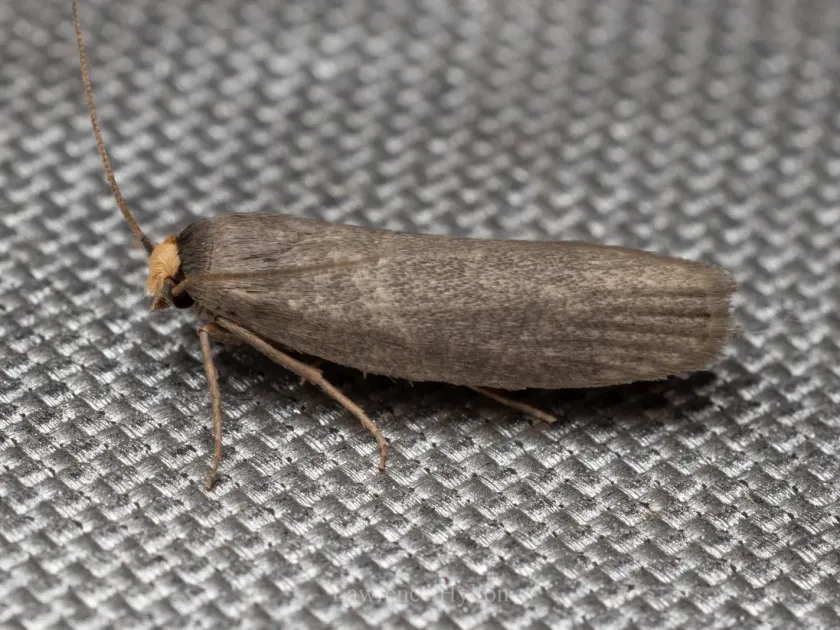
The lesser wax moth (Achroia grisella) is a moth of the Pyralidae family. It is a well-known pest that specifically targets beehives and stored wax products.
The adult moth is small, with a wingspan of approximately 20–25 mm. It has a distinctive grayish-yellow appearance with a silky sheen that helps it blend into the hive environment.
The larvae are small, cream-colored caterpillars with brown heads. They are highly mobile and possess strong mandibles capable of chewing through beeswax and debris.
Pupation occurs within a tough, silver-gray cocoon, often found tucked into corners of frames or within small cracks in the wooden parts of the hive.
Their life cycle is highly dependent on environmental temperature. In warm climates or heated storage rooms, they can complete multiple generations throughout the year.
What it damages
The primary damage is caused by the larvae, which feed on wax, pollen, and debris left by bees. This consumption significantly degrades the quality of honeycombs.
Larvae tunnel through the wax foundation and cell walls, destroying the structure of the comb. This renders the frames unsuitable for egg-laying by the queen or honey storage.
Weak colonies are the most susceptible, as they lack the manpower to patrol all areas of the hive and evict the moth larvae effectively.
Extensive infestations can lead to the total collapse of the colony, especially if the infestation goes unnoticed until the majority of the brood comb is compromised.
Besides structural damage, the accumulation of larval silk webbing and excrement contaminates the honey and pollen stores within the hive.
When it appears
Lesser wax moths are most active during the warmer months of spring and summer, which facilitates rapid larval growth and reproductive cycles.
Adult moths are nocturnal and seek out unguarded hives at night to deposit eggs in protected crevices or directly onto the comb.
In autumn and winter, the moth frequently migrates to storage facilities where beeswax, used frames, and supers are kept, provided the temperature remains sufficient for development.
The duration of a full life cycle varies, typically ranging from a few weeks in high summer to several months during cooler periods.
Presence of the pest increases significantly when bees are clustered tightly, leaving outer frames of the hive unprotected and vulnerable.
Signs of infestation
The most telltale sign of an infestation is the presence of silk webbing spun by larvae across the cells of the honeycomb.
Fine, granular debris resembling sawdust or gray powder often accumulates on the floorboard of the hive, indicating active larval feeding.
Visual inspection of the frames reveals winding tunnels or furrows cut through the midrib of the wax foundation, often filled with dark fecal pellets.
Adult moths can occasionally be seen fluttering around the hive entrance at dusk, or they may emerge quickly when a hive lid is lifted.
Heavily infested combs become brittle and discolored, often smelling musty, and may break apart completely if handled or shaken.
Control measures
Maintaining strong, populous honey bee colonies is the single most effective method for preventing wax moth infestations, as bees are excellent at housekeeping.
Good sanitation practices on the apiary, such as removing old, dark combs and cleaning the hive floor regularly, significantly reduce nesting sites.
- Store frames in tightly sealed boxes or racks in well-ventilated, well-lit rooms.
- Avoid over-wintering excessive amounts of empty equipment that cannot be defended by the bees.
- Utilize biological control agents, such as Bacillus thuringiensis, which are safe for bees but lethal to wax moth larvae.
- Use physical barriers or screens for storage areas to prevent adult moth entry.
- Freeze frames for 24–48 hours to kill all life stages of the moth before placing them in long-term storage.
Taxonomy
- Latin name
- Achroia
- Order
- Lepidoptera (butterflies)
- Family
- Pyralidae
- EPPO code
- ACHISP
Discussion
No discussions yet — be the first.