
Zorotypus
Zorotypus
Description
How to identify
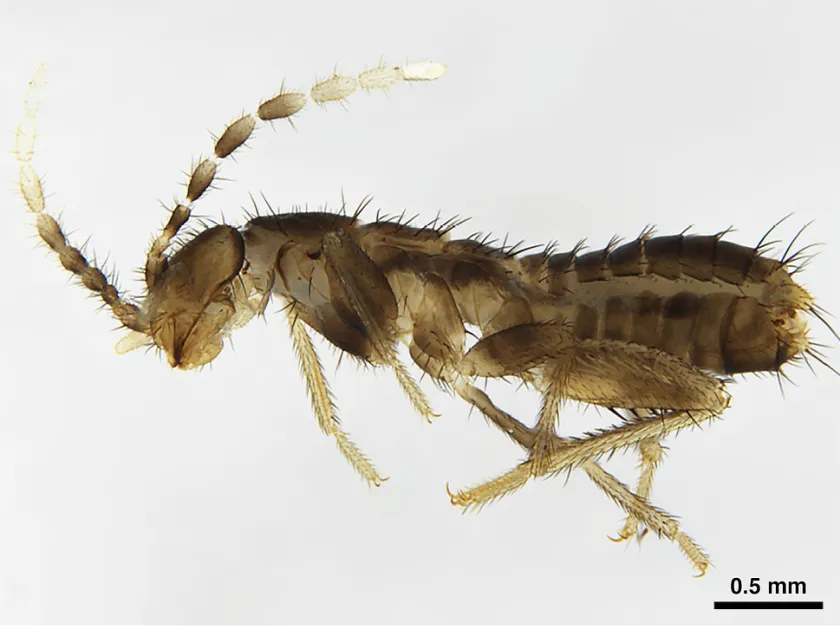
Zorotypus belongs to the order Zoraptera, a small and distinct group of insects. These are extremely small, often measuring less than 3 mm in length.
They possess a delicate, elongated body, typically colored in shades of pale yellow, brown, or dark grey depending on the species and developmental stage.
A notable characteristic of these insects is their polymorphism: they exhibit both winged and wingless forms, which helps them adapt to different environmental conditions.
The head is relatively large and features chewing mouthparts, which are highly efficient for feeding on decaying organic matter and fungal spores.
Entomologists often distinguish Zorotypus by the structure of their antennae, which usually consist of nine segments, a key morphological feature.
What it damages
Zorotypus insects primarily thrive in environments with decomposing wood, leaf litter, or moist soil, where they consume fungi and organic debris.
In greenhouses or nurseries, they can become problematic by feeding on delicate plant roots, seedlings, or the mycelium of mushrooms being cultivated.
The physical damage they inflict on root systems can serve as an entry point for various plant pathogens, leading to fungal or bacterial infections.
While they are not major agricultural pests in large fields, their presence in high-density greenhouse environments can stunt growth and reduce plant vigor.
Their feeding activity often leads to weakened plant structures, making seedlings more susceptible to transplant shock and environmental stressors.
When it appears
The activity of Zorotypus is closely tied to moisture levels and temperature; they are most active during warm, humid periods of the year.
In controlled greenhouse settings, they can maintain active populations year-round, provided that high humidity and organic waste are present.
Their life cycle is relatively rapid, allowing populations to expand quickly if sanitation protocols are neglected in the growing area.
They are photophobic and moisture-dependent, meaning they spend the majority of their time in hidden, dark, and damp locations near the soil surface.
Monitoring should be concentrated during the spring and summer months, or whenever greenhouse moisture levels are kept at a maximum.
Signs of infestation
The most common sign of infestation is the discovery of the insects themselves under damp mulch, pots, or within rotting wooden greenhouse benches.
Visual confirmation of small, pale, fast-moving insects when the soil surface or organic matter is disturbed strongly indicates their presence.
If they are damaging roots, plants may show signs of yellowing or wilting despite appropriate watering and nutrient levels in the growing medium.
The appearance of "dusty" organic material on the soil surface can result from the insects' chewing activity as they process decaying matter.
In mushroom cultivation, the visible destruction or thinning of the fungal mycelium mat is a clear indication that Zorotypus populations are feeding.
Control measures
The most effective strategy is to eliminate the habitats of Zorotypus by maintaining a dry and clean greenhouse environment with excellent drainage.
Regular sanitation, including the removal of rotting wood, leaf litter, and over-saturated organic material, is critical to preventing population booms.
Sterilizing potting mixes and substrates before use ensures that the insects are not introduced into the growing facility with the growth media.
When necessary, insecticides labeled for use in greenhouses can suppress high populations, though they should be a last resort after cultural adjustments.
Encouraging or introducing natural predatory organisms that inhabit the soil can also assist in long-term suppression of Zorotypus numbers.
Taxonomy
- Latin name
- Zorotypus
- Family
- Zorotypidae
- EPPO code
- ZOROSP
Discussion
No discussions yet — be the first.