
Gooseberry fruitworm
Zophodia grossulariella
Description
How to identify
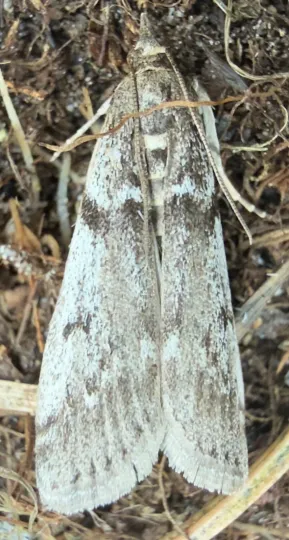
The gooseberry fruitworm (Zophodia grossulariella) is a moth belonging to the family Pyralidae. The adult moth has a wingspan of approximately 25–30 mm, with greyish forewings featuring dark transverse bands and a distinct central spot.
The larvae, which cause the primary damage, develop into caterpillars reaching about 20 mm in length. They are characterized by a reddish-brown color with darker longitudinal stripes and a blackish head capsule.
This species typically produces one generation per year. The insect overwinters as a pupa within a tough, silk cocoon located in the soil at the base of the host plant, usually at a depth of 2–5 cm.
The emergence of adults is highly synchronized with the flowering stage of currants and gooseberries. This timing allows the female moths to lay their eggs directly on the newly formed blossoms or young ovaries.
Each female moth can lay up to 200 eggs. The larvae hatch within a week and immediately begin to burrow into the fruit, ensuring they are protected from environmental factors and contact insecticides.
What it damages
The primary hosts of this pest include gooseberries, as well as red and black currants. The larvae are specialized fruit-feeders, causing significant economic losses in commercial and home berry production.
Caterpillars feed inside the berries, hollowing them out completely. As they exhaust the resources of one berry, they move to adjacent ones, webbing them together with fine silk threads.
A single larva can destroy 10 to 15 berries during its developmental phase. In cases of high infestation, the total crop loss can exceed 50% if no management strategies are implemented.
Infested berries show signs of premature ripening and discoloration, turning pink or purplish long before they are ready for harvest. These damaged fruits quickly dry up or rot, becoming unmarketable.
The damage is particularly severe during years with early spring warming, as the accelerated development of the pest aligns perfectly with the early stages of fruit set, leaving the crop vulnerable.
Signs of infestation
The earliest symptom of an infestation is the premature reddening of individual berries within a cluster, which stands out against the green foliage and healthy fruit.
Upon closer inspection, the presence of webbing connecting multiple berries is a definitive sign of activity. This webbing often traps debris and frass, making the infestation easy to spot.
If you break open a premature, withered berry, you will likely find a caterpillar or its excrement inside. This confirms the presence of the larva rather than a fungal pathogen.
Excessive fruit drop in late spring or early summer is a strong indicator that the larvae have completed their feeding cycle and are preparing to pupate in the soil beneath the canopy.
During the peak of the season, infested clusters will look messy and stunted. Persistent monitoring of the fruit clusters during the post-bloom stage is essential for timely detection.
Control measures
Cultural control is highly effective for this pest. Autumn or early spring cultivation of the soil around the bushes disrupts the overwintering pupae and exposes them to predators and freezing temperatures.
Mounding the soil around the base of the bushes to a height of 10–15 cm before flowering creates a barrier that prevents emerging moths from reaching the surface, thereby reducing the adult population.
Sanitation is key; all infested or prematurely colored berries should be hand-picked and destroyed before the caterpillars emerge to pupate in the soil, which helps curb the next generation.
Chemical control is only effective during the pre-bloom period when moths are active and eggs are being laid. Once the larvae have entered the fruit, they become virtually untouchable by contact sprays.
- Apply approved insecticides during the green-bud phase.
- Use pheromone traps to monitor adult flight activity.
- Encourage natural predators like predatory wasps and ground beetles.
Taxonomy
- Latin name
- Zophodia grossulariella
- Order
- Lepidoptera (butterflies)
- Family
- Pyralidae
- EPPO code
- ZOPHGR
Discussion
No discussions yet — be the first.