
Spruce bud moth
Zeiraphera ratzeburgiana
Description
How to identify
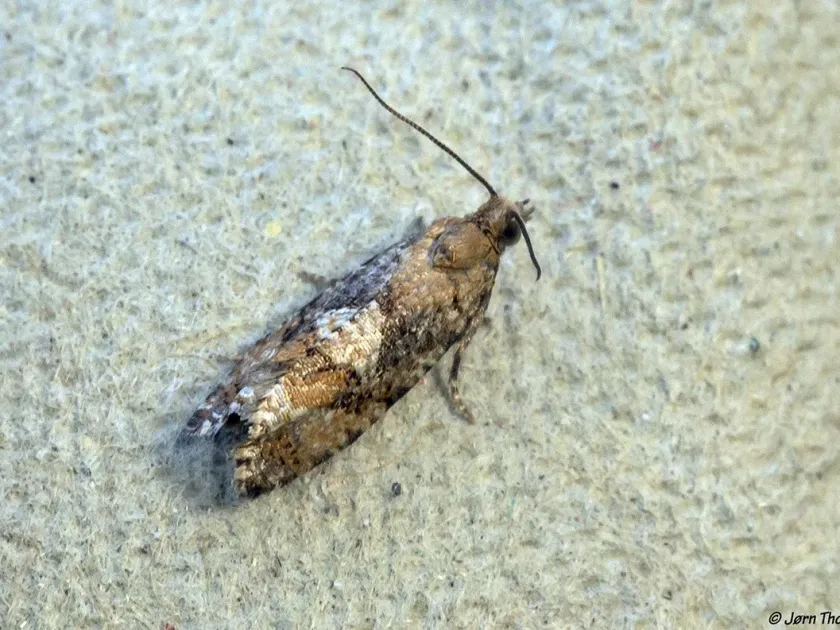
The spruce bud moth (Zeiraphera ratzeburgiana) belongs to the order Lepidoptera and the family Tortricidae. It is a small moth, with adults typically featuring a wingspan of 15 to 18 mm, characterized by mottled grey-brown patterns on their wings.
The larvae progress through several instars, usually appearing pale or yellowish-green with a dark head capsule. They are highly secretive, making them difficult to spot during their early feeding stages.
The life cycle is univoltine, meaning there is one generation per year. The insect overwinters in the egg stage, with eggs tucked securely beneath the bud scales of the host tree.
Larval emergence coincides precisely with the spring bud burst of spruce trees, ensuring that the larvae have immediate access to high-quality food resources.
Climate variables, particularly spring temperatures, significantly dictate the population dynamics, as prolonged warm springs typically lead to higher survival rates of the larvae.
What it damages
The primary host for this species is the Norway spruce (Picea abies), though other Picea species may serve as hosts in various geographical regions.
The larvae are particularly damaging to juvenile trees and saplings, as they concentrate their feeding activity on the terminal buds, which are essential for vertical growth.
In ornamental nursery settings, the feeding of the larvae causes the destruction of developing needles, which leads to distorted shoot growth and ruins the symmetry of the spruce crown.
Repeated infestation over several seasons can cause chronic stress to the trees, leading to stunted development and reducing the tree's overall aesthetic and commercial value.
By consuming the terminal buds, the moth restricts the tree's ability to expand its canopy, effectively curbing the natural growth trajectory of the spruce.
Signs of infestation
The first indicator of an infestation is the presence of silk webbing around the buds, which larvae use to pull the bud scales together during the initial feeding phase.
Affected buds often fail to develop normally, resulting in dry, brown, or deformed tips that fail to sprout new, healthy foliage in the spring.
Small deposits of frass (larval waste) caught in the silken webs near the base of the buds are clear diagnostic signs of recent feeding activity by the caterpillars.
As the season progresses, one might notice damaged, curled, or partially eaten needles, often occurring in clumps near the tips of the branches.
In heavy infestation years, the upper crown of the tree may appear sparse or thin, as a significant proportion of the new growth has been systematically destroyed.
Control measures
Chemical control is often necessary during outbreak years. Systemic insecticides are preferred as they penetrate the plant tissues, effectively targeting larvae feeding within the buds.
Timing is critical for the application of pesticides; treatments must be applied just as the buds begin to swell to ensure contact before the larvae become protected by webbing.
For smaller landscape or garden trees, manual removal of infested buds during the early stages of the season can provide a non-chemical alternative to reduce population pressure.
Biological control agents, including certain Bacillus thuringiensis strains, can be applied to manage larval populations while maintaining a safer environmental footprint.
Cultural practices, such as ensuring proper irrigation and soil fertility, help the trees remain vigorous, which improves their natural ability to withstand and recover from light infestations.
Taxonomy
- Latin name
- Zeiraphera ratzeburgiana
- Order
- Lepidoptera (butterflies)
- Family
- Tortricidae
- EPPO code
- EPINRA
Discussion
No discussions yet — be the first.