
Brown twig beetle
Xylosandrus morigerus
Description
How to identify
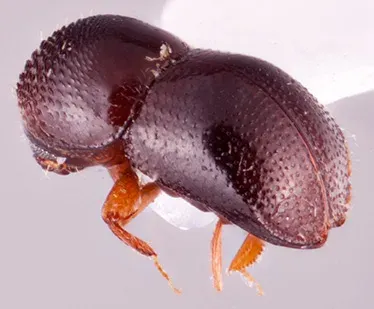
The Brown twig beetle (Xylosandrus morigerus) is a species of ambrosia beetle in the family Curculionidae. It is a tiny, cylindrical insect measuring approximately 1.5 to 2 millimeters in length.
Females are significantly larger than males, which are often flightless due to underdeveloped wings. The species thrives in a symbiotic relationship with specific fungi, which they cultivate within their tunnels.
These beetles are cryptic, living almost entirely inside the stems or branches of host plants. Their life cycle is adapted for colonizing living wood, which distinguishes them from many other bark beetles.
Due to global trade, this beetle has become a significant invasive species in various tropical and subtropical regions across the globe.
Morphologically, they are characterized by a dark brown, glossy appearance and a habit of boring directly into the xylem of host plants.
What it damages
This beetle is a highly polyphagous pest, known to attack hundreds of plant species, including commercially important crops like coffee, tea, and various fruit trees.
Both larvae and adults feed on the fungal mycelium growing inside the tunnels they bore into the plant's vascular tissue. This action disrupts the flow of water and nutrients.
The damage often leads to the death of affected branches or young saplings. In severe cases, high population densities can kill mature trees within a short period.
The fungus introduced by the beetles can cause secondary infections, further weakening the host tree and making it susceptible to other pathogens.
In nurseries, an outbreak can cause catastrophic losses, as young, thin-barked plants are particularly attractive for colonization.
Signs of infestation
The primary sign of infestation is the presence of tiny entry holes, often less than a millimeter in diameter, on the surface of branches or stems.
Fine wood dust or toothpick-like frass (excrement and wood particles) extruded from the holes is a classic indicator of beetle activity.
Plants may show symptoms of general distress, such as leaf yellowing, branch wilting, and dieback of terminal shoots caused by the blockage of vascular channels.
Cross-sections of infested wood typically reveal dark, discolored streaks, which indicate the fungal colonization associated with the beetle's gallery system.
External inspection might be misleading if the infestation is in its early stages, as the beetles are well-hidden deep within the woody tissue.
Control measures
The most effective strategy is strict phytosanitary regulation, ensuring that no infested plant material is moved into new, uninfected areas.
Sanitation is crucial: infested branches and trees should be immediately pruned and burned to eliminate breeding sites and reduce the local beetle population.
Chemical control is challenging because the beetles spend most of their life cycle inside the wood, protected from contact insecticides.
Monitoring using ethanol-baited traps can help growers detect the arrival of adult beetles and trigger timely management actions before the infestation spreads.
Maintaining high plant health through proper irrigation and fertilization can help trees resist minor attacks, though this does not provide immunity against heavy pest pressure.
Taxonomy
- Latin name
- Xylosandrus morigerus
- Order
- Coleoptera (beetles)
- Family
- Curculionidae
- EPPO code
- XYLSMO
Discussion
No discussions yet — be the first.