
Black twig borer
Xylosandrus germanus
Description
How to identify
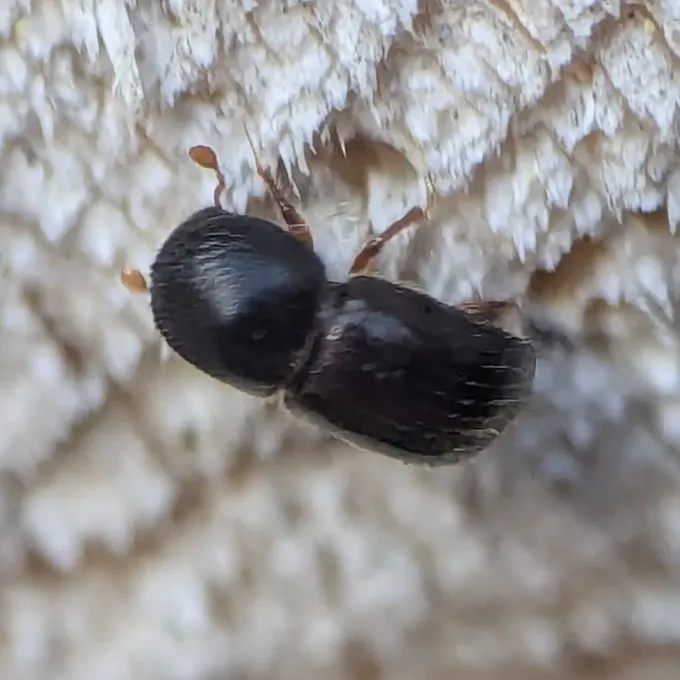
The Black twig borer (Xylosandrus germanus) belongs to the Curculionidae family, specifically the Scolytinae subfamily. Adult beetles are very small, typically ranging from 2 to 2.5 mm in length, with a cylindrical, shiny black or dark brown body.
The larvae are legless, white grubs with a yellowish head, developing entirely within galleries excavated by the parent beetles in the woody tissue of host plants. Males are significantly smaller than females and are flightless, meaning the females are responsible for dispersal.
This species is known as an ambrosia beetle. They do not feed directly on the wood itself; instead, they cultivate specific symbiotic fungi within their galleries, which serve as the primary nutritional source for both the larvae and the adults.
It is important to distinguish this beetle from other bark beetles. Unlike many other species, it does not create maternal galleries under the bark but instead tunnels deep into the sapwood and heartwood of the stems or branches.
The species demonstrates high ecological plasticity, enabling it to colonize both stressed and relatively healthy trees, making it a dangerous invasive pest in many parts of the world.
What it damages
The pest attacks a wide range of deciduous trees, including fruit crops such as apple, pear, plum, and cherry, as well as ornamental and forest species, including beech, oak, maple, and alder.
The Black twig borer poses a particular threat to young saplings in nurseries, where a single infested tree can quickly become a source of mass infestation for the entire plantation.
The damage is caused when the beetles introduce fungal spores into the tree tissues upon entry. This triggers rot processes, clogs the vascular system, and disrupts the flow of water and nutrients within the plant.
As a result of the insect's activity and the subsequent fungal infection, rapid wilting of branches or even the total death of the tree occurs due to the breakdown of physiological functions.
Massive infestations in plantations lead to significant economic losses, as damaged specimens often cannot be treated and require complete removal from the site.
When it appears
The beetle's flight begins in the spring, typically when temperatures reach 15–18 degrees Celsius, often coinciding with the flowering period of fruit crops.
After mating, females actively search for suitable trees to colonize, often showing a preference for those with reduced immunity due to drought, flooding, mechanical damage, or frost cracks.
Depending on local climatic conditions, the pest can complete one to two generations per season, which allows for rapid reproduction and colonization of new host trees.
The period of most active infestation occurs during the spring and summer months, although beetles may remain active until the onset of autumn if conditions are favorable.
Adults, predominantly females, overwinter inside galleries within the wood of infested trees or in leaf litter, allowing them to successfully survive harsh winter conditions.
Signs of infestation
The first and most characteristic sign of infestation is the appearance of small holes in the bark, often accompanied by the presence of thin, toothpick-like strands of sawdust or "frass" protruding from the entry points.
In some tree species, resin or gum flow may be observed at the entry sites, which serves as the plant's defense mechanism against the insect's entry and the developing infection.
Upon cutting into the stem or branch of an infested tree, one can identify a network of branching galleries, with the inner walls stained dark or black due to the growth of the symbiotic fungal mycelium.
An external indicator of progressing damage is the sudden wilting of individual branches or foliage in mid-summer, despite adequate irrigation and a lack of other visible disease symptoms.
In cases of heavy infestation, trees rapidly lose their aesthetic appeal and vigor, and the bark may begin to flake off, revealing the tunnels carved by the insect deep within the wood.
Control measures
- Regular inspection of plantings for early signs of infestation and immediate removal of damaged branches.
- Maintaining high levels of horticultural care, including proper irrigation, fertilization, and protection from stress factors that weaken tree health.
- Deployment of pheromone traps to monitor beetle populations and determine the precise timing for chemical interventions.
- Application of systemic insecticides during the peak flight period to prevent the beetles from successfully boring into the bark.
- Proper disposal of infested wood, preferably through burning, to prevent the emergence of a new generation of beetles from the removed material.
Taxonomy
- Latin name
- Xylosandrus germanus
- Order
- Coleoptera (beetles)
- Family
- Curculionidae
- EPPO code
- XYLBGE
Discussion
No discussions yet — be the first.