
Black twig borer
Xylosandrus compactus
Description
How to identify
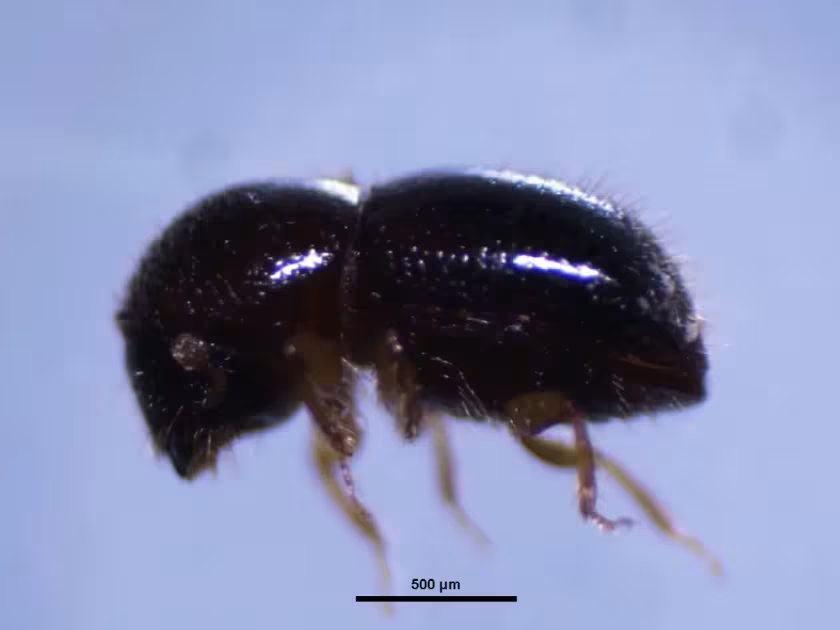
The black twig borer (Xylosandrus compactus) is a small ambrosia beetle belonging to the Curculionidae family. Adult females are approximately 1.5–2 mm long, cylindrical in shape, and possess a dark brown or black, shiny body.
This species exhibits a complex biological strategy involving a symbiotic relationship with Ambrosiella fungi. The female beetle creates galleries in the xylem, where she introduces fungal spores to serve as a food source for her larvae.
Males are significantly smaller than females, flightless, and remain inside the galleries throughout their entire life cycle. This specialized adaptation makes the species highly successful in colonizing host plants.
The beetle possesses specialized organs known as mycangia, which are used to transport fungal inoculum to new host tissues during the colonization process.
As an invasive species, it has spread globally, facilitated by international trade in wood and nursery stock, becoming a significant challenge for arborists and foresters.
What it damages
The black twig borer infests a wide range of woody plants, including over 200 species such as coffee, avocado, oak, maple, and various ornamental trees.
The primary damage is caused by the construction of gallery systems in the twigs and branches, which disrupts the flow of water and nutrients, leading to branch dieback.
The associated fungus colonizes the vascular tissue, causing further necrosis and wilting of the foliage, which often manifests as sudden browning of the leaves.
Young trees and small-diameter branches are particularly vulnerable, often suffering from structural failure or death after a heavy infestation.
Commercial nurseries frequently incur severe economic losses when shipments are infested, as the beetles can easily go unnoticed during initial inspections.
When it appears
Activity typically begins in the spring, once temperatures consistently remain above 20°C (68°F), marking the initiation of flight for colonized females.
In tropical and subtropical environments, the beetle can maintain continuous breeding cycles, resulting in overlapping generations throughout the entire year.
In regions with distinct seasons, peak adult flight and host colonization typically occur during the warmer summer months, correlating with the active growth period of host trees.
Cooler temperatures during autumn and winter generally reduce metabolic activity, although beetles can survive and continue to develop within the protective environment of woody branches.
Monitoring for flight periods using ethanol-baited traps is essential for timing insecticide applications effectively and managing local pest populations.
Signs of infestation
One of the first signs of an infestation is the appearance of tiny entry holes, about 1 mm in diameter, found on the bark of twigs or small branches.
A distinctive feature of an active infestation is the presence of "frass toothpicks"—thin, cylindrical columns of sawdust and excrement pushed out of the entry holes by the beetles.
Visible flagging, which is the sudden wilting and browning of leaves on specific branches, is a clear indicator of systemic vascular disruption caused by the gallery construction.
Cross-sectioning an affected branch often reveals dark, stained wood around the galleries, indicative of the symbiotic fungus that the beetle cultivates.
Upon peeling back the bark of infested twigs, one can typically find the gallery system containing various life stages of the beetle, including larvae and pupae.
Control measures
The most effective cultural control method is the pruning and immediate destruction of infested branches, cutting at least 10–15 cm below the lowest visible entry hole.
Sanitation is critical; all pruned materials should be burned or chipped promptly to prevent the beetles from emerging and migrating to healthy neighboring plants.
Systemic insecticides can be applied as a preventive measure during the peak flight season to protect vulnerable high-value trees or nursery stock from colonization.
Ethanol-based lures in traps are useful for tracking beetle activity and providing data for integrated pest management (IPM) programs.
Maintaining tree vigor through proper irrigation and fertilization helps improve the tree's natural defense mechanisms, making them less susceptible to initial beetle attacks.
Taxonomy
- Latin name
- Xylosandrus compactus
- Order
- Coleoptera (beetles)
- Family
- Curculionidae
- EPPO code
- XYLSCO
Discussion
No discussions yet — be the first.