
Xylosandrus amputatus
Xylosandrus amputatus
Description
How to identify
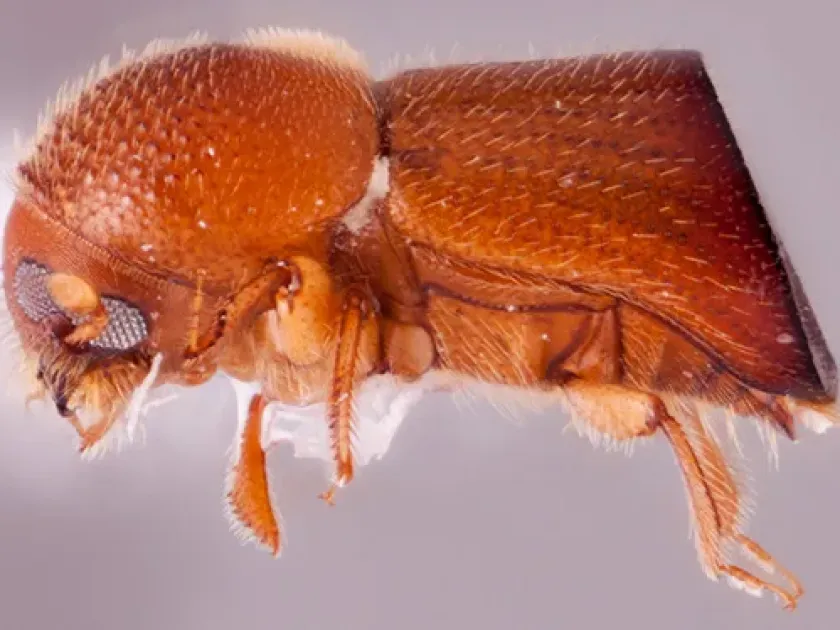
Xylosandrus amputatus is a small beetle belonging to the Scolytinae subfamily, family Curculionidae. Adult specimens typically have a cylindrical body measuring between 2 and 3 millimeters in length, usually displaying a dark, nearly black coloration.
Like other members of the Xyleborini tribe, this species leads a cryptic lifestyle, developing inside wood. The beetle's sensory organs are highly adapted to locate stressed plants that emit specific volatile compounds that attract the pest.
Females of this species act as primary vectors for ambrosia fungi, with which they maintain a symbiotic relationship. These fungi serve as the main food source for larvae and adults within the tunnels, making this pest extremely dangerous to forest and fruit trees.
Differentiating it from closely related species can be difficult without microscopic examination of the elytra and pronotum structure. Specialists focus on specific notches and the shape of the posterior part of the beetle, which are characteristic of the amputatus group.
An important morphological feature is the presence of setae (hairs) on the body, as well as the structure of the antennae. Accurate identification often requires the assistance of entomologists specialized in quarantine control.
What it damages
This pest infests a wide range of broad-leaved trees and shrubs, including various forest and fruit crops. Trees that are in a state of physiological stress are particularly vulnerable to Xylosandrus attacks.
Damage is caused by both larvae and adults, which tunnel into the sapwood and heartwood of stems. This disrupts the plant's vascular system, leading to wilting and eventual death of individual branches or the entire tree.
During tunneling, beetles introduce spores of pathogenic fungi that trigger rapid necrosis within the wood. This secondary infection is often more lethal to the plant than the mechanical damage itself.
The object poses the greatest risk to nurseries and young orchards, where the rapid spread of the pest can lead to the total loss of planting material in a short period.
Economic losses arise from direct timber damage, reduced yield, and the costs associated with implementing quarantine measures and eradicating infested sites.
When it appears
The activity of Xylosandrus is directly dependent on temperature and air humidity. Typically, the flight of adults begins with the onset of stable, warm spring temperatures, when the air warms up to 18-20 degrees Celsius.
The breeding season can last throughout the entire growing period, provided there is a sufficient number of available plants for colonization. In regions with mild climates, the development of several generations per year is possible.
Autumn cooling usually reduces the intensity of external flight, but the insects continue their activity within the tunnels in the wood, where the microclimate is more stable.
The pest overwinters at various developmental stages, most commonly as adults within the galleries inside the stems of infested trees. This allows them to successfully survive adverse winter conditions.
Monitoring adult flight is carried out using pheromone traps, which allow agronomists to accurately determine activity peaks to plan necessary control treatments.
Signs of infestation
The first and most noticeable sign of the beetle's presence is the appearance of tiny entry holes on the bark of trunks and branches. Fine wood dust, known as frass, often protrudes from these holes.
In the areas of infestation, changes in bark color or the exudation of sap/gum are observed, which are the plant's defensive reactions. Gradually, the affected parts begin to dry out, and the leaves on the branches lose turgor.
When damaged wood is split, branched tunnels are clearly visible, stained dark due to the growth of the ambrosia fungus mycelium. This is a key diagnostic feature distinguishing Xylosandrus from other bark beetles.
In later stages of infestation, mass yellowing and leaf drop are observed, as well as bark cracking in areas with the most intense wood damage.
If a tree is severely weakened, colonization can occur very rapidly, covering the entire surface of the stem from the root collar to the lower structural branches.
Control measures
The primary control method is strict adherence to phytosanitary standards: the removal and immediate burning of all infested or dead trees. Woody debris should not be left in the orchard, as it serves as a reservoir for the pest.
Maintaining a high level of agronomic care is essential, as strong, healthy trees are much more resistant to beetle attacks. Regular irrigation and fertilization reduce the risk of attracting the pests.
Chemical control includes the application of systemic insecticides during periods of mass beetle flight. Treatments should be aimed at thoroughly covering trunks and large branches with the pesticide solution.
If a quarantine object is detected in a nursery, a quarantine regime is imposed, restricting the movement of plant products to prevent the further spread of the pest to other regions.
Biological control methods, including the use of entomopathogenic fungi and nematodes, are currently under active research but already show potential as a supplement to traditional protection measures.
Taxonomy
- Latin name
- Xylosandrus amputatus
- Order
- Coleoptera (beetles)
- Family
- Curculionidae
- EPPO code
- XYLSAM
Discussion
No discussions yet — be the first.