
Two-toothed bark beetle
Xylocleptes bispinus
Description
How to identify
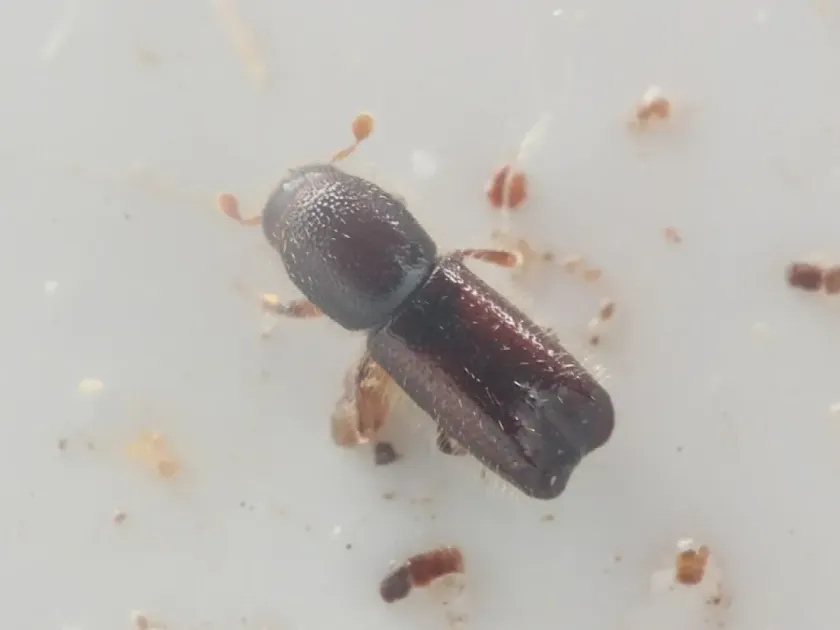
The two-toothed bark beetle (Xylocleptes bispinus) is a small wood-boring insect belonging to the Curculionidae family, subfamily Scolytinae. Adult beetles are typically 2.0–2.5 mm long and possess a cylindrical, dark brown body.
The most distinctive feature of this species is the structure of the elytral apex, which features two prominent spines or teeth. This specific morphological characteristic makes it relatively identifiable under magnification.
Its life cycle consists of the standard holometabolous stages: egg, larva, pupa, and adult. The larvae are legless, pale-colored, and feed exclusively within the woody stems of their host plants, completing their development inside tunnels.
Adult beetles are typically active during the growing season, primarily in late spring and summer. They are capable of flight and disperse to find suitable hosts to mate and establish new galleries for their offspring.
While the beetle is small, its impact on host plants is significant due to the habit of colonizing the stems, which leads to structural and vascular damage in the affected woody tissues.
What it damages
The primary host for Xylocleptes bispinus is Clematis vitalba and other related Clematis species. The beetle targets the woody stems of established plants, causing significant stress to the host.
Both adults and larvae contribute to the damage by excavating galleries inside the stem. These galleries interrupt the translocation of water and nutrients, which is critical for the plant’s survival and flowering capability.
As the infestation progresses, the internal wood tissue is consumed, leaving behind a complex network of tunnels filled with "frass" (bore dust). This process effectively weakens the stem from the inside out.
Heavily infested plants often exhibit symptoms of decline, including reduced vigor, sparse foliage, and an inability to maintain normal growth cycles. In severe cases, large portions of the plant may die back completely.
The internal damage also creates entry points for secondary pathogens, such as fungi, which can cause wilt diseases. This often exacerbates the damage caused by the beetle, leading to rapid plant decay.
Signs of infestation
The most common sign of an infestation is the appearance of small, circular exit or entrance holes on the bark of the stems. Bore dust or frass may be visible around these holes or on the leaves below.
Wilting of individual branches or entire stems during the growing season, even when soil moisture is adequate, is a strong indicator that the vascular integrity of the stem has been compromised.
Close inspection of the stems may reveal sunken bark areas or irregular swellings. If a suspected stem is carefully dissected, internal galleries and the presence of larvae or adult beetles confirm the diagnosis.
Discoloration of the bark around the entry points is another frequent sign. In many cases, the bark might become brittle or peel away, exposing the damaged wood and galleries beneath.
A decline in the overall health of the clematis, characterized by a lack of flowers and progressive branch dieback starting from the tips, often suggests a well-established colony of bark beetles.
Control measures
Sanitation is the most critical control measure. Carefully prune and remove all infested stems as soon as they are identified. All pruned material must be destroyed by burning to prevent the emergence of new adults.
Maintaining plant vigor through proper watering, mulching, and balanced fertilization helps the clematis resist successful colonization by bark beetles. Healthy plants are far less attractive to these insects.
Systemic insecticides may be used as a preventative or curative measure, especially during the peak flight period of the adult beetles. Direct application to the stems can help eliminate larvae within the wood.
Integrated pest management (IPM) strategies, including the use of pheromone traps, can assist in monitoring beetle populations and timing chemical applications for maximum efficacy.
- Ensure garden tools are sterilized to prevent the accidental spread of pathogens.
- Remove deadwood and garden debris from the vicinity of clematis plantings.
- Encourage natural predators, such as insectivorous birds and parasitic wasps, in the garden.
Taxonomy
- Latin name
- Xylocleptes bispinus
- Order
- Coleoptera (beetles)
- Family
- Curculionidae
- EPPO code
- XYOEBE
Discussion
No discussions yet — be the first.