
Xyleborus xylographus
Xyleborus xylographus
Description
How to identify
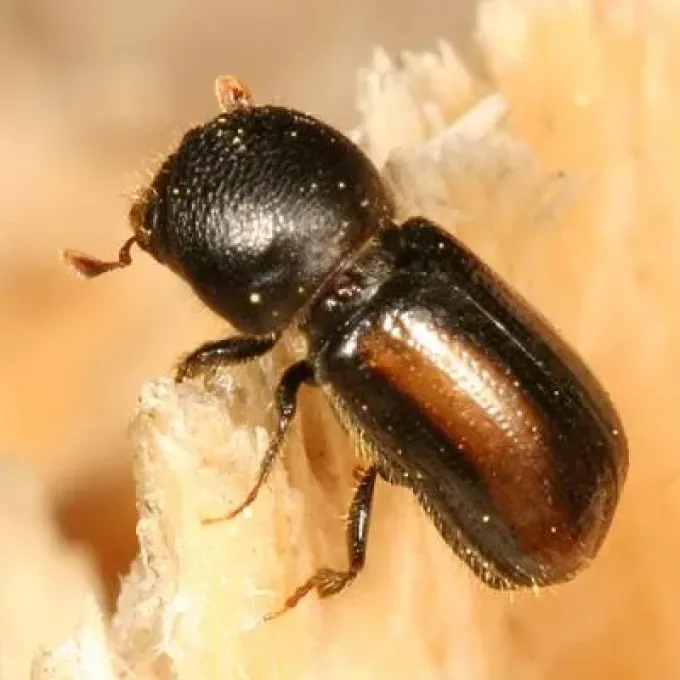
Xyleborus xylographus belongs to the Curculionidae family, subfamily Scolytinae. It is a small beetle, typically measuring between 2.5 and 3 mm in length, with a cylindrical, dark brown or black body.
These beetles live in a symbiotic relationship with ambrosia fungi, which they cultivate inside the wood. They are known for their concealed lifestyle, spending most of their life cycle within the tunnels they excavate in host trees.
The adult females have specialized morphology allowing them to penetrate hard wood tissues efficiently. Their larvae are legless, white grubs that rely entirely on the fungal gardens maintained by the adults for nourishment.
Xyleborus xylographus is highly adaptable, often selecting stressed or weakened trees as hosts. Their ability to fly allows them to migrate between orchards and forests in search of suitable breeding sites.
The reproductive strategy of this species is highly efficient, as the fungi they introduce into the wood serve as the primary food source for their entire larval development.
What it damages
The beetle primarily infests a variety of deciduous trees. Fruit trees, including apple, pear, plum, peach, and cherry, are among the most common hosts for this damaging pest.
Beyond fruit orchards, the beetle also attacks forest trees such as oak, beech, and willow, especially when these trees are experiencing physiological stress from drought or disease.
The damage is caused by the construction of tunnels within the sapwood and heartwood, which disrupts the tree's vascular system, hindering the transport of water and nutrients.
Furthermore, the beetles introduce fungal pathogens into the wood, causing secondary infections and accelerating the decay of the affected branches or the entire tree.
Severe infestations can lead to limb dieback, reduced yield, and, if left unchecked, the complete mortality of the infested tree within a few growing seasons.
When it appears
The active flight of adults typically begins in the spring when average daily temperatures exceed 15-18 degrees Celsius, often aligning with the blooming period of fruit crops.
Depending on the climatic conditions and humidity levels, the beetle may complete one or several generations within a single growing season.
Females bore into the bark during May and June, seeking appropriate sites to establish egg-laying galleries, which is the most critical time for monitoring and intervention.
Throughout the summer, larval and pupal development occurs deep within the wood, making external detection of the beetle very difficult during the peak growing months.
In the autumn, the new generation of adults emerges from the tunnels to locate overwintering sites, such as bark crevices, leaf litter, or deeper layers of tree trunks.
Signs of infestation
The most visible indicator of an infestation is the presence of tiny entrance holes, often described as drill marks, accompanied by small piles of sawdust-like wood flour.
In response to the beetle's entry, trees may exhibit sap flow or gumming around the affected areas as they attempt to physically exclude the pests from their tissues.
A classic sign of damage is the sudden wilting and browning of leaves on specific branches, which occurs even when the tree is otherwise well-watered and healthy.
- Entrance holes approximately 1-1.5 mm in diameter.
- Accumulation of boring dust at the base of the tree or on branches.
- Localized bark necrosis where galleries are situated.
- Premature yellowing and leaf drop on affected limbs.
If the bark is carefully removed from an infested section, you can observe a network of narrow, dark-stained galleries caused by the symbiotic fungi associated with the beetle.
Control measures
The most effective strategy is to maintain tree vigor through proper horticultural practices, as healthy trees are less susceptible to successful beetle colonization.
Sanitation is crucial: infested branches showing signs of dieback should be pruned and destroyed immediately to reduce the overall population pressure in the orchard.
Systemic insecticides applied during the peak spring flight period can provide a necessary protective barrier, preventing the beetles from successfully entering the bark.
Using pheromone traps helps growers monitor the activity of the beetle and accurately time chemical treatments, ensuring higher efficiency and minimal environmental impact.
Applying trunk washes or whitewashing with added insecticidal agents in early spring can serve as a deterrent, discouraging the beetles from attempting to colonize the tree.
Taxonomy
- Latin name
- Xyleborus xylographus
- Order
- Coleoptera (beetles)
- Family
- Curculionidae
- EPPO code
- XYLBXY
Discussion
No discussions yet — be the first.