
Xyleborus volvulus
Xyleborus volvulus
Description
How to identify
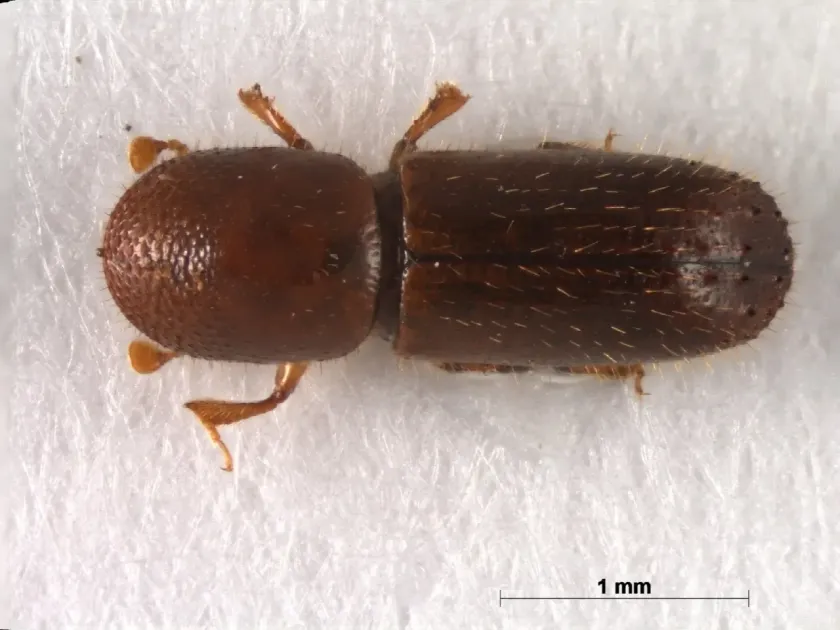
Xyleborus volvulus is a species of bark beetle belonging to the Curculionidae family. The adult beetle is small, with a cylindrical body typically colored dark brown or black.
Females are significantly larger than males and possess functional wings, allowing them to disperse over long distances to colonize new host trees.
The larvae are legless, white in color, and have a hardened head capsule, developing strictly inside tunnels bored into the tree wood.
The beetle shares a symbiotic relationship with specific fungi, which the female carries in specialized structures on her body to introduce into the host plant.
As a polyphagous pest, this beetle can adapt to various woody plant species, making it a significant concern in both orchards and natural forests.
What it damages
This beetle affects a wide range of plants, including important agricultural crops like avocado, citrus, and cacao, as well as various ornamental hardwood species.
While often attracted to stressed or weakened trees, the population can reach levels where healthy trees are also susceptible to colonization and damage.
The adults bore radial tunnels into the wood, which physically disrupts the transport of water and nutrients within the tree's vascular system.
The fungus introduced by the beetles grows within these tunnels, causing vascular clogging, tissue necrosis, and eventually branch or whole-tree mortality.
In nursery settings, an infestation can lead to significant economic losses, rendering saplings unsellable due to poor structural integrity and health.
Signs of infestation
The primary sign of infestation is the presence of small, circular entry holes on the bark, often accompanied by fine, light-colored sawdust or frass.
On some tree species, the frass may accumulate as distinct, toothpick-like protrusions extending from the bark surface near the tunnel entrance.
Leaves on infested branches may exhibit signs of wilting, yellowing, and premature drop as the tree's ability to maintain water balance is compromised.
When examining infected wood, internal tunnels are usually visible, often showing dark staining on the walls due to the growth of the symbiotic fungus.
In cases of severe infestation, a hollow sound may be produced when tapping the trunk or main branches, indicating extensive internal tunneling.
Control measures
Maintaining optimal tree vigor through proper irrigation and fertilization is the first line of defense, as healthy trees can better resist beetle entry.
Sanitation is critical; all infested branches and dead or dying trees must be removed and destroyed to reduce the local population of the beetle.
Monitoring using pheromone traps is recommended to track beetle activity and determine the timing for potential chemical interventions if necessary.
Because the beetles spend most of their life cycle inside the wood, chemical control is often limited in efficacy and must be timed precisely with adult emergence.
- Regular inspection of bark for entry holes.
- Immediate removal and burning of infested wood.
- Application of protective sealants to major pruning wounds.
- Implementation of biological control agents where applicable.
Taxonomy
- Latin name
- Xyleborus volvulus
- Order
- Coleoptera (beetles)
- Family
- Curculionidae
- EPPO code
- XYLBTO
Discussion
No discussions yet — be the first.