
Xyleborus spinulosus
Xyleborus spinulosus
Description
How to identify
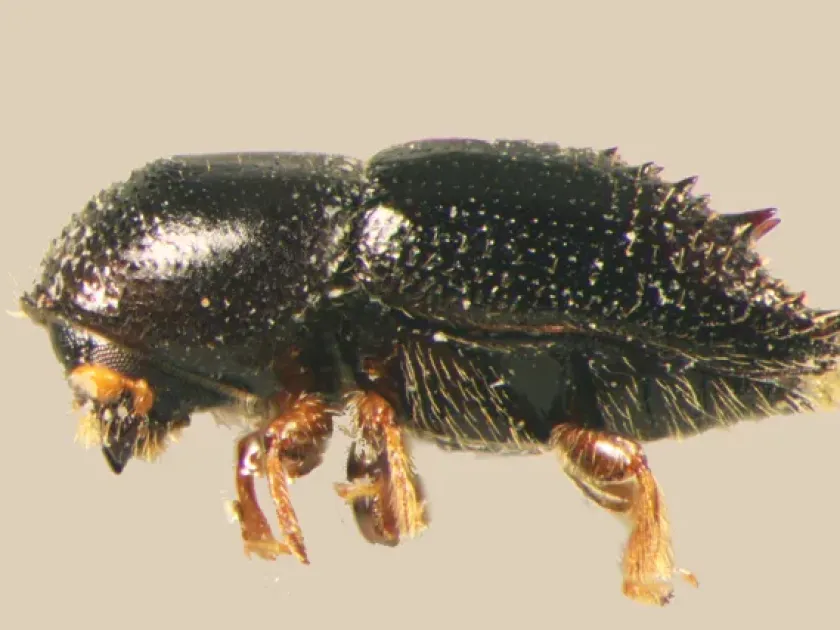
Xyleborus spinulosus is a small beetle belonging to the family Curculionidae and the subfamily Scolytinae. These insects, known as ambrosia beetles, are characterized by their cylindrical bodies, typically measuring 2.5 to 3 millimeters in length.
The name "spinulosus" refers to the small spines located on the elytra (wing covers), which are a key diagnostic feature for identification. They are dark brown or black in color and are rarely seen due to their cryptic habits.
Unlike traditional bark beetles, these insects have a symbiotic relationship with fungi. They carry fungal spores into the galleries they excavate, creating a "garden" that serves as the primary nutrition source for both adults and larvae.
The lifecycle occurs entirely within the woody tissues of the host tree. Males are usually flightless and remain within the host system, where mating occurs with females before they emerge to colonize new trees.
They are highly efficient at exploiting physiologically stressed trees. Their biology is adapted to environments where wood moisture and specific fungal growth conditions can be maintained within the galleries.
What it damages
Xyleborus spinulosus primarily attacks deciduous trees. While they often inhabit forest environments, they can become significant pests in commercial orchards, particularly those suffering from environmental stress.
Damage occurs when the female beetle bores deep into the sapwood or heartwood. This excavation process creates a complex network of tunnels that physically compromises the vascular structure of the plant.
The introduction of ambrosia fungi is the most damaging aspect of the infestation. As the fungus grows, it clogs the plant's xylem, severely hindering the upward transport of water and nutrients, eventually leading to branch or tree decline.
Stressed trees are particularly vulnerable, as their defense mechanisms are often insufficient to contain the fungal spread. Once a tree is colonized, the beetle population can grow rapidly if environmental conditions are favorable.
Severe infestations often result in the gradual dieback of branches, stunted growth, and in extreme cases, the total death of the host tree, especially if multiple generations colonize the same specimen.
Signs of infestation
The most reliable sign of an infestation is the presence of tiny, perfectly round entry holes, approximately 1 millimeter in diameter, on the surface of the bark or branches.
Boring dust, which looks like fine sawdust, often accumulates near the entry holes or in bark crevices. This material is produced as the beetle removes wood to expand its internal tunnel system.
Exudation of sap or gum from the entry holes is a common reaction of the tree. This indicates the host is attempting to seal the gallery and flush out the intruder, though it often suggests the infestation is already deep.
Internal symptoms involve the staining of wood tissue around the galleries. The mycelium of the symbiotic fungi causes a dark discoloration that can be observed if the branch is cross-sectioned.
Canopy symptoms are usually secondary and include yellowing leaves, wilting, and the sudden browning of foliage. These signs appear as the water supply to the affected branches is effectively blocked.
Control measures
The best control strategy is the promotion of tree vigor through excellent horticultural practices. Proper irrigation and nutrient management ensure the tree can withstand minor attacks without becoming a viable host.
Sanitation is critical for managing populations. Any branches or trees infested with Xyleborus spinulosus should be pruned and destroyed immediately to prevent the emergence and migration of new beetles.
Chemical control can be difficult due to the beetles' protected status deep within the wood. However, systemic insecticides applied during the peak flight periods can be effective in reducing adult populations.
Monitoring the flight activity of the beetles using pheromone or sticky traps is highly recommended. This allows for precise timing of chemical applications, significantly improving the efficacy of the control program.
- Remove and burn infested wood promptly.
- Maintain optimal soil moisture to prevent drought stress.
- Apply systemic insecticides based on monitoring results.
- Avoid mechanical damage to tree trunks and branches.
- Encourage beneficial predatory insect populations.
Taxonomy
- Latin name
- Xyleborus spinulosus
- Order
- Coleoptera (beetles)
- Family
- Curculionidae
- EPPO code
- XYLBSN
Discussion
No discussions yet — be the first.